Umbwe Route
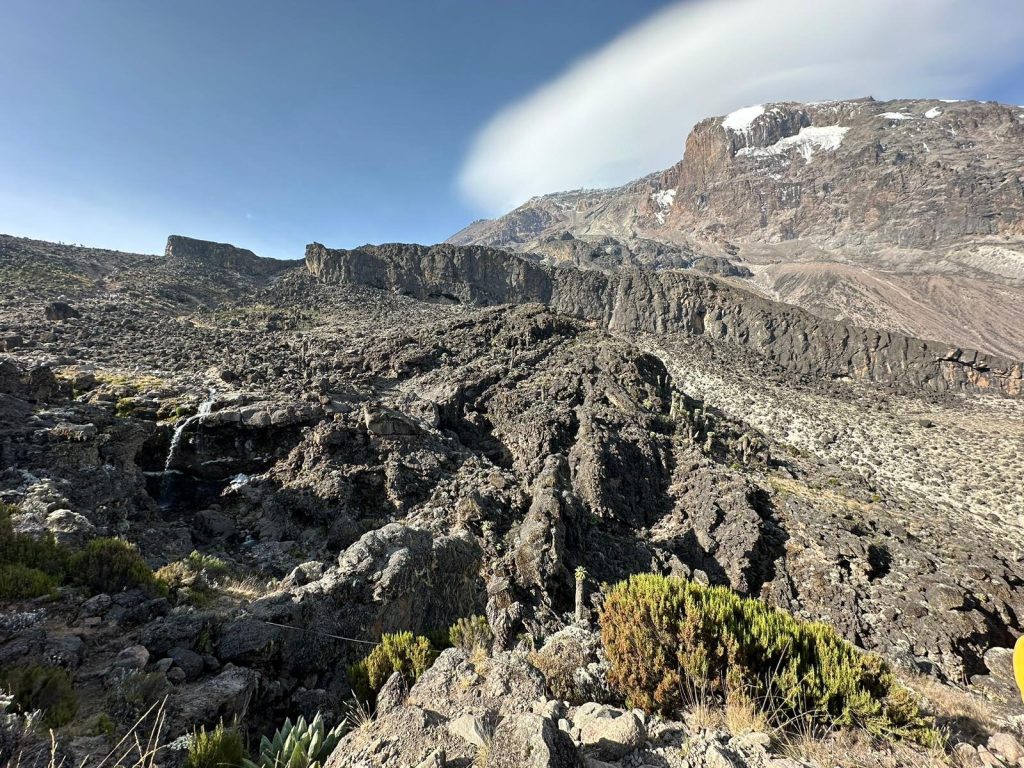
The Umbwe Route is a six or seven day trek up Mount Kilimanjaro and the steepest, most direct trail on the mountain, climbing a narrow southern ridge from Umbwe Gate at 1,640 metres and covering about 53 kilometres. Only around one percent of climbers use it, and most reputable operators steer beginners away. Umbwe sits on the southern flank of Kilimanjaro National Park in northern Tanzania and descends via Mweka.
Umbwe Route Trekking and Who It Suits
Umbwe route trekking is the hardest way to walk up Kilimanjaro. It is not technical, in the sense that no rope or ice axe comes out of the bag on the standard version, but it gains height faster than anything else on the mountain and gives your body the least help doing it. Only the Shira trail, which starts on the plateau by vehicle, comes close for front loading altitude.
The trail rises almost straight up a ridge between the Lonzo and Umbwe rivers, reaching the Barranco Valley in two hard days. From there it turns east onto the Southern Circuit, the same path Machame and Lemosho use, and summits from Barafu.
Who books this? Experienced trekkers who have been high recently, sometimes people who have just climbed Mount Meru as pre acclimatisation, and climbers who want two days of genuine solitude in the forest. Who should not book it: anyone on a first high altitude trip, and anyone whose main goal is standing on Uhuru Peak rather than the walk itself.
Several serious operators will not sell Umbwe to first timers at all, and will say so on the phone. That is not gatekeeping. On a route with no acclimatisation days built in, the trail cannot compensate for a body that has not been above 3,000 metres before.
Umbwe Trek Day One Up the Forest Ridge
Registration usually happens at Machame Gate, about 50 minutes from Moshi, before a short transfer through coffee and banana plantations to Umbwe Gate at roughly 1,640 metres. The gate itself is undeveloped compared with the busier entrances.
The path starts as a wide forestry track and narrows fast. Within an hour you are on a steep root covered footpath climbing the ridge between two rivers, with enormous trees on both sides and deep gorges dropping away. The air is humid, the ground is usually muddy, and there is no easing into this trek.
Five or six hours of strenuous walking gains around 1,200 metres to Umbwe Cave Camp at roughly 2,900 metres, perched among the trees and thick undergrowth. Compare that with Machame’s first day, which gains about 1,200 metres over five to seven gentler hours on a wide trail, and the difference is in the gradient rather than the numbers.
Umbwe Route Trekking to Barranco Camp
Day two is steeper again at the start. Muddy slopes, then the forest thins into rockier ground with moss covered straggly trees, and glimpses of Kibo begin appearing above. The ridge narrows in places and there is one section climbers call the Rope Rock, which needs hands but no equipment.
The path eventually flattens as it comes into the Barranco Valley through the senecio forest, arriving at Barranco Camp at roughly 3,960 metres after five or six hours. You have gained another 1,000 metres.
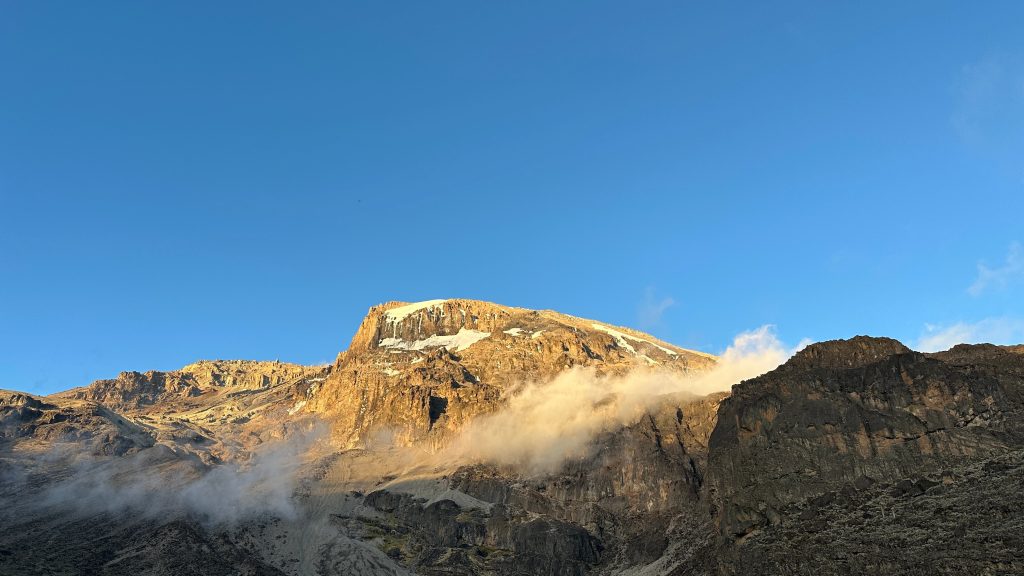
Two days, nearly 2,300 metres of altitude, no rest day and no descent to sleep lower. That is the whole problem with this route stated in one sentence, and it shows up plainly in the summit figures reported trail by trail. Trekkers who felt fine on day one often feel considerably less fine at Barranco, and this is where the seven day version earns its money by stopping here for an extra night.
Umbwe Trekking Over the Barranco Wall to Karanga
From here Umbwe joins the crowd. You descend into a ravine at the base of the Great Barranco Wall, then climb the 257 metre face on switchbacks. It is a non technical scramble, an hour or so of work with hands on rock, and after the ridge you have just come up it will feel reasonable.
Above the wall the trail crosses a series of hills and valleys, drops sharply into the Karanga Valley and climbs back out to Karanga Camp at roughly 4,035 metres. Three to four hours, and almost no net height gain, which is the first genuinely kind day on this itinerary.
You will now be walking among Machame and Lemosho groups. Some Umbwe trekkers find that jarring after two days of empty forest; others are quietly glad of the company.
Umbwe Route Trekking to Barafu Camp
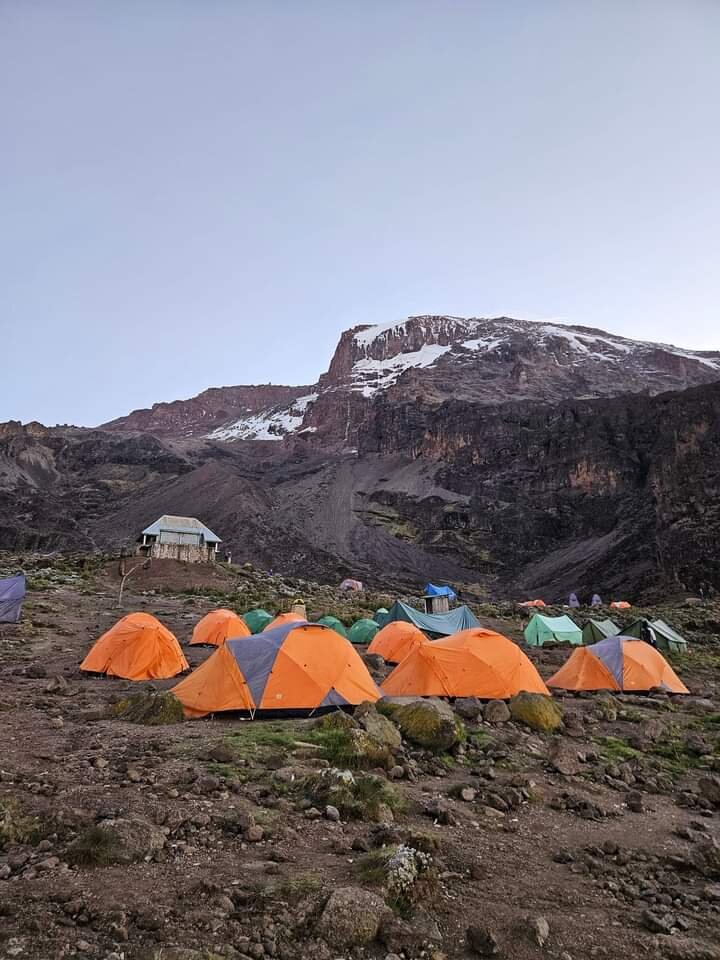
A short steep pull of three to four kilometres through alpine desert brings you to Barafu Camp at roughly 4,670 metres, arriving by early afternoon. Barafu means ice, and the camp is a rocky exposed ridge with wind most afternoons and nothing growing on it.
The afternoon goes on eating, drinking and lying down from early evening. Sleep is poor for almost everyone. On Umbwe it tends to be worse, because you have arrived here with fewer nights of acclimatisation behind you than anyone else at the same camp.
Water freezes overnight, so bottles go inside the sleeping bag. Your guide will run a health check and, on this route more than most, will be honest about whether going up is sensible.
Umbwe Route Summit Climb to Uhuru Peak
Midnight departure. Five kilometres of switchbacks on loose scree in the dark, taking five to seven hours, with temperatures between roughly minus seven and minus twenty degrees Celsius before dawn and wind chill taking it lower.
Umbwe trekkers reach the crater rim at Stella Point at about 5,750 metres, then walk the rim for roughly an hour to Uhuru Peak at 5,895 metres. That western arrival is the shorter of the two rim walks available, which is one small mercy this route does offer.
Then down the scree to Barafu, a rest and hot food, and on to Mweka Camp at around 3,100 metres. Twelve to fourteen hours on the move. The last morning is a three to four hour descent through the forest to Mweka Gate for your certificate and the transfer to Moshi.
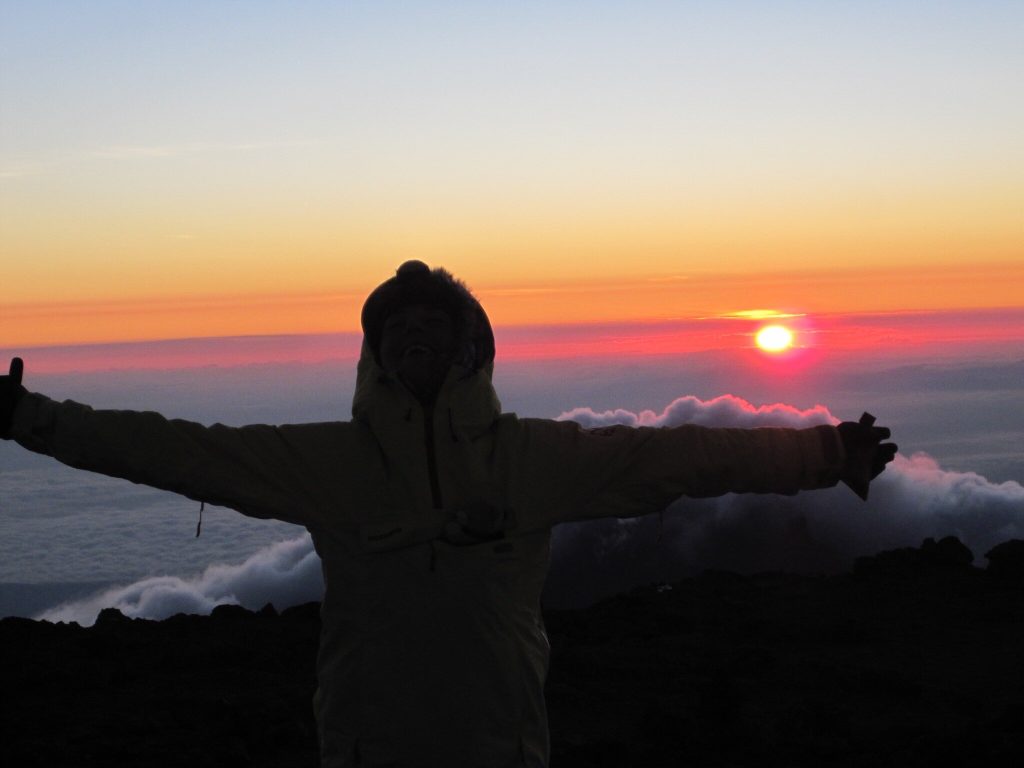
Umbwe rewards you with the quietest two days on Kilimanjaro and charges for them at the summit. It is the only route where the trail itself is working against your chances rather than for them.
Umbwe Route Trekking via the Western Breach
Traditionally Umbwe fed into the Western Breach, a steep line past the Arrow Glacier onto the crater rim, often with a night at Crater Camp near 5,750 metres. It is the most direct way to the summit and the most serious.
This is not trekking. The Breach is exposed to rockfall, has a history of fatalities, sometimes requires a helmet and basic climbing skill, and needs an operator with genuine mountaineering competence. Sleeping in the crater also carries an extra park charge and puts you at extreme altitude overnight without much benefit to your acclimatisation.
Some operators still offer the Umbwe and Western Breach combination and describe it, fairly, as the hardest thing you can do on Kilimanjaro without ropes. If you are reading a route guide to choose your first Kilimanjaro trek, this variation is not the one.
Six Day or Seven Day Umbwe Trekking
Six days. The standard version. Umbwe Cave, Barranco, Karanga, Barafu, summit, out. No rest day anywhere. Best suited to strong hikers with recent high altitude time behind them.
Seven days. Adds an acclimatisation day at Barranco Camp on day three, which is exactly where the profile needs it. If Umbwe is your choice, choose this one.
Five days. Technically possible and strongly discouraged by every operator worth booking. The altitude gain per day is beyond what most bodies manage safely.
An honest comparison: if what draws you to Umbwe is the solitude, Lemosho gives you two quiet days as well, on a profile that works with you rather than against you, and joins the identical Southern Circuit afterwards. If what draws you is the difficulty itself, then Umbwe over seven days with prior high altitude experience is a legitimate trek and a memorable one.
Best Time for an Umbwe Route Trek
The two dry windows matter more here than on gentler trails, because steep ground plus rain plus roots is a recipe for a fall. January to early March gives warmer days and clear mornings. Late June to October is the long dry season and the safest bet for the ridge.
April and May, the long rains, turn the Umbwe ridge into slick mud and are best avoided entirely on this route even by people who would happily trek elsewhere in the wet. November into early December brings shorter rains. Traffic is thin in every month, so crowd avoidance is never a reason to pick a wet week here.
Getting to Umbwe Gate for Your Trek
Fly into Kilimanjaro International Airport, roughly an hour from Moshi by road. Moshi is the base, and Umbwe Gate is one of the closer trailheads: about 50 minutes to Machame Gate for registration, then a short drive across to Umbwe itself through the plantations.
Plan a night in Moshi before your briefing and a night after you come down at Mweka. Anyone considering this route should arrive with months of hill walking already behind them, and should also look at spending three or four days on Mount Meru beforehand, which sits nearby, reaches 4,562 metres and is the most useful pre acclimatisation available in the region.
Frequently Asked Questions About the Umbwe Route
How much does an Umbwe route trek cost?
A six day Umbwe generally runs $1,900 to $2,700 per person with a mid range operator, with seven day versions a few hundred dollars more. It is priced similarly to Machame of the same length, since park charges are identical and the crew requirements are comparable, so it never turns out to be the cheapest way up the mountain despite being one of the shortest. Fewer operators run it, so quotes vary more than usual. Flights, the visa at around $50, high altitude insurance, tips and personal gear sit outside the package.
What park fees apply on the Umbwe route?
Conservation fees of roughly $70 per person per day, camping fees around $50 per person per night, a one off rescue fee near $20, and small park entry charges for every guide, porter and cook. Most published tariffs exclude the 18 percent VAT. If your itinerary includes a night at Crater Camp on a Western Breach variation, add roughly $100 per person for that night.
Why do operators discourage the Umbwe route?
Because it gains around 2,300 metres in two days with no rest day and no meaningful chance to sleep lower than your day’s high point. Altitude sickness is the leading reason climbers fail on Kilimanjaro, and this profile maximises the risk rather than reducing it. A responsible operator would rather sell you a seven day Machame you complete than a six day Umbwe you abandon at Barafu.
Is the Umbwe route technical?
The standard version is not. It is steep walking with a few places where you use your hands, including a section on the ridge and the Barranco Wall scramble, but no ropes or specialist equipment. The Western Breach variation is a different matter entirely and belongs to mountaineering rather than trekking.
How much should I tip on an Umbwe trek?
Roughly $250 to $300 per climber for a six or seven day trek. Pooled across the group rather than per climber, the usual daily figures are $20 to $25 for the lead guide, $10 to $15 for assistant guides and the cook, and $5 to $10 for each porter. Porters carrying loads up the Umbwe ridge are working harder than on any other trail, which is worth remembering at the tipping ceremony. Bring clean US dollar notes.
How quiet is the Umbwe route?
Very quiet for two days, then not at all. Around one percent of Kilimanjaro climbers start here, so the forest ridge is usually empty. Once you reach Barranco Camp you join the Southern Circuit and share every camp with Machame and Lemosho groups through to the summit. Colobus monkeys are commonly seen in the lower forest and the gorge views are among the best on the mountain.
Booking Your Kilimanjaro Trip
The safari companies and tour operators listed on this website put trips like this together for a living and know which camps, guides and routes actually deliver. We are an independent guide to Kilimanjaro; we do not book or sell tours ourselves.
When you are ready, arrange your safari, tour or holiday with one of the recognised operators listed here. Tell them your dates and what matters most, and a real person, not a form, will handle the itinerary, park bookings and logistics for you.