Kilimanjaro Route Success Rates

Summit rates on Mount Kilimanjaro range from roughly 27 percent on five day itineraries to between 90 and 95 percent on the nine day Northern Circuit, with the overall figure across all routes generally put at 65 to 80 percent. Itinerary length predicts the outcome far better than which trail you walk. All routes finish at Uhuru Peak, 5,895 metres, in Kilimanjaro National Park in northern Tanzania.
Kilimanjaro Trekking Summit Rates by Route and Duration
Nine day Northern Circuit. Roughly 90 to 95 percent. The longest trek on the mountain and the strongest record, with two northern days that end lower than they began.
Eight day Lemosho. Around 90 percent. Adds the Moir Hut acclimatisation night to an already sound profile.
Seven day Machame and seven day Lemosho. Around 85 percent. The same trail from Lava Tower onwards, and the same reported outcomes.
Seven day Rongai. Around 85 percent with the Mawenzi Tarn rest day, falling to roughly 70 percent on six days.
Six day Machame. Between 50 and 73 percent depending on the operator. Skips the Karanga night.
Six day Marangu. Roughly 50 to 65 percent with the Horombo rest day. Five day Marangu sits at 27 to 30 percent, the weakest figure on the mountain.
Read that list by number of days rather than by route name and the pattern becomes obvious. Sorted purely by duration, park derived figures put five day treks near 27 percent, six day treks around 44 to 50 percent, seven day treks around 64 to 85 percent, and eight day treks around 85 to 90 percent. That arithmetic is why an eight day Lemosho trek has become the default recommendation for a first climb.
Why Trek Length Drives Kilimanjaro Summit Rates
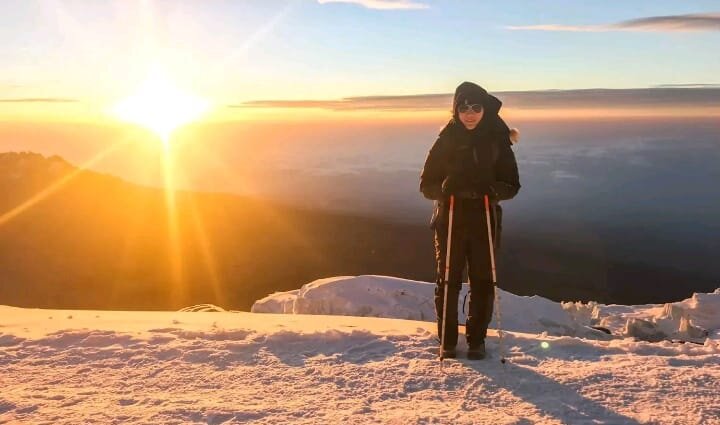
Altitude sickness is the leading reason climbers turn back, and the only reliable defence against it is time, which is why how many days a climb runs to is the first thing to settle. Your body needs days, not hours, to adjust to air holding roughly half the oxygen it does at sea level.
Every extra night you spend above 3,000 metres is a night your body spends producing the changes that let you function at 5,895 metres. There is no shortcut, no gadget and no fitness level that substitutes for it. Acetazolamide, sold as Diamox, speeds the process up somewhat and is worth discussing with your doctor, but it accelerates acclimatisation rather than replacing it.
This is also why very fit climbers sometimes fare worse than moderately fit ones. Strong walkers tend to climb faster, arrive at camp earlier and outpace their own physiology. Guides say pole pole for a reason, and the trekkers who arrive last are often the ones standing on the summit.
If you take one number from this page, take this one: adding a single night to a six day itinerary is worth somewhere between 10 and 30 percentage points depending on the route. Nothing else you can buy comes close to that.
How Climb High and Sleep Low Trekking Profiles Change the Odds
Two treks of the same length can perform quite differently, and this is where trail design earns its keep.
Machame, Lemosho and the Northern Circuit repeatedly take you high during the day and bring you down to sleep. Machame’s third day climbs above 4,600 metres at Lava Tower and camps at 3,985 metres, a net gain of about 100 metres after hours in thin air. The next day crosses the Barranco Wall to Karanga with no net gain at all. The Northern Circuit goes further still, with two consecutive days on the northern slopes that finish lower than they started.
Rongai and Marangu climb more or less steadily upwards. The gradient is gentler and the walking is easier, and the body gets less help. That is why a six day Rongai reports lower figures than a six day Machame despite being the less demanding trail underfoot.
Sleeping altitude matters more than daytime highs. It is also why the Shira route, which drives climbers to about 3,500 metres for their first night, underperforms the Lemosho trail it otherwise shares. The Umbwe ridge fails the same test from the other direction, gaining roughly 2,300 metres in two days with no rest built in anywhere.
Summit Approach and Its Effect on Trekking Outcomes
Where a route meets the crater rim changes the last, hardest hour of the climb.
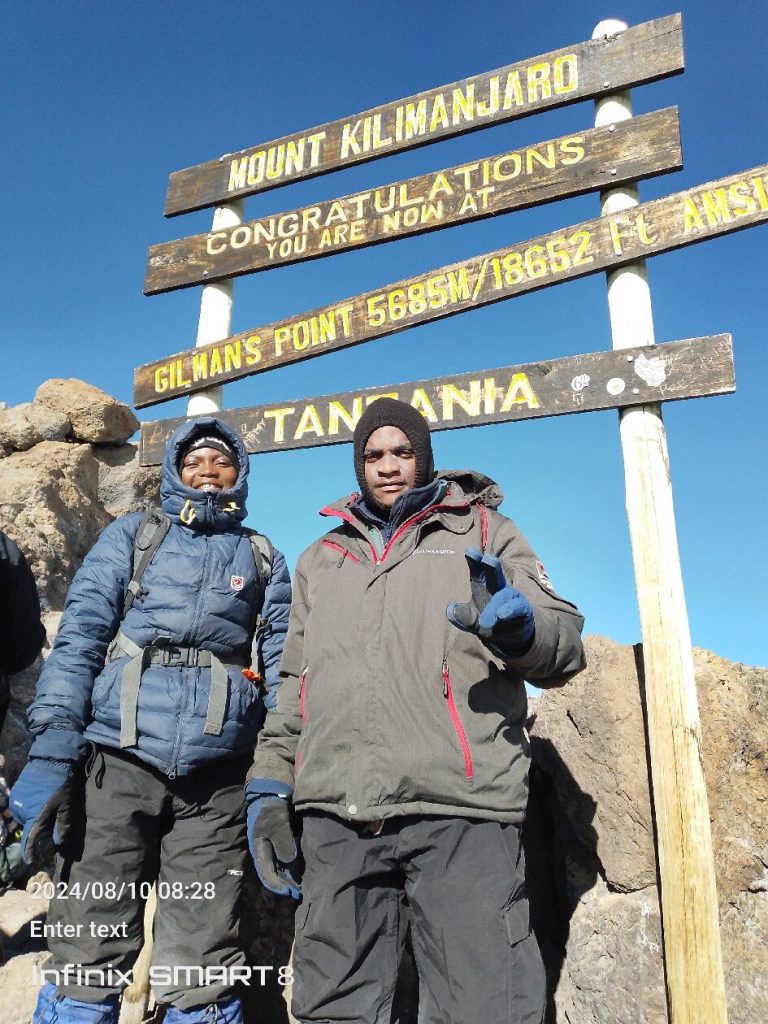
Machame, Lemosho, Shira and Umbwe trekkers arrive from the west at Stella Point at about 5,750 metres, and the walk to Uhuru Peak takes roughly an hour on gentle ground. Marangu, Rongai and Northern Circuit trekkers arrive from the east at Gilman’s Point at about 5,685 metres, and that walk takes one and a half to two hours.
Plenty of climbers stop at Gilman’s. It earns a certificate and it is a genuine achievement, and it is also the point where an exhausted trekker at 5,685 metres does the mental arithmetic on another two hours and decides against it. Part of Marangu’s weak record sits in that decision rather than in the trail below it.
Why Operator Summit Figures Are Unreliable
Almost every Kilimanjaro company publishes a percentage, and they are worth treating with mild scepticism for reasons that have nothing to do with dishonesty.
An operator selling only eight and nine day western treks will naturally report high figures, because those are the itineraries that work. One that also runs five day Marangu departures for school groups and budget travellers will report lower ones for the same quality of service. Comparing the two headline numbers tells you about their product mix rather than their competence.
Sample sizes are often small, definitions vary on whether Gilman’s Point or Stella Point counts, and there is no independent auditor. The one official park figure most people cite, around 45 percent overall, dates back to 2006 and is long out of date; modern estimates put the mountain wide figure at 65 to 80 percent as short itineraries have fallen out of favour.
A company with a genuine commitment to safety will turn a sick climber around rather than protect a percentage. Which means the most honest operators sometimes publish slightly lower numbers than the least honest ones.
What to Ask an Operator Instead of Their Summit Rate
More useful than a percentage is what an operator actually does on the mountain. A handful of questions separates the serious from the rest.
How often do guides run health checks, and do they use a pulse oximeter alongside the Lake Louise scoring system? Twice daily is the standard worth expecting. Do guides carry bottled oxygen and are they trained in wilderness first response? What happens if one climber in a group of four needs to descend, and is there an assistant guide free to take them down without ending everyone else’s trek?
What is the turnaround policy, and who makes the call? An operator that talks plainly about sending a climber down at their own commercial cost is telling you something a homepage figure cannot. Are they a KPAP partner, meaning porter loads, wages and welfare are independently monitored? Underpaid, underfed crews are a safety issue as much as an ethical one.
Personal Factors That Shift Your Own Trekking Odds
Route and operator set the baseline. The rest is you.
Pace is the most powerful lever and the hardest to accept. Walking slower than feels natural, every day, from the first hour, does more for your chances than months of training. Hydration comes next: three to four litres a day, which is more than most people manage without deliberate effort. Then food, particularly carbohydrates, eaten even when appetite has disappeared, which it usually does above 4,000 metres.
Telling your guide about symptoms early rather than pushing through matters enormously. A headache mentioned on day three can be managed; the same headache concealed until day five may end the trek. Skip alcohol and sleeping pills, keep warm and dry, and take the acclimatisation walks your guide offers rather than resting in the tent.
Prior time at altitude helps more than gym fitness, though that is no argument against a consistent walking plan, which buys endurance for summit night and protects your knees on the descent. Some climbers spend three or four days on Mount Meru at 4,562 metres nearby beforehand, which is the most useful pre acclimatisation available in the region.
How Season Affects Kilimanjaro Summit Rates
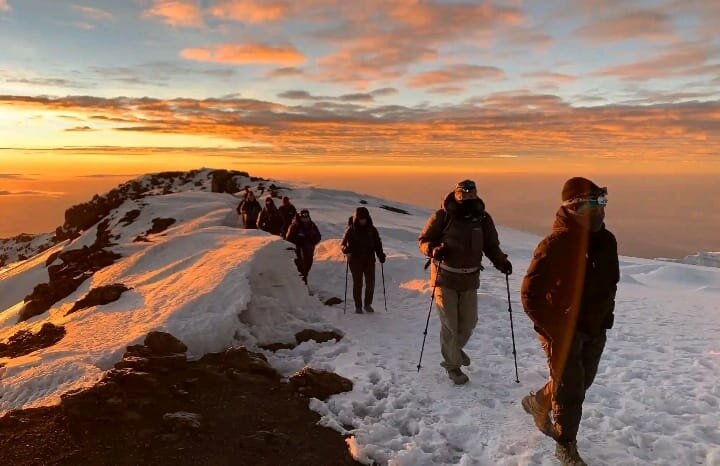
Weather has less influence than people assume, though it is not nothing. The dry windows of January to early March and late June to October give clearer skies, firmer trails and better visibility, and outcomes are marginally better in them.
April and May, the long rains, see figures drop. Wet slippery trails slow progress, poor visibility flattens morale, cold wet clothing makes rest harder, and injury risk rises on muddy descents. The rain mostly affects the lower slopes rather than the summit push itself, so the effect is smaller than the difference between a six and eight day itinerary.
November brings shorter rains. Trekking in either wet period is entirely possible, and the northern routes on the drier side of the mountain are the sensible choice if your dates fall there. A seven day Rongai trek is the usual recommendation, since the Mawenzi Tarn rest day keeps its figures close to Machame’s.
Frequently Asked Questions About Kilimanjaro Summit Rates
Which route has the highest success rate on Kilimanjaro?
The nine day Northern Circuit, generally reported at 90 to 95 percent, followed by the eight day Lemosho at around 90 percent and the seven day Machame and Lemosho at roughly 85 percent. All three benefit from length and from profiles that let you climb high and sleep lower.
What is the overall success rate on Kilimanjaro?
Modern estimates put it somewhere between 65 and 80 percent across all routes and durations. The frequently quoted official figure of around 45 percent dates from 2006 and no longer reflects the mountain, since far fewer climbers now book five day itineraries. Roughly one climber in three still turns back somewhere short of Uhuru Peak.
Does paying more improve my chances?
Indirectly, yes, and mostly because more money usually buys more days. A longer itinerary costs more because conservation fees run about $70 per person per day and camping about $50 per person per night before the 18 percent VAT most tariffs exclude, plus another day of crew wages and food. Beyond that, the step from a budget operator around $1,500 to a mid range one at $2,500 to $3,500 buys fair crew wages, better food, working equipment and proper health monitoring, all of which matter. Spending beyond mid range buys comfort rather than better odds.
Does fitness determine whether I summit?
Less than people expect. Altitude sickness is the leading cause of failure and it does not track fitness, age or sex. Marathon runners get turned around and casual walkers reach the top. Fitness helps with endurance on summit night and with recovering between days, but very fit climbers sometimes fare worse because they walk too fast. Being able to hike five to eight hours on rough ground for consecutive days is the useful bar.
Does reaching Gilman’s Point or Stella Point count as summiting?
Both earn a park certificate and both are on the crater rim, but neither is the summit. Uhuru Peak at 5,895 metres is the high point, one to two hours further along the rim depending on which side you arrived from. Operators differ on whether they count rim arrivals in their published figures, which is one reason those figures are hard to compare.
How much should I budget for tips regardless of route?
Roughly $250 to $350 per climber on a six or seven day trek and $350 to $450 on an eight or nine day one. Pooled across the group rather than paid per climber, the commonly used daily figures follow KPAP guidance: $20 to $25 for the lead guide, $10 to $15 for assistant guides and the cook, and $5 to $10 for each porter. Tips should reflect the service rather than whether you reached the top. Bring clean US dollar notes from home.
Booking Your Kilimanjaro Trip
The safari companies and tour operators listed on this website put trips like this together for a living and know which camps, guides and routes actually deliver. We are an independent guide to Kilimanjaro; we do not book or sell tours ourselves.
When you are ready, arrange your safari, tour or holiday with one of the recognised operators listed here. Tell them your dates and what matters most, and a real person, not a form, will handle the itinerary, park bookings and logistics for you.