Mount Kilimanjaro Routes
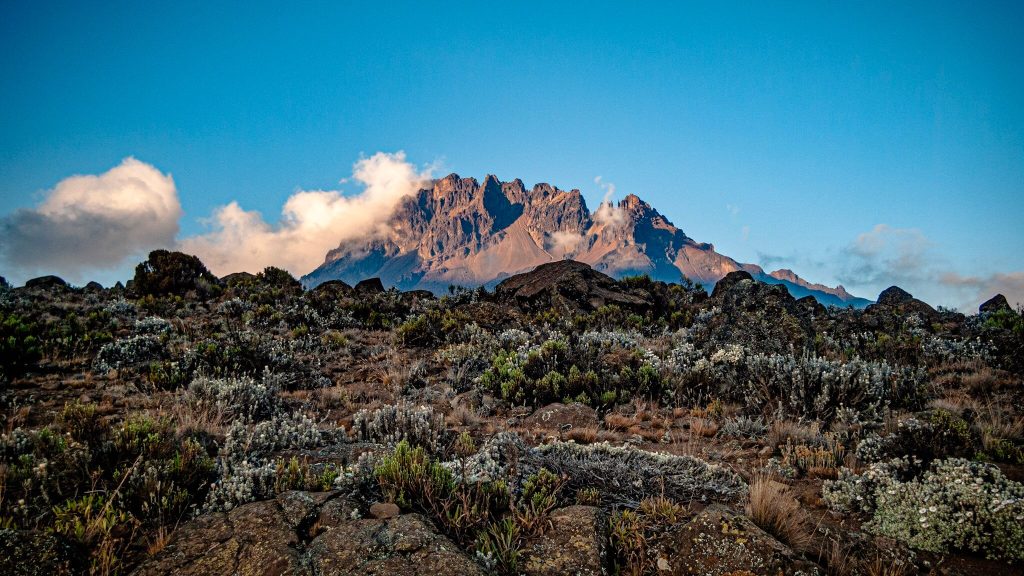
Seven trekking Mount Kilimanjaro routes lead to Uhuru Peak: Machame, Lemosho, Marangu, Rongai, Northern Circuit, Shira and Umbwe, ranging from five to nine days on the mountain. Climbers book one route as a guided package, and the choice sets their scenery, crowd levels and summit odds. Kilimanjaro is a dormant volcano in northern Tanzania whose 5,895 metre high point sits on the rim of the Kibo crater.
Machame Route Trekking on the Southern Flank
Machame route trekking takes about 62 kilometres gate to gate over six or seven days, starting at Machame Gate on the south western side and finishing down the Mweka trail. Nearly half of everyone on Kilimanjaro in a given year is walking this trail, which tells you both that it works and that you will have company.
Day one climbs through dripping forest. Day two breaks out onto moorland and up to Shira. From there the trail swings east under Lava Tower at around 4,600 metres before dropping back down to Barranco Camp, a pattern of gaining height then sleeping lower that does real work on your acclimatisation. Morning four brings the Barranco Wall, a 257 metre rock face that looks worse from the campsite than it feels with your hands on it.
The seven day version adds a night at Karanga Camp. It is a short walking day and it is also the difference between a trek that usually works and one that often does not. If Machame is your pick, take the extra night. Lemosho shares this trail from Lava Tower onwards, so the two differ mainly in how they begin.
Lemosho Route Trekking from Londorossi Gate
Lemosho starts on the western side at Londorossi Gate, around two to three hours from Moshi, and covers roughly 70 kilometres on the eight day itinerary. The first two days are the quietest walking on the mountain, through undisturbed forest where elephant sign turns up occasionally and colobus monkeys are often seen in the canopy.
From there the trail crosses the Shira Plateau, one of the highest plateaus anywhere, with Kibo standing across the open ground ahead of you. The eight day version detours to Moir Hut at the foot of the Lent Hills for an acclimatisation walk before merging with the Machame trail near Lava Tower. Everything after that point is shared: Barranco, Karanga, Barafu, then the summit. Moir Hut is also the fork where the Northern Circuit turns north instead.
Six and seven day versions exist. The six day option drives you up to about 3,400 metres on the plateau and skips the forest entirely, which loses both the best scenery and the gentle start. Most operators who care about their record push clients towards eight days here.
Marangu Route Trekking and the Mountain Huts
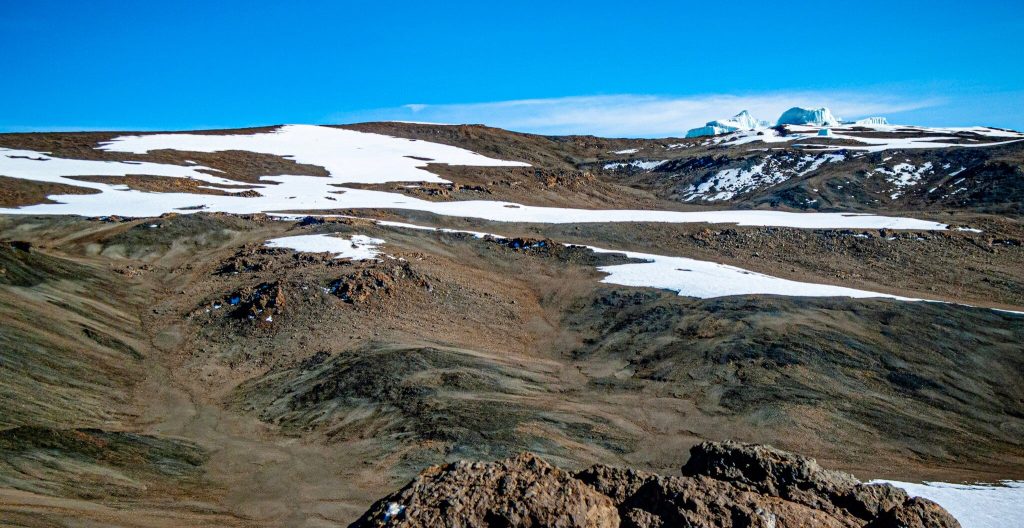
Marangu is the oldest trail on Kilimanjaro and the only one where you sleep in permanent buildings rather than tents. It starts at Marangu Gate on the south east, runs about 64 kilometres return over five or six days, and is the only route that comes back down the way it went up.
The huts are dormitory style with bunks, mattresses and pillows supplied. Mandara and Kibo hold 60 beds each, Horombo 120. The two lower huts have running water and flush toilets; Kibo, up at around 4,700 metres, has long drops and buckets. You still need your own sleeping bag.
Its nickname, the Coca Cola route, has done it a disservice by suggesting it is easy. The gradient is gentle and the path is wide, but Marangu climbs to exactly the same altitude as everything else while giving you the fewest nights to get ready for it. On the five day version, most climbers do not reach Uhuru Peak. The six day option, with an extra day around Horombo and Zebra Rocks, roughly doubles the odds. Held up against Machame, the gap between the two oldest trails is almost entirely about nights rather than gradient.
Rongai Route Trekking on the Northern Slopes
Rongai is the only trail that starts on the northern side, close to the Kenyan border, and it is the driest ground on the mountain. Six or seven days, camping throughout, and genuinely quiet: something like one climber in twenty picks it.
The walking is gentle by Kilimanjaro standards, past Simba Camp, Kikelewa and up under the jagged spires of Mawenzi before crossing the saddle to School Hut or Kibo Hut for the summit push. Wilderness feel is the draw, along with reliable weather when southern trails are being rained on in the shoulder weeks.
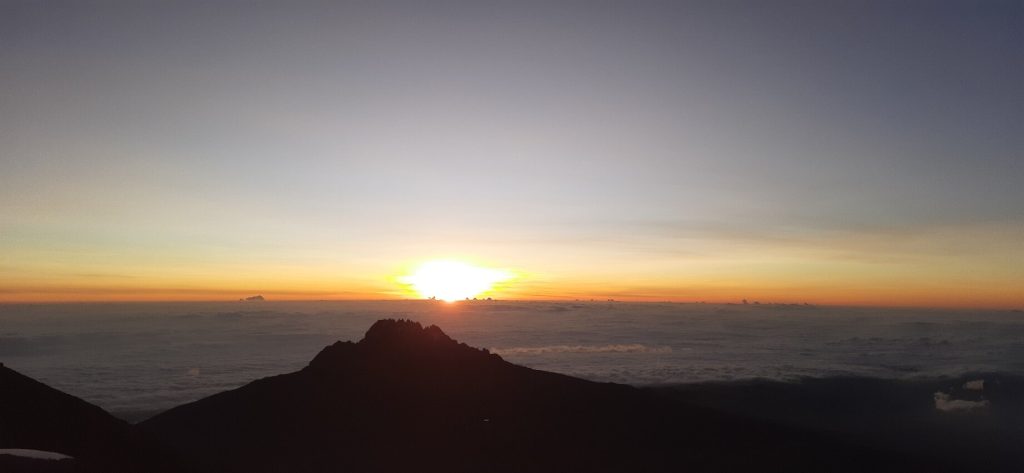
The catch is the altitude profile. Rongai climbs steadily without much opportunity to go high and then drop to sleep, which is the mechanism that makes Machame and Lemosho work. That makes the seventh day more valuable here than almost anywhere, and it makes the six day version a tougher week than the map suggests.
Northern Circuit Trekking Around the Mountain
The newest and longest trek on Kilimanjaro, at eight or nine days. It starts on the west like Lemosho, crosses the Shira Plateau to Moir Hut, then instead of turning south towards Barranco it swings north and works right around the quiet northern slopes through the Third Cave area before summiting from School Hut.
Nine days above the forest gives your body more time than any other itinerary, and this trail consistently records the highest share of climbers reaching Uhuru Peak, generally quoted between 90 and 95 percent with a strong operator. You also get the emptiest campsites on the mountain and a full circuit of views rather than one flank of it.
The price of that is time and money. Nine days of park charges, crew wages and food make it the most expensive route on the mountain, and it needs a fortnight of leave. For anyone who has one shot at this and wants the best possible odds, it is the honest answer.
Umbwe Route Climbing: The Steep Southern Ridge
Umbwe goes almost straight up a narrow ridge from the south and reaches the Barranco Valley in two hard days. It is the steepest, most direct and least walked line on Kilimanjaro, and it is the only one experienced operators actively discourage.
The scenery is raw and you will barely see another group before you join the southern trail. But the height gain is fast, there is nothing built into the profile to help you adjust, and summit night arrives with your body still catching up. Strong hikers with prior high altitude experience use it, sometimes combined with the Western Breach, which is a genuinely technical variant and outside ordinary trekking.
Shira Route Trekking Across the Western Plateau
Shira is Lemosho’s older sibling and shares most of its path. The difference is at the start: a vehicle takes you up to around 3,500 metres at the Morum Barrier, so you step out onto the open plateau on day one and skip the rainforest completely.
Big skies, quiet camps and immediate views of Kibo are the reward. The problem is that beginning your trek at that altitude front loads the hardest part of adjustment into the first night, which is the opposite of what you want. It suits people who have been high recently and know how they respond, and it is why most operators offer Lemosho instead.
Comparing Kilimanjaro Routes for Summit Odds and Crowds
Highest chance of topping out. Northern Circuit over nine days, then Lemosho over eight. Both spend the most nights above 3,000 metres.
Best scenery for the money. Lemosho and Machame. They share the southern traverse under the ice fields, which is the most dramatic walking on the mountain.
Quietest trails. Northern Circuit and Rongai. Umbwe and Shira are emptier still, but for reasons that are not in your favour.
Beds instead of tents. Marangu only, and best booked as six days rather than five.
Hardest going. Umbwe by a distance, followed by any five or six day itinerary regardless of which trail it uses.
Wet season resilience. Rongai and the Northern Circuit sit on the drier northern side and hold up better in April, May and November.
Route names get all the attention, but the number that actually predicts whether you stand on Uhuru Peak is the count of nights on your itinerary. Five day treks put roughly a quarter of climbers on the summit. Eight and nine day treks put nine in ten there.
Summit Approaches and the Mweka Descent Trail
All seven routes converge on one of three ways onto the crater rim. Machame, Lemosho, Shira and Umbwe come up the western side of Kibo to Stella Point, from where it is about an hour along the rim to the summit. Marangu, Rongai and the Northern Circuit arrive from the east at Gilman’s Point, which leaves closer to two hours of rim walking and makes for a harder finish.

The third way, the Western Breach past the Arrow Glacier, is steep, exposed to rockfall and only used by mountaineering parties. It is not part of a standard trekking package.
Coming down, every route except Marangu and the huts system uses Mweka, dropping through Millennium or Mweka Camp and out through Mweka Gate. It is a long knee punishing descent through the forest, and it is where your trekking poles finally justify their weight.
Getting to the Kilimanjaro Route Trailheads
Kilimanjaro International Airport sits between Moshi and Arusha, roughly an hour from Moshi by road. Almost every operator collects you there. Moshi is the practical base for the southern and eastern gates, Machame and Marangu in particular; Arusha adds driving time but suits anyone pairing the trek with a northern circuit safari.
Gate transfers vary more than people expect. Machame and Marangu gates are within an hour or so of Moshi. Londorossi, for Lemosho and the Northern Circuit, is two to three hours away plus a rough forest track to the trailhead, which in wet weather sometimes means walking further than planned. Rongai involves a long drive around the mountain towards the Kenyan border. None of it is difficult, but it does mean your first day includes several hours in a vehicle before you start walking.
Frequently Asked Questions About Kilimanjaro Routes
Which Kilimanjaro route is cheapest?
Marangu, because it is the shortest and because hut sleeping needs less camping equipment and fewer porters. Budget five and six day Marangu packages start from around $1,200 to $1,800 per person. That saving buys you the lowest chance of reaching the summit on the mountain, so it is worth pricing a six or seven day Machame at around $2,000 to $2,600 before deciding. Anything below roughly $1,200 is almost certainly being funded by underpaying the crew.
How do park fees differ between routes?
The charges are the same per day, so route cost tracks route length. Conservation fees run about $70 per person per day before the 18 percent VAT that most published tariffs leave out. Camping is around $50 per person per night on every trail except Marangu, where hut fees of roughly $60 a night apply. Add a one off rescue fee near $20, plus small per head charges for each guide and porter. An eight day Lemosho therefore carries a few hundred dollars more in fixed fees than a six day Machame.
Which route has the best summit rate?
The nine day Northern Circuit, generally reported at 90 to 95 percent, followed by the eight day Lemosho at around 90 percent and the seven day Machame at roughly 85 percent. The five day Marangu sits near 27 to 30 percent. Treat any single operator’s figures with mild scepticism, since a company that only sells long routes will naturally publish flattering numbers.
Can I choose a route with hut accommodation?
Only Marangu. Every other trail on Kilimanjaro is a camping trek, with tents, mattresses and a mess tent carried and pitched by your crew. Hut space on Marangu is booked and paid for in advance, so it needs more notice in peak weeks than a camping route does.
Which route is best for a first time trekker?
Lemosho over eight days for most people, or the Northern Circuit if you have the extra days and budget. Both build in gradual height gain and both cross the Shira Plateau, which is the finest walking on the mountain. Machame over seven days is the strong value alternative and the one you will find on almost every operator’s calendar.
Is one route more scenic than the others?
Lemosho and Machame are usually named first, because between them they take in the forest, the plateau, the Lava Tower country and the traverse beneath the southern ice fields. The Northern Circuit trades a little of that drama for solitude and a full lap of the mountain. Views on any route depend on cloud, and the lower forest days are often walked in mist whatever month you pick.
Booking Your Kilimanjaro Trip
The safari companies and tour operators listed on this website put trips like this together for a living and know which camps, guides and routes actually deliver. We are an independent guide to Kilimanjaro; we do not book or sell tours ourselves.
When you are ready, arrange your safari, tour or holiday with one of the recognised operators listed here. Tell them your dates and what matters most, and a real person, not a form, will handle the itinerary, park bookings and logistics for you.