Best Time to Climb Kilimanjaro
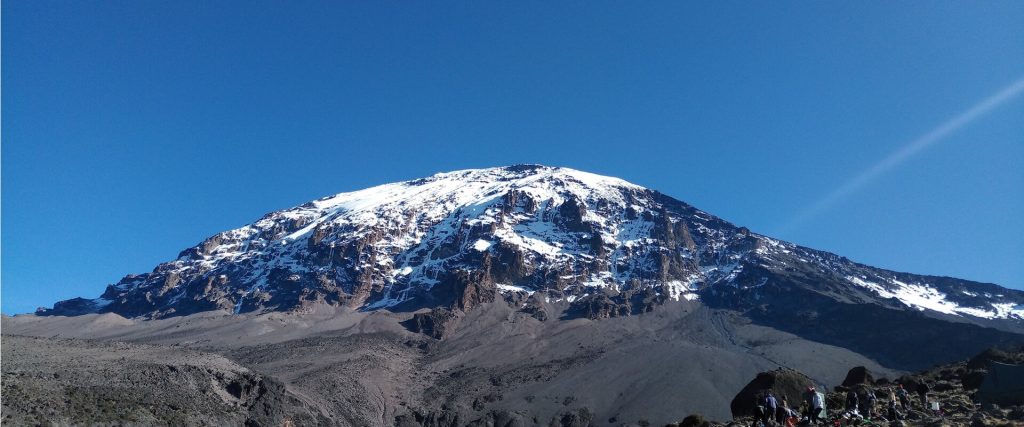
The best time to climb Kilimanjaro is during the two dry seasons: January to early March, and late June to October. The strongest months are January, February, July, August, September and October, with clear skies and firm trails. April, May and November bring rain and lower prices. Kilimanjaro sits close to the equator in northern Tanzania, so it has wet and dry seasons rather than summer and winter.
Best Months for a Kilimanjaro Climbing Trek
Because the mountain lies roughly 330 kilometres south of the equator, a Kilimanjaro trek is not governed by seasons in the temperate sense. Temperature at any given camp barely shifts across the year. What shifts is rainfall.
Two dry windows carry the great majority of climbs. The shorter one runs from late December through to the middle of March. The longer one runs from late June into October. Between and around them sit two rainy periods, the long rains of April and May and the shorter rains of November into early December.
Trekking is possible in every month of the year, and the park never closes. What changes is how muddy the forest is, how often you see the summit, and how many other people are on the trail. No month turns this into a technical climb, which is why trekkers with no mountaineering background walk up in every one of them.
Weather matters less to your chances than the length of your itinerary. An eight day trek in a wet month outperforms a five day trek in perfect conditions by a wide margin. Pick the number of days first, then optimise the month.
January to March Trekking on Kilimanjaro
The short dry season, and for many guides the quietest good weather of the year. January and February offer the clearest conditions on the mountain, with warm days, bright mornings and evenings, and a reasonable chance of an afternoon shower that passes.
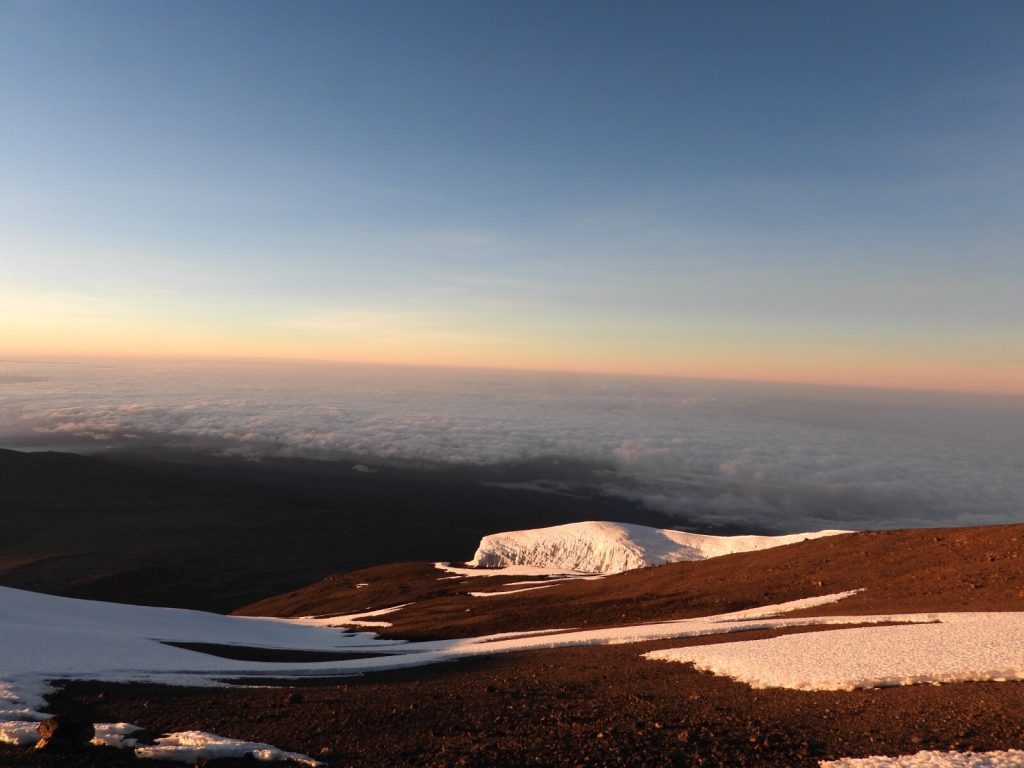
Daytime temperatures at the lower camps are pleasant and the summit is marginally less brutal than in the long dry season, which is worth knowing if you feel the cold. December sees the most snowfall on the crater rim, and that snow often persists into January and February, so a trek in this window has a good chance of a genuinely white summit.
Crowds are moderate. Christmas and New Year are busy, then things settle. February in particular is repeatedly named by operators as one of the two or three best months on the mountain.
March is a transition. The first half is usually reliable; the second half often turns as the long rains arrive, and conditions become difficult to predict. Early March is one of the best value weeks of the year.
The Long Rains: Trekking Kilimanjaro in April and May
These are the wettest months and the ones most operators steer people away from. Days in the rainforest can be hot and humid, trails turn to mud, and you should expect rain on most days rather than the occasional shower.
The practical problems are slippery footing, which raises the risk of a fall on the descent, and poor visibility, which means you may walk for days without seeing the mountain you came to climb. Wet clothing also makes rest harder at camp, and being cold and damp for a week wears people down in a way that shows on summit night.
There are real compensations. The mountain is close to empty, prices soften considerably, and the rain mostly affects the lower slopes rather than the summit push itself. If your dates are fixed in this window, choose a northern route: Rongai and the Northern Circuit sit in the mountain’s rain shadow and stay far drier than Machame or Umbwe. Marangu’s huts are also worth considering, since not pulling on wet boots outside a tent counts for something.
June Trekking as the Dry Season Returns
June is the other transition month, and it usually resolves in your favour. The rains taper off through the first half and conditions firm up towards the end, though the changeover date moves year to year and the rains occasionally spill into early June.
Expect drier trails than May, good views, fine sunrises and sunsets from the plateau camps, and noticeably fewer people than July brings. The trade off is cold. June and July tend to produce the harshest conditions at the summit itself, and it can be at or below freezing from your second night on the mountain depending on the route.
For anyone who wants dry season reliability without peak season company, late June is a strong week to target.
July and August Trekking in Peak Season
The long dry season at its most settled, and the busiest weeks of the year. The probability of rain is minimal, skies are mostly clear and visibility is excellent, which makes this the best photography window on the mountain.
It is also colder and drier than January and February, and the summit is at its least forgiving. Bring the warmest layers you own.
Company is the real consideration. This period lines up with school and university holidays across Europe and North America, so the popular trails fill. On Machame, camps hold several hundred trekkers, queues form at the base of the Barranco Wall in the morning, and Barafu is noisy through the night as groups depart at staggered times.
Two ways around that without giving up the weather. Book Lemosho for two quiet days at the start, or book the Northern Circuit or Rongai and barely notice the crowds at all. Both northern options are close to empty even in August.
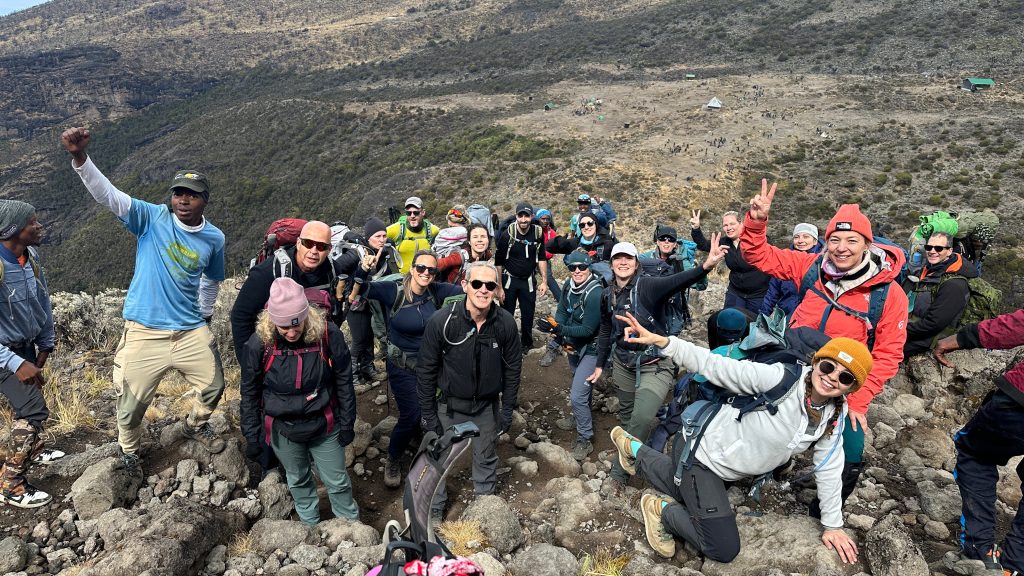
July and August give you the most reliable weather Kilimanjaro offers and the least solitude. September delivers almost the same conditions with a fraction of the traffic, which is why guides quietly recommend it more often than clients ask for it.
September and October Trekking on Kilimanjaro
September is arguably the best month of the year to climb Kilimanjaro. Conditions remain settled, it is slightly warmer than August, and the crowds thin noticeably as the northern hemisphere holidays end.
October continues the dry season with numbers falling further, and it is the quietest of the reliable months. Rain becomes more likely towards the end as the short rains approach, so an early October departure is safer than a late one.
Both months suit anyone who wants dry season trails without peak season camps, and both are excellent for pairing the trek with a northern circuit safari afterwards while the wildlife viewing is still strong.
November and Early December Short Rains Trekking
November brings the shorter rainy period, and it behaves less predictably than April and May. You may get rain for a short spell each day rather than a genuine soaking, or you may get a run of clear days. It varies year to year in a way the long rains do not.
Views are less reliable and there tends to be more fresh snow higher up, which some trekkers consider a bonus. Prices are lower and trails are quiet.
Late November into early December is a window worth watching. As the short rains ease, conditions often turn good before the Christmas rush starts, and more climbers now book the first weeks of December than used to. Snow on the summit is likely, and if a snowy crater rim appeals, this is the period that most often delivers it.
Best Time for Each Kilimanjaro Trekking Route
Machame and Umbwe. Southern trails on the wettest flank. Stick to the dry windows, since the forest sections become properly heavy in April, May and November.
Lemosho and Shira. Western routes with a shared weak point: the Londorossi forest track can defeat vehicles in the rains and turn a drive into a longer walk in.
Rongai. The driest trail on the mountain, in the northern rain shadow. Viable year round and the standard recommendation for anyone whose dates fall in a wet stretch.
Northern Circuit. Also northern and also drier, with the quietest camps in every month including August.
Marangu. The hut accommodation is a genuine advantage in wet weeks, since kit and boots stay dry overnight.
Any route in peak season. If you must climb in July or August and dislike crowds, go north or west rather than south.
Full Moon and Summit Night Timing on a Kilimanjaro Trek
Some operators sell full moon departures, timing summit night so the trail is lit. On a clear night that is genuinely pleasant and it reduces reliance on a headlamp.
One detail rarely mentioned. Because the summit trail climbs the eastern side of the Kibo massif, the mountain itself blocks the setting moon in the small hours, so from roughly three in the morning you can be in complete darkness even on a full moon night. Bring the headlamp regardless.
Full moon dates also draw more climbers, which on a busy southern route means a more crowded summit night. The alternative worth asking about is a daytime summit variant, offered by a handful of operators on longer itineraries, which reaches the crater rim in daylight rather than before dawn. Some climbers find that considerably easier mentally, at the cost of missing sunrise from the top.
Temperature and Climate Zones on a Kilimanjaro Climb
You pass through five bands in a week and the difference between them dwarfs the difference between months.
The cultivated lower slopes and rainforest run warm, roughly 21 to 27 degrees Celsius by day. Moorland is cooler and windier. Alpine desert around the high camps swings hard, feeling warm in direct sun and dropping ten to fifteen degrees within an hour once the sun goes behind the mountain, with water freezing in bottles overnight.
The summit zone stays below freezing all year. Night temperatures at Uhuru Peak generally sit between about minus seven and minus twenty degrees Celsius, colder with wind chill, and figures as low as minus twenty seven have been recorded before dawn. That does not change meaningfully by season, which is why the layering advice is the same in February as in August, and why the same kit list applies whichever month you book.
Getting to Kilimanjaro and Booking for the Right Season
Fly into Kilimanjaro International Airport, between Moshi and Arusha and around an hour from Moshi by road. Moshi is the standard base for every route, in every season, and the arrival routine described in the wider Kilimanjaro climbing guide does not change with the month.
Lead times track the seasons. July, August and the Christmas period want six to twelve months of notice, especially on Marangu where hut space is capped and paid for in advance. January, February and September want a few months. April, May and November can often be arranged with a few weeks’ notice, which is part of their appeal. Deposit terms, visa timing and insurance limits come up in almost every enquiry and are answered on the Kilimanjaro questions page.
Book the trek before the flights, and arrive at least a day before your briefing whatever the month, so that a delayed bag becomes an inconvenience rather than a crisis.
Frequently Asked Questions About the Best Time to Climb Kilimanjaro
Which single month is best for climbing Kilimanjaro?
September, on balance. Conditions are nearly as settled as August, it is slightly warmer, and the crowds have thinned. February is the strongest alternative, with the clearest skies of the year and a good chance of snow on the crater rim. Both are excellent; September edges it on the balance of weather and quiet.
Is it cheaper to climb in the rainy season?
Yes, noticeably. Peak season packages in July, August and at Christmas sit at full rates, while April, May and November typically come in several hundred dollars lower for the same route and operator. A seven day Machame that runs $2,400 in August might be quoted nearer $2,000 in May. International flights also drop, often by $300 to $500. Park fees stay the same year round at roughly $70 per person per day plus $50 per night camping, before the 18 percent VAT.
Can you climb Kilimanjaro in April and May?
Yes, and some people deliberately do for the solitude and the price. Expect rain most days, muddy trails, a higher risk of slipping on the descent and limited views. Choose a northern route such as Rongai or the Northern Circuit, both of which sit in the rain shadow, and bring genuinely waterproof outer layers rather than showerproof ones.
Does the season affect my chance of reaching the summit?
Modestly. Dry season treks report slightly better outcomes because firm trails, clear visibility and dry kit all help, and wet season figures dip. The effect is far smaller than itinerary length: a five day trek in perfect August weather still reports around 27 to 30 percent, while an eight day trek in May reports far better than that.
When is the summit coldest?
June through August tend to produce the harshest summit conditions, with January and February also very cold but marginally less severe. Night temperatures at Uhuru Peak range from roughly minus seven to minus twenty degrees Celsius year round, colder with wind chill. Pack for those figures whichever month you choose, since the seasonal variation at the top is small.
How far in advance should I book for peak season?
Six to twelve months for July, August and the Christmas and New Year period. Marangu needs the most notice because hut space is limited and prepaid. Deposits are commonly $100 to $300 per person and usually non refundable, so confirm the cancellation terms before paying. Shoulder and wet season departures can often be arranged much closer to the date.
Booking Your Kilimanjaro Trip
The safari companies and tour operators listed on this website put trips like this together for a living and know which camps, guides and routes actually deliver. We are an independent guide to Kilimanjaro; we do not book or sell tours ourselves.
When you are ready, arrange your safari, tour or holiday with one of the recognised operators listed here. Tell them your dates and what matters most, and a real person, not a form, will handle the itinerary, park bookings and logistics for you.