Best Route to Climb Kilimanjaro
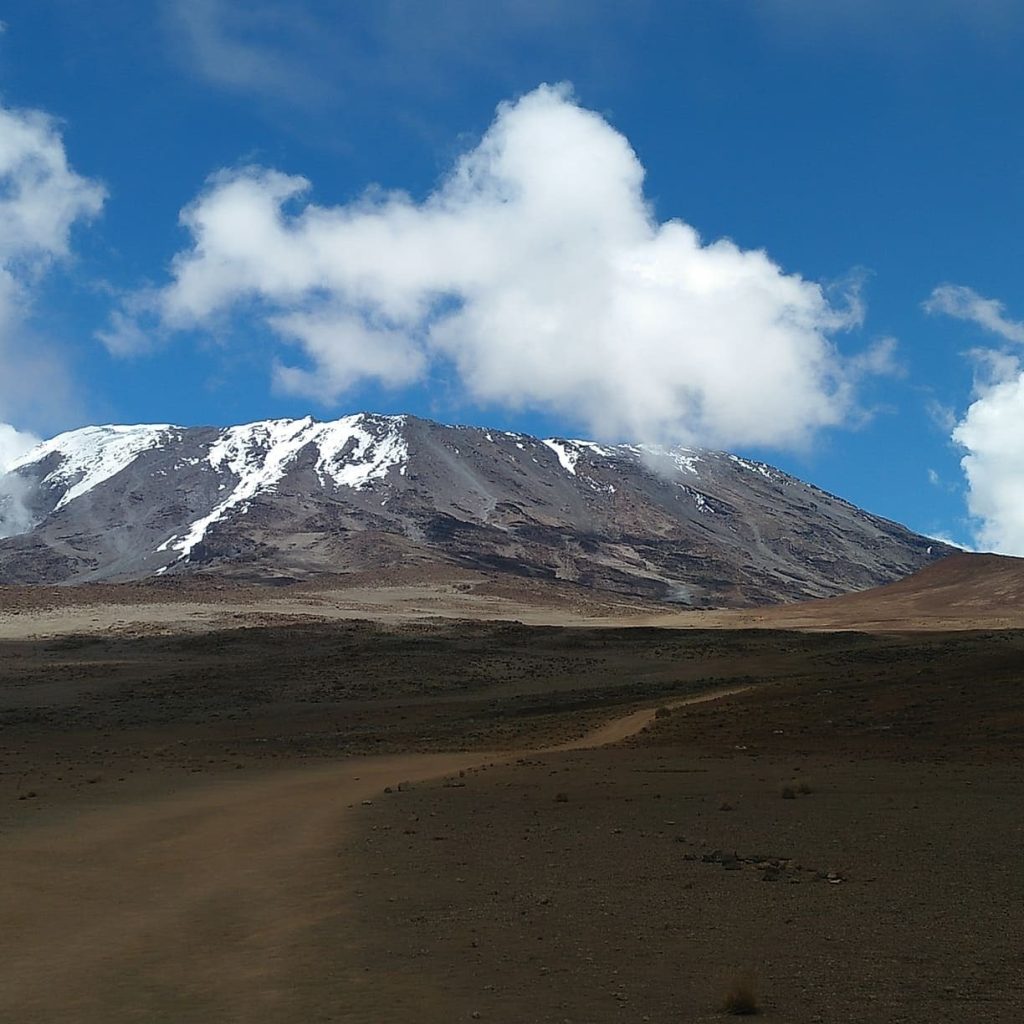
The best route to climb Kilimanjaro for most people is the eight day Lemosho, which pairs strong acclimatisation with the finest scenery on the mountain and puts around 90 percent of climbers on the summit. Trekkers wanting the highest odds book the nine day Northern Circuit; those on a tighter budget book the seven day Machame. All are guided camping treks inside Kilimanjaro National Park in northern Tanzania.
What Actually Makes One Kilimanjaro Climbing Route Better
Choosing the best route to climb Kilimanjaro comes down to four things, and only one of them gets much attention in brochures. There are seven established trails to the crater rim, and they differ far less in difficulty than in the number of nights they give your body.
The first is nights on the mountain. This is the big one, and how many days you spend walking predicts the outcome better than anything else on the booking form. Five day itineraries put roughly a quarter of climbers on the summit, six day ones around half, seven day ones about two thirds to eighty percent, and eight or nine day ones close to ninety. Same mountain, same walkers, different arithmetic.
The second is whether the trail lets you climb high and sleep low. Machame, Lemosho and the Northern Circuit all take you above 4,000 metres during the day and bring you back down for the night, sometimes repeatedly. Rongai and Marangu climb more or less straight up. The trails that go up and down feel harder and work better.
Third is the summit approach. Trekkers arriving on the crater rim from the west at Stella Point walk about an hour to Uhuru Peak. Those arriving from the east at Gilman’s Point walk one and a half to two hours. After a sleepless night at 5,700 metres that gap is worth having.
Fourth, and last, is scenery and crowds. Real considerations, and the ones people lead with, but they should not outrank the first three.
If you take one thing from this: pick your number of days first, then pick the trail. A seven day Machame beats a six day Lemosho. An eight day Lemosho beats them both. Nobody has ever regretted an extra night on Kilimanjaro at the moment they reached Stella Point.
Best Kilimanjaro Route Overall: The Eight Day Lemosho Trek
Lemosho over eight days is the route most experienced operators put in front of first time climbers, and the reasoning holds up.
It starts on foot at Londorossi Gate at 2,250 metres and climbs through quiet western forest for two days, so your body gains height gradually rather than stepping out of a vehicle at altitude. It crosses the Shira Plateau, which is the best walking surface on the mountain. It usually includes an acclimatisation night at Moir Hut at roughly 4,200 metres with a walk up the Lent Hills. Then it joins the Machame trail near Lava Tower and takes the Southern Circuit through Barranco and Karanga to Barafu, arriving at the rim from the west.
Around 70 kilometres, seven nights, and summit rates commonly reported near 90 percent. The first two days are lightly walked and the last four are shared with Machame groups, which is the trade you make for the finest section of trail on Kilimanjaro. The day by day Lemosho itinerary shows where each of those nights falls.
Best Kilimanjaro Trek for Summit Odds: The Nine Day Northern Circuit
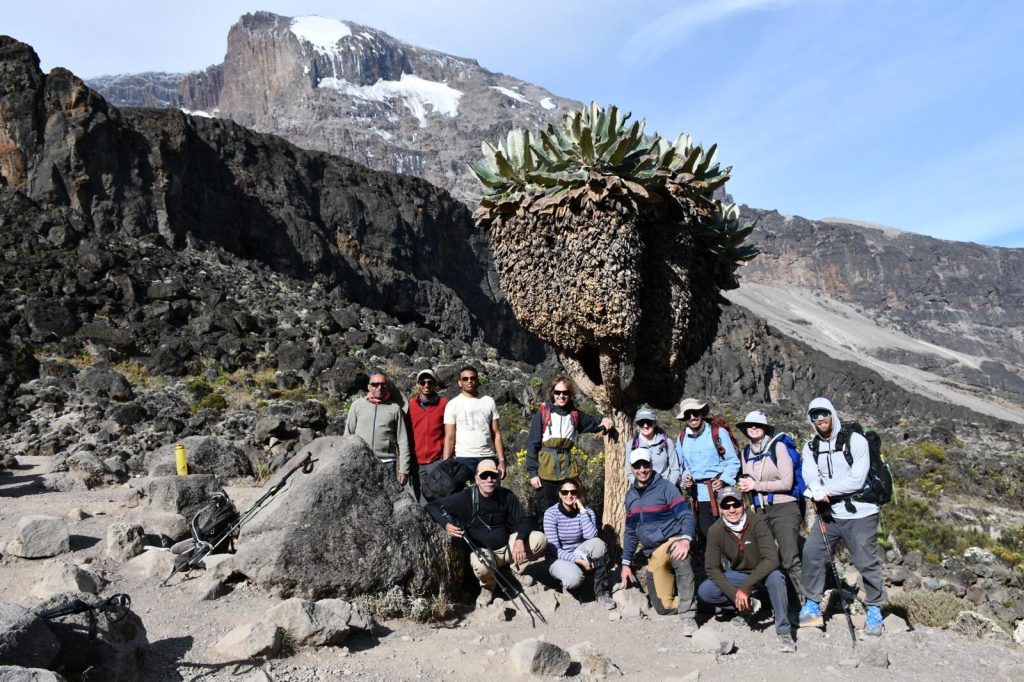
If reaching Uhuru Peak is the only thing that matters, the Northern Circuit is the answer and there is not much debate about it.
Nine days, roughly 90 kilometres, a near complete loop of the mountain, and reported summit rates of 90 to 95 percent. It shares the Lemosho start, then turns north from Moir Hut and works around slopes that carry almost no traffic, with two consecutive days that end lower than they began. That sounds like the opposite of progress and is precisely why it works.
Two honest drawbacks. It is the most expensive route on the mountain, because park fees, wages and food are charged by the day. And the summit morning is longer, since you arrive at Gilman’s Point in the east and face up to two hours of rim walking. Set against nine nights of acclimatisation, most climbers would take that deal. Whether the extra nights justify the price is the Lemosho against Northern Circuit question, and it turns on budget rather than ability.
Best Value Kilimanjaro Climbing Route: The Seven Day Machame Trek
Machame over seven days is the workhorse and the best compromise between money and outcome. Most first timers end up weighing it against Lemosho, and the answer depends on what the extra night is worth to them.
Roughly 62 kilometres from Machame Gate on the southern side, with a genuinely useful profile: high at Lava Tower then down to Barranco, over the Barranco Wall, a short day to Karanga, then Barafu and a western arrival at Stella Point. Summit rates commonly quoted at around 85 percent, and it costs several hundred dollars less than an eight day Lemosho. Reading the Machame trail camp by camp shows where that profile does its work.
The cost is company. Nearly half of everyone on Kilimanjaro in a given year is on this trail, and in July and August the Barranco Wall backs up in the morning and the camps are full. If you are relaxed about that, this is the sensible booking. Take seven days rather than six; the extra night at Karanga is worth 10 to 15 percentage points on your chances. If your leave only stretches to the six day Machame trek, book it with the tighter odds in mind.
Best Kilimanjaro Trek for Solitude: Rongai or the Northern Circuit
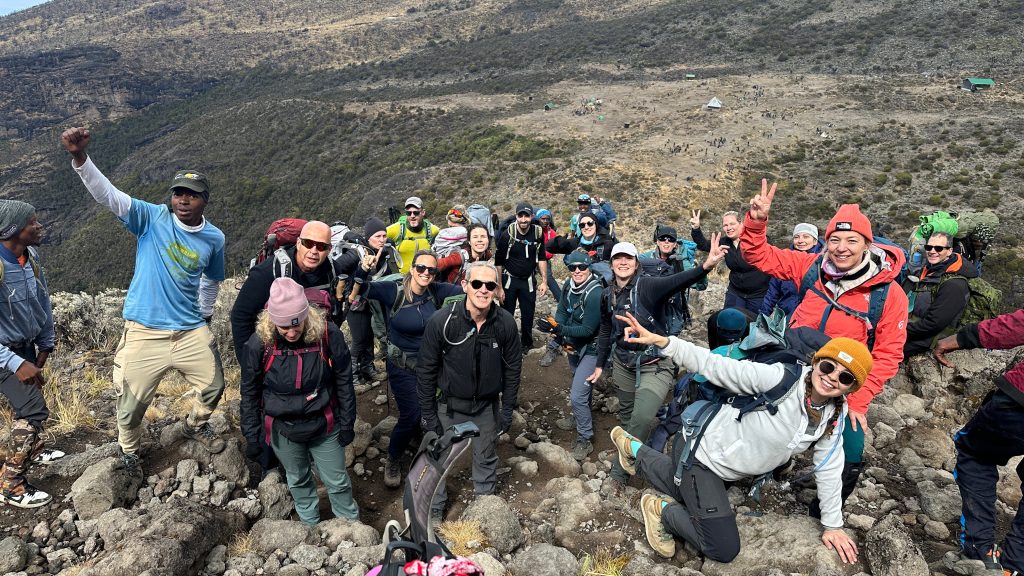
Two routes deliver genuine quiet, for different reasons.
Rongai is the only northern trail, six or seven days, and about one climber in twenty uses it. The first four days are close to empty, the ground is the driest on the mountain, and Mawenzi Tarn beneath the shattered spires of the second cone is one of the best campsites anywhere on Kilimanjaro. The catch is a weaker acclimatisation profile, which makes the seven day version with its Mawenzi rest day the only one worth booking.
The Northern Circuit is quieter still after Moir Hut, and unlike Rongai it does not trade anything away to get there. If solitude and summit odds both matter to you and budget does not, this is the route.
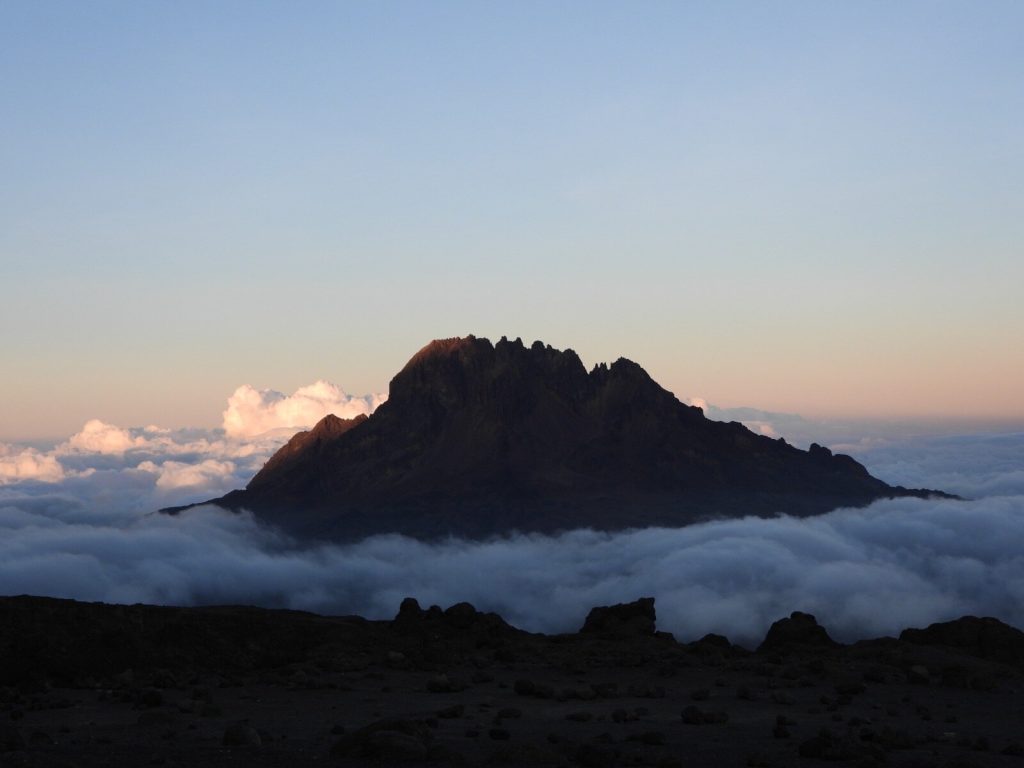
Route names get argued about endlessly. The number that predicts whether you stand on the summit is on your invoice, not your map: how many nights you paid for.
Best Kilimanjaro Route for Comfort: The Six Day Marangu Trek
Marangu is the only trail with hut accommodation, sleeping in dormitory buildings at Mandara, Horombo and Kibo with mattresses, pillows, communal dining and running water at the lower two. In wet weeks that means not pulling on damp boots outside a tent, which is a real comfort.
It is also the only route where the gradient is gentle throughout and the path is wide, and it goes up and down the same way, which suits groups who may want to split up.
Where it falls down is the schedule. Five day Marangu reports summit rates near 27 to 30 percent, the weakest on the mountain, and even the six day version with its Horombo rest day generally sits between 50 and 65 percent. It ends at the same 5,895 metres as everything else while giving your body the fewest nights to get ready. If tents are genuinely out of the question, book six or seven days here rather than five. Set huts against tents and the comfort argument looks a good deal smaller than the acclimatisation one. If they are merely unappealing, the camping routes will serve you better.
Kilimanjaro Routes Worth Avoiding for a First Climb
Umbwe. The steepest trail on the mountain, gaining roughly 2,300 metres in two days with no rest day. Excellent for experienced high altitude trekkers, poor for anyone else, and many operators will not sell it to first timers.
Shira. Drives you to around 3,500 metres for your first night, skipping the forest that Lemosho walks through. Same trail above the plateau, worse first 48 hours.
Any five day itinerary. Whichever trail it uses, five days is not enough for most bodies. The reported outcomes across the mountain make this plain.
The Western Breach. Steep, exposed to rockfall, with a history of fatalities. This is mountaineering, not trekking, and it does not belong on a first Kilimanjaro climb.
Matching a Kilimanjaro Trekking Route to Your Days and Budget
Work backwards from what you actually have. Count travel days, add a night in Moshi before your briefing and a night after the descent, and see what is left.
With around ten days available, seven day Machame or seven day Lemosho are the strong choices. With eleven or twelve, eight day Lemosho. With a full fortnight and the budget to match, the nine day Northern Circuit. With only nine days, seven day Rongai if you want quiet or six day Machame if you accept the tighter odds. With eight days or fewer, a six day Marangu or Machame is what remains, and going in with realistic expectations is the honest preparation.
Fitness barely enters this calculation, which surprises people. Altitude sickness does not track fitness, and very fit walkers often fare worse because they climb too fast. Eight to twelve weeks of hill walking in the boots and daypack you plan to use is worth more than any amount of gym time, and it will not substitute for a night on the mountain.
Best Time to Trek Any Kilimanjaro Route
Two windows carry most climbs. January to early March gives warmer days, clear mornings and a good chance of snow on the crater rim. Late June to October is the long dry season, colder high up but the most settled weather of the year, with July and August the busiest weeks and September quieter while staying dry.
April and May are the long rains, and the southern forest sections turn to mud. November into early December brings shorter rains. Neither closes the mountain and prices soften in both. If your dates fall in a wet stretch, the northern trails, Rongai and the Northern Circuit, sit in the rain shadow and hold up considerably better than Machame or Umbwe.
Getting to Kilimanjaro and Choosing an Operator
Kilimanjaro International Airport sits between Moshi and Arusha, roughly an hour from Moshi by road. Moshi is the standard base for every route. Trailhead transfers range from under an hour for Machame and Marangu to two or three hours plus a forest track for Londorossi, and around three and a half hours of rough road for Rongai.
The operator matters as much as the route, and possibly more. Ask whether they are a KPAP partner, what their guides are trained in, whether they carry bottled oxygen and a pulse oximeter, how often they run health checks, and what their policy is on turning a sick climber around. A company that talks openly about sending someone down at its own commercial cost is telling you something a summit percentage on a homepage cannot. The questions worth asking, and the answers to expect, are set out in the wider guide to climbing Kilimanjaro.
Frequently Asked Questions About Choosing a Kilimanjaro Route
Which Kilimanjaro route is cheapest?
Marangu, because it is the shortest and needs less camping equipment. Budget five and six day packages start around $1,200 to $1,800 per person. A seven day Machame typically runs $2,000 to $3,000, an eight day Lemosho $2,400 to $3,500, and a nine day Northern Circuit $2,800 to $3,800. Prices below roughly $1,200 almost always mean the crew is being underpaid.
Why do longer routes cost more?
Because park charges are levied per day. Conservation fees run about $70 per person per day and camping about $50 per person per night, before the 18 percent VAT most published tariffs exclude, plus a one off rescue fee near $20 and small entry charges for every crew member. Add another day of wages and food for a crew of ten and each extra night costs a few hundred dollars in fixed terms. The cost per day is nearly identical across routes.
Is Lemosho or Machame better?
Lemosho for most first timers, on two counts: two quieter days at the start and a longer profile with an acclimatisation option at Moir Hut. They share the entire second half of the trail, so the summit is identical. Machame is cheaper and easier to book at short notice. If money is the binding constraint, seven day Machame comfortably beats six day Lemosho.
Which route has the highest summit rate?
The nine day Northern Circuit at roughly 90 to 95 percent, then the eight day Lemosho near 90 percent and the seven day Machame around 85 percent. The five day Marangu sits near 27 to 30 percent. Treat individual operator figures with mild scepticism, since a company selling only long routes will naturally publish flattering numbers.
How much should I budget for tips whichever route I pick?
Roughly $250 to $350 per climber on a six or seven day trek, and $350 to $450 on an eight or nine day one. Pooled across the group rather than paid per climber, the commonly used daily figures are $20 to $25 for the lead guide, $10 to $15 for assistant guides and the cook, and $5 to $10 per porter. Bring clean US dollar notes from home.
Does route choice affect what I need to pack?
Barely. The same layered clothing, four season sleeping bag, broken in boots and 15 kilogram duffel limit apply everywhere. Marangu is the one exception, where huts mean you do not need a sleeping mat. Rongai and the Northern Circuit run colder and windier at the exposed northern camps, so a warmer bag pays off there.
Booking Your Kilimanjaro Trip
The safari companies and tour operators listed on this website put trips like this together for a living and know which camps, guides and routes actually deliver. We are an independent guide to Kilimanjaro; we do not book or sell tours ourselves.
When you are ready, arrange your safari, tour or holiday with one of the recognised operators listed here. Tell them your dates and what matters most, and a real person, not a form, will handle the itinerary, park bookings and logistics for you.