Machame Route vs Marangu Route
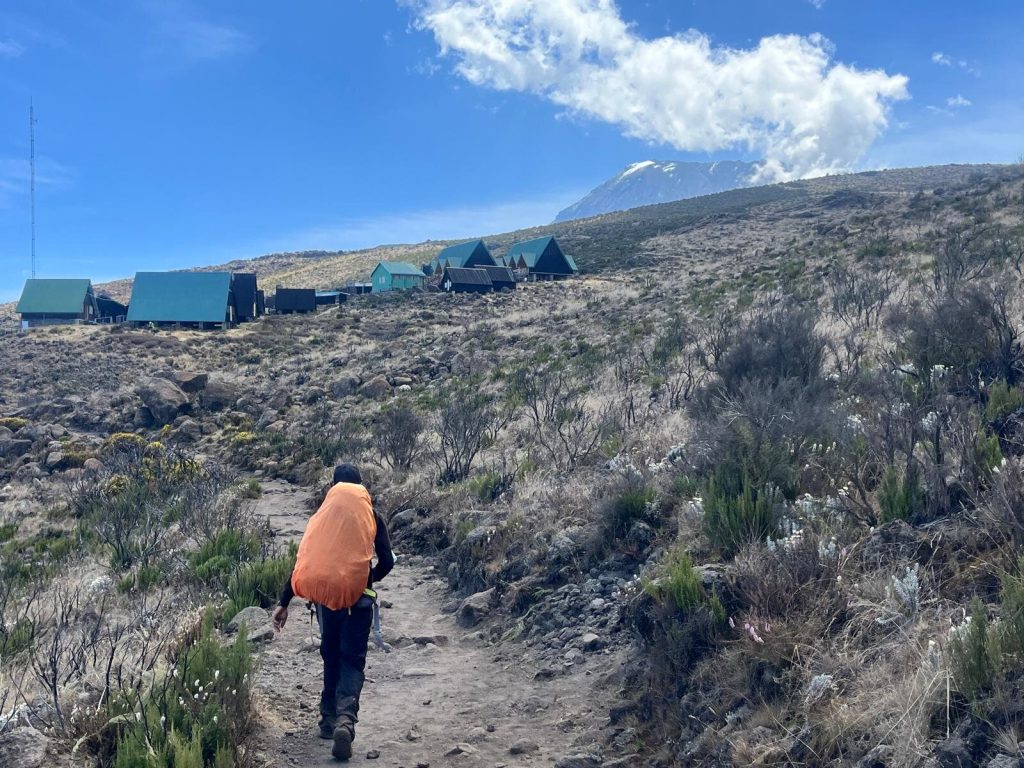
Machame and Marangu are the two oldest established trekking routes on Mount Kilimanjaro and they differ in almost every respect: Machame is a six or seven day camping trek up the southern flank with summit rates near 85 percent on seven days, while Marangu is a five or six day hut trek on the eastern side reporting 27 to 65 percent. Marangu is cheaper and more comfortable. Both finish at Uhuru Peak, 5,895 metres, in Kilimanjaro National Park in northern Tanzania.
Machame and Marangu Trekking Compared at a Glance
Machame trek. Southern flank from Machame Gate, roughly 62 kilometres, six or seven days, tents. Different paths up and down, finishing at Mweka Gate. Around 85 percent reach the summit on seven days.
Marangu trek. Eastern flank from Marangu Gate, roughly 64 kilometres return, five or six days, dormitory huts. Same path up and down. Between 27 and 30 percent reach the summit on five days, 50 to 65 percent on six.
Machame in a phrase. Harder walking, better odds, more scenery, higher price.
Marangu in a phrase. Gentler walking, beds, lower price, and the weakest record on the mountain.
Their nicknames tell the story badly. Marangu is called the Coca Cola route and Machame the Whiskey route, which makes it sound as though one is a stroll and the other is punishing. In reality both climb to the same altitude, and the trail that feels easier underfoot is the one where most climbers turn back. Neither nickname helps much when you are working out which trail actually suits you.
Sleeping Arrangements on Each Kilimanjaro Trek
This is the difference most people notice first and it is a real one.
Marangu is the only trail on Kilimanjaro with permanent buildings. Mandara at about 2,700 metres and Kibo at roughly 4,700 metres hold around 60 bunks each; Horombo at 3,720 metres holds 120. Mattresses and pillows are supplied, so you carry a sleeping bag but no mat. The two lower huts have piped water, flush toilets and solar lighting, and Horombo has a dining hall where beer is sold. Kibo has long drop toilets and buckets. Rooms are shared with whoever else is booked in, four to eight to a room.
Machame is tents every night. Your crew pitches camp before you arrive, with a mess tent, tables and chairs, hot water in a bowl and a sleeping mat under your bag. It is more comfortable than most people expect and colder than any hut.
In a wet week the huts win clearly, because you are not pulling on damp boots outside a tent in the dark. In a dry week the difference comes down to whether you sleep better among strangers in a dormitory or alone in a tent.
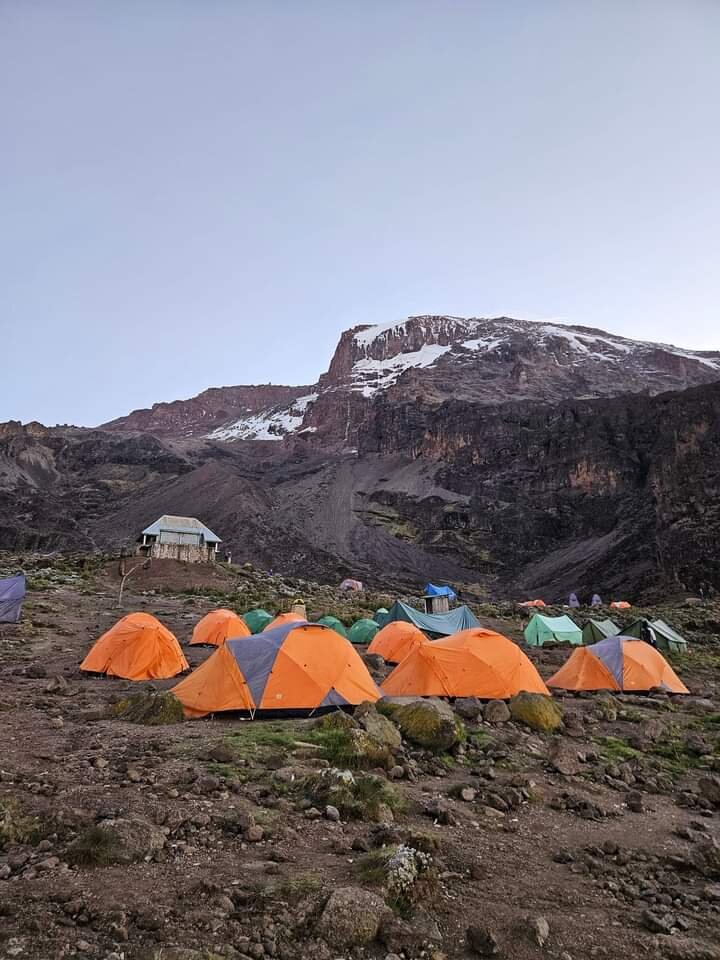
Hut space on Marangu is capped and paid for in advance, which means this route needs earlier booking in July, August and around Christmas than any camping trek does. If your dates are fixed and close, a Machame departure is usually easier to join.
Trail Character on a Machame Trek Against a Marangu Trek
Marangu is the gentlest walking on Kilimanjaro. The path is wide, well maintained and shaded through the forest, the gradient is steady rather than steep, and there is nothing on it that requires using your hands. Day two crosses into high moorland with giant lobelias and views of Kibo and Mawenzi. Day four crosses the saddle, a broad stony desert between the two cones, which is flat and strangely difficult because the far side never gets closer.
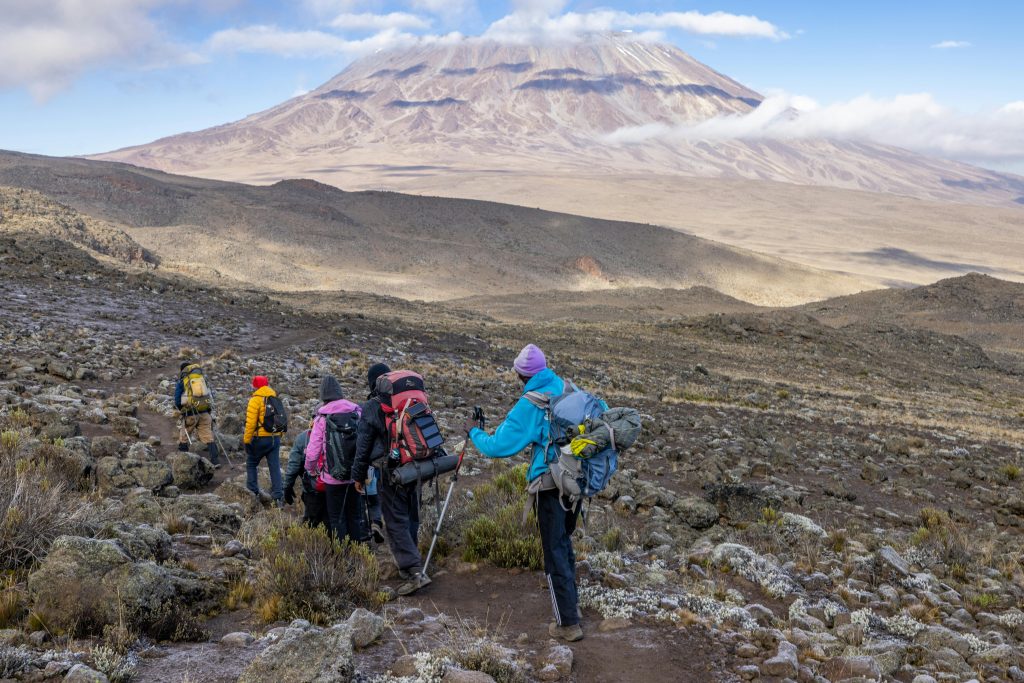
The Machame trail is more physical and more varied. A steep forest day, then moorland, then a high traverse under Lava Tower at about 4,640 metres, a drop into the Barranco Valley beneath the southern ice fields, and the Barranco Wall, a 257 metre non technical scramble taking about an hour. After that, ridges and valleys to Karanga and a steep pull to Barafu.
Marangu also walks the same trail twice, up and down, while Machame comes down the separate Mweka path. Seeing new ground every day matters more to some people than it sounds on paper.
Acclimatisation Profiles on Both Trekking Routes
Here is where the outcomes come from, and it is worth understanding rather than taking on trust.
Machame repeatedly takes you high during the day and brings you back down to sleep. Day three climbs to over 4,600 metres at Lava Tower and camps at 3,985 metres, a net gain of about 100 metres after several hours in thin air. Day four crosses the Barranco Wall to Karanga with no net gain at all. The spread between the trailhead and Barafu is roughly 1,550 metres.
Marangu climbs more or less continuously. Mandara, then Horombo, then Kibo, each higher than the last, with the altitude difference between the gate and the high camp closer to 1,100 metres. On the five day version there is no rest anywhere. On the six day version you gain a second night at Horombo with a walk up towards Zebra Rocks at around 3,980 metres, which is the only climb high and sleep low day the route offers, and it roughly doubles the odds on its own.
Neither trail is more dangerous than the other. The difference is how much help the profile gives your body while the altitude does its work.
Summit Night on a Machame or Marangu Trek
Both start around midnight and both are the hardest thing you do that week, but they are not the same climb.
Machame trekkers leave Barafu at roughly 4,670 metres and climb about five kilometres of scree switchbacks in five to seven hours to Stella Point at around 5,750 metres, then walk the crater rim for roughly an hour to Uhuru Peak.
Marangu trekkers leave Kibo Hut at roughly 4,700 metres and climb steep loose scree to Gilman’s Point at about 5,685 metres, generally reaching it at dawn with the sun coming up behind Mawenzi. From there it is another one and a half to two hours around the rim to the summit. That eastern arrival is the longer of the two finishes on Kilimanjaro, and plenty of climbers stop at Gilman’s, which earns a certificate but is not the top.
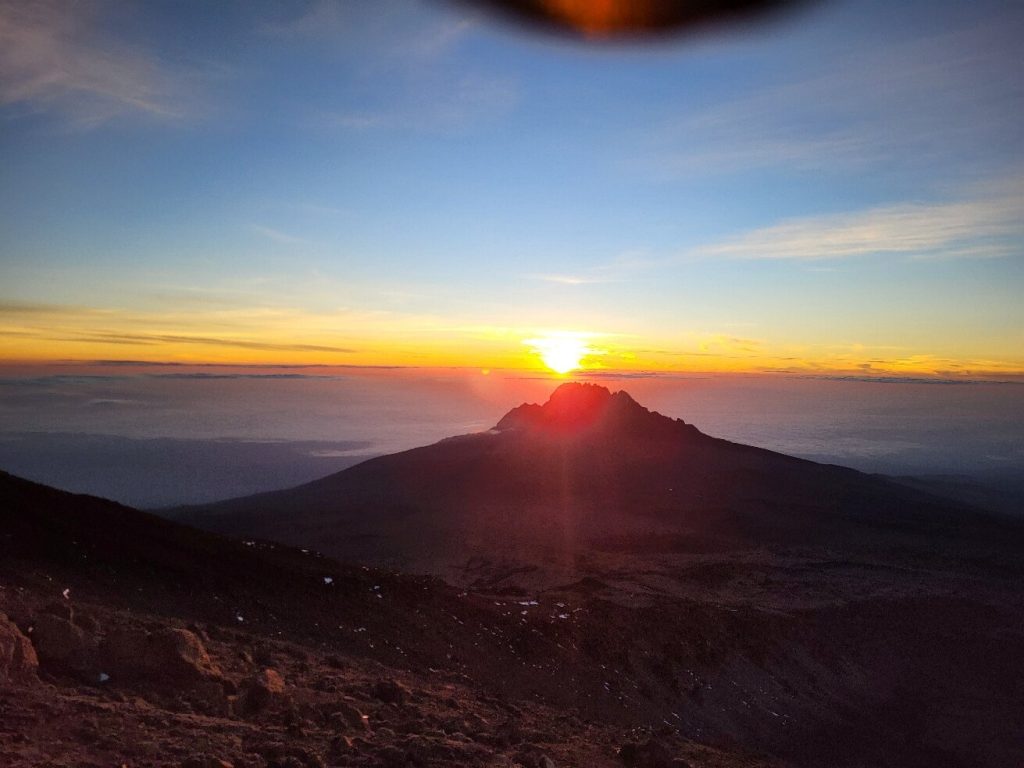
Temperatures on either route sit between roughly minus seven and minus twenty degrees Celsius before dawn, colder in wind. Machame descends to Mweka Camp and out through Mweka Gate; Marangu descends to Horombo and then walks roughly 20 kilometres back to Marangu Gate.
Marangu gives you a gentler path, a bed and a lower price, then asks you to do the longest rim walk on the mountain with the fewest nights of acclimatisation behind you. That is the trade, stated honestly.
Crowds and Scenery on Each Trekking Route
Machame carries close to half of all Kilimanjaro traffic, so camps are busy and the Barranco Wall can queue in the morning during July and August. What you get for that is the best scenery available on a mainstream trek: the Shira Plateau’s southern edge, Lava Tower, the Barranco Valley with senecio trees scattered across it, and the traverse beneath the southern glaciers. Lemosho walks all of that same ground from Lava Tower onwards, which is why the choice between the two western trails comes down to their opening days.
Marangu is also heavily used, particularly by trekkers on short itineraries and school groups, and Horombo is the busiest single overnight point on the mountain because climbers going up and coming down both sleep there. Its scenery is good rather than exceptional, and because you retrace your steps you see it twice.
Neither route is a solitude choice. If that is what you want, look at Rongai or the Northern Circuit.
Which Kilimanjaro Trek Suits Which Climber
Choose Machame if. Reaching Uhuru Peak is the priority, you can free seven days on the mountain, and you are comfortable sleeping in a tent.
Choose Machame if. Scenery matters to you and you would rather come down a different trail than the one you walked up.
Choose Marangu if. Tents are genuinely out of the question, whether for medical reasons, temperature, or simple preference. Then book six or seven days rather than five.
Choose Marangu if. Budget is tight and you accept the lower odds going in, or your group may need to split up, which the single up and down path makes straightforward.
One comparison people miss: a six day Marangu and a six day Machame are not equivalent purchases. At the same number of nights, Machame’s profile does more for you, and the reported figures reflect that. If you are choosing between the two on price at equal length, Machame is the better trek. Marangu only saves you real money when you also shorten the itinerary, and that is precisely where the odds collapse. If price is the binding constraint, it is worth seeing where the cheapest itineraries on the mountain make their savings before you book one.
Best Time to Trek Machame or Marangu
Both follow the same pattern. January to early March gives warmer days, clear mornings and often snow on the crater rim. Late June to October is the long dry season, colder at height and the most settled weather of the year, with July and August busiest.
April and May are the long rains. Machame’s forest day becomes properly muddy and its camps sit on the wettest flank of the mountain. This is the one period where Marangu holds a real advantage, because the huts keep your kit and your boots dry, and guides regularly point that out to anyone whose dates are fixed in a wet stretch. November into early December brings shorter rains with the same logic applying more mildly.
Getting to Machame Gate and Marangu Gate
Fly into Kilimanjaro International Airport between Moshi and Arusha, roughly an hour from Moshi by road. Moshi is the base for both treks and both trailheads are conveniently close, which is unusual on this mountain.
Machame Gate is around 45 minutes to an hour from Moshi. Marangu Gate is about the same, through Marangu village on the eastern side. Neither route eats most of a day getting to the trail, unlike Londorossi in the west or the long drive around to Rongai in the north, and every other trailhead on the mountain costs more travelling time than these two. Plan a night in Moshi before your briefing and a night after you come down, and rent bulky gear in town rather than flying with it.
Frequently Asked Questions About Machame and Marangu
Which route is cheaper, Machame or Marangu?
Marangu, and by a clear margin at its shortest. Budget five and six day Marangu packages start around $1,200 to $1,800 per person, while a seven day Machame typically runs $2,000 to $3,000 and a six day Machame $1,700 to $2,400. The saving comes from fewer days and from hut sleeping, which needs less equipment and fewer porters. Anything advertised below roughly $1,200 is almost certainly funded by underpaying the crew.
How do the park fees compare?
Conservation fees are the same on both at roughly $70 per person per day. The difference is overnight charges: Machame pays camping fees of about $50 per person per night, while Marangu pays hut fees nearer $60. Marangu still works out cheaper overall because it runs one or two nights shorter. Add a one off rescue fee around $20 and small entry charges for each crew member, and note that most published tariffs exclude the 18 percent VAT.
Is Marangu really easier than Machame?
Easier underfoot, harder to complete. The gradient is gentle, the trail is wide and there is no Barranco Wall. But it gives your body the fewest nights and almost no chance to climb high and sleep lower, which is why five day Marangu reports 27 to 30 percent summit rates against around 85 percent for seven day Machame. The walking is easier; the mountain is not.
Do I need a sleeping bag on the Marangu route?
Yes. Mattresses and pillows are provided in the huts but bedding is not, and there is no heating anywhere on the route. A four season bag rated well below freezing is needed for Kibo Hut in particular, where water in bottles freezes overnight. You can skip the sleeping mat, which you would need on Machame.
How much should I tip on each route?
Roughly $200 to $300 per climber on a five or six day Marangu and $250 to $350 on a seven day Machame, since camping crews are larger. Pooled across the group rather than paid per climber, the usual daily figures are $20 to $25 for the lead guide, $10 to $15 for assistant guides and the cook, and $5 to $10 per porter. Bring clean US dollar notes from home.
Which route should a first time trekker book?
Seven day Machame for most people, because the profile does real work and the summit finish from Stella Point is shorter. Marangu makes sense if huts are a requirement rather than a preference, in which case take the six or seven day version. Avoid five day Marangu unless you are genuinely comfortable with the possibility of turning back at Gilman’s Point.
Booking Your Kilimanjaro Trip
The safari companies and tour operators listed on this website put trips like this together for a living and know which camps, guides and routes actually deliver. We are an independent guide to Kilimanjaro; we do not book or sell tours ourselves.
When you are ready, arrange your safari, tour or holiday with one of the recognised operators listed here. Tell them your dates and what matters most, and a real person, not a form, will handle the itinerary, park bookings and logistics for you.