Kilimanjaro Packing List
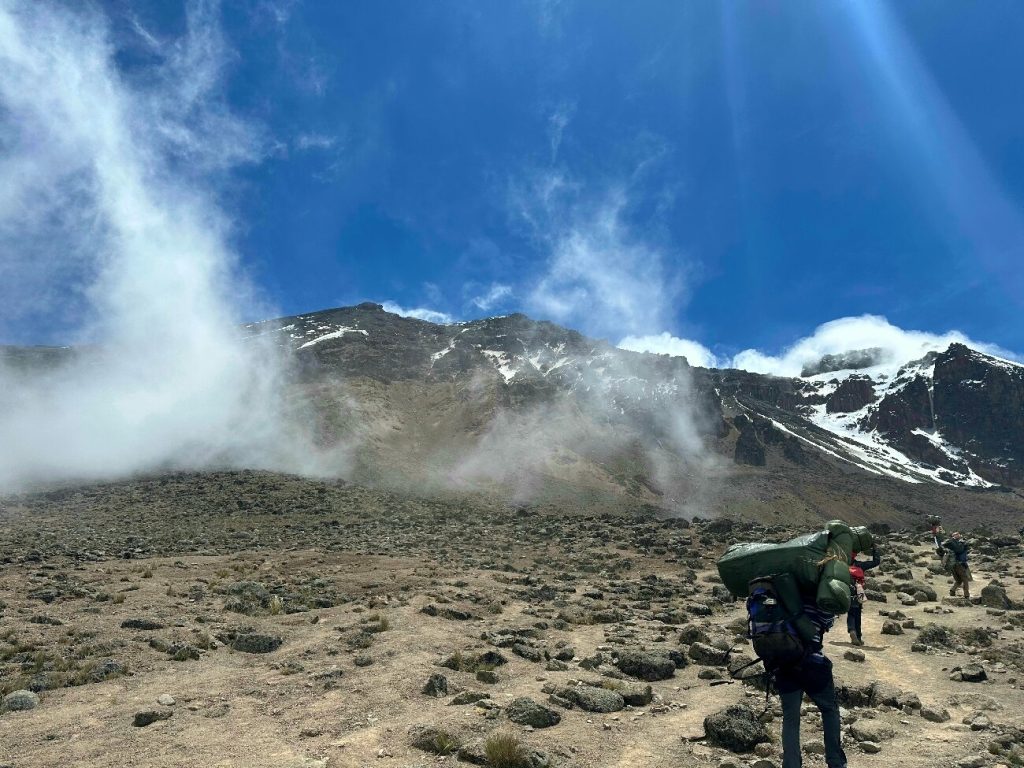
A Kilimanjaro packing list splits into two bags: a porter carried duffel capped at 15 kilograms including your sleeping bag, and a 25 to 35 litre daypack you carry yourself. The core items are layered clothing, broken in boots, a four season sleeping bag, a headlamp and water bottles. Bulky gear can be rented in Moshi. Kilimanjaro crosses five climate bands on the way to 5,895 metres in northern Tanzania.
How Bags Work on a Kilimanjaro Trekking Tour
Everything on a Kilimanjaro trek packing list has to live in one of two places, and knowing which is which prevents most of the mistakes people make.
Your duffel goes with the porters. They leave camp after you, overtake you on the trail and have it waiting at the next camp, which means you do not see it between breakfast and mid afternoon. Park rules cap it at 15 kilograms, your sleeping bag included, and it gets weighed at the gate. Overweight bags mean hiring an extra porter.
Your daypack stays on your back all day. Water, snacks, rain gear, a warm layer, camera, sun cream and anything else you might need between camps. Twenty five to thirty five litres with a proper hip belt.
Anything you are not taking up the mountain stays locked at your hotel in Moshi, which is why luggage locks are worth packing. Safari clothes and beach kit do not need to go anywhere near the summit.
The 15 kilogram limit sounds generous until you weigh a four season sleeping bag, a down jacket and seven days of layers. Weigh your packed duffel at home rather than discovering the problem in a queue at the gate with a crowd watching.
Clothing for Your Kilimanjaro Climbing Trek
Layers rather than bulk, because you walk from rainforest at 21 to 27 degrees Celsius to summit conditions between roughly minus seven and minus twenty in the same week. The reasoning behind each layer and when it comes out of the pack is worth reading alongside this list.
Base layers are the foundation: two or three long sleeved wicking tops and two pairs of thermal leggings, in merino or synthetic. No cotton anywhere, since it holds moisture and stays cold. Add two or three short sleeved shirts for the lower days.
Mid layers do the insulating. A fleece or light insulated jacket for daytime, plus a heavier down jacket reserved for the high camps and summit night. Two pairs of trekking trousers, one convertible or lightweight for the warm forest days, one warmer softshell pair for higher up. Fleece or insulated trousers for summit night and for sleeping.
Outer layers keep weather off. A properly waterproof and windproof jacket with a hood, and waterproof overtrousers you can pull on over boots. Showerproof is not enough if your dates fall in April or November.
Then the small items that matter disproportionately: a warm hat, a sun hat or cap, a buff or balaclava for summit night, thin liner gloves and thick insulated outer gloves or mittens, and four to six pairs of hiking socks plus one warm pair kept dry for sleeping.
Footwear on a Kilimanjaro Packing List
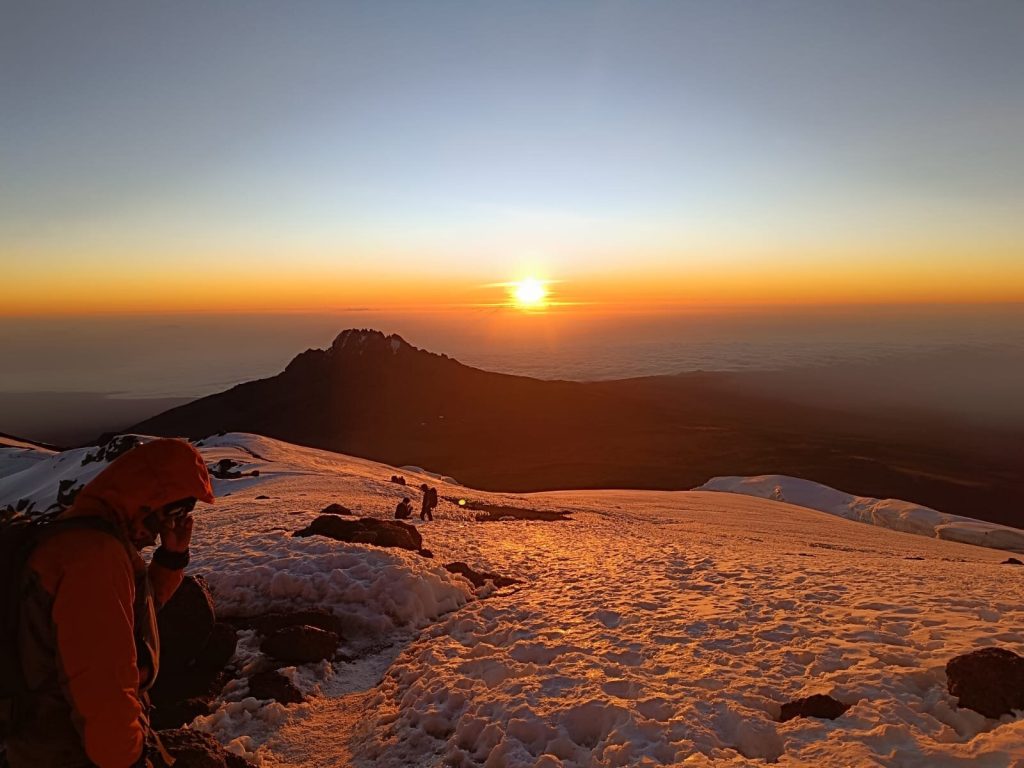
Mid weight waterproof trekking boots with ankle support, and they must be broken in before you fly. Choosing and sizing a pair deserves more thought than anything else on this list. Fifty kilometres or more through them at home, in the socks you will climb in. New boots on this mountain produce blisters on day two and there is no remedy at 4,000 metres beyond continuing to walk.
Bring a second pair of light shoes or trainers for camp, which is one of the quiet pleasures of the evening after boots come off. Gaiters keep scree and dust out on the summit push and the descent, and they are worth having on the loose ground above 4,500 metres.
Carry your boots in your hand luggage on the flight. If your checked bag is delayed, everything else on this list can be rented in Moshi and boots effectively cannot.
Sleeping Gear for a Kilimanjaro Trek
A four season sleeping bag rated well below freezing, ideally to minus ten degrees Celsius or colder, and minus fifteen to minus seventeen if you feel the cold. Nights at Barafu, Kibo Hut and School Hut freeze water in bottles.
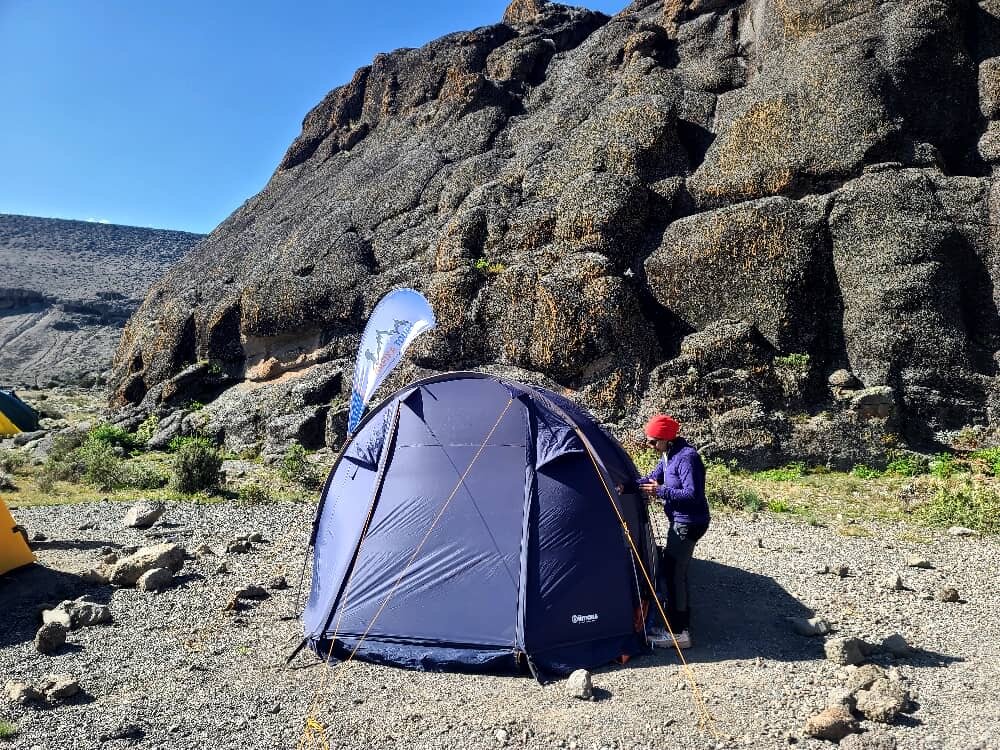
Sleeping mats are supplied by your operator on camping routes, so you do not need one. On Marangu the huts provide mattresses and pillows, so again no mat, though you still need the bag.
Add a sleeping bag liner if you want a few extra degrees and something easier to wash, an inflatable pillow if you sleep badly without one, and earplugs, which are more useful than they sound in a camp where several groups leave for the summit at staggered times.
Daypack Contents for Each Day of Trekking
Water. Two or three litres in wide mouth bottles. Bladder hoses freeze solid on summit night, and bottles can be filled with hot water as a bed warmer.
Weather layers. Waterproof jacket and overtrousers plus a warm layer, every single day, whatever the sky looks like at breakfast.
Sun protection. High factor sun cream, lip balm with sun protection and category four sunglasses. Ultraviolet exposure at altitude is severe even in cloud.
Snacks. Whatever you will actually eat when your appetite has gone. Nuts, dried fruit, energy bars, boiled sweets and electrolyte tablets.
Personal items. Headlamp, camera, phone, power bank, small first aid kit, hand sanitiser, tissues and any medication you take daily.
A dry bag or liner. Rain gets into packs. A waterproof liner protects the camera and the layer you were relying on staying dry.
Technical Gear and Accessories for Kilimanjaro Trekking
Trekking poles come near the top of the list, and their real value is on the descent from 5,895 metres to around 3,100 in a single afternoon. Adjustable poles that pack down for the Barranco Wall scramble are ideal.
A headlamp with at least 300 lumens and spare batteries is non negotiable for summit night. Cold shortens battery life considerably, so bring more than you think you need and keep spares warm in an inside pocket.
A power bank of 10,000 to 20,000 milliamp hours covers a week, since there is no mains power on the mountain and cold drains phones fast. Keep devices in your sleeping bag overnight.
Then the useful small things: a duffel of 70 to 90 litres, waterproof stuff sacks or heavy duty bin liners for packing inside it, a pee bottle for cold nights in the tent, a quick dry towel, wet wipes for washing, a small padlock, and a water bottle insulator or sock to slow freezing on the summit push.
Toiletries and Medication for a Kilimanjaro Climb
Keep this compartment small. Toothbrush and paste, a small bar or bottle of soap, wet wipes, hand sanitiser, toilet paper in a sealed bag, deodorant, and a hairbrush if you use one. Washing on the mountain is a bowl of warm water outside your tent.
For the medical bag: blister plasters and tape, painkillers such as ibuprofen or paracetamol, anti nausea tablets, rehydration salts, plasters and antiseptic, throat lozenges for the dry air, and any prescription medication in its original packaging with enough for the whole trip plus a few days.
Acetazolamide, sold as Diamox, is worth discussing with your doctor before you fly rather than buying at the last minute. It speeds up your body’s own adjustment to altitude and side effects can include tingling fingers and more frequent trips out of the tent at night. Your guide carries a first aid kit and bottled oxygen, but not your personal medication.
Documents and Money for Your Kilimanjaro Trek
Passport with at least six months of validity and a couple of blank pages, plus a photocopy kept separately. Your Tanzanian visa or the paperwork for obtaining one on arrival. Travel insurance documents showing coverage for trekking above 5,000 metres and helicopter evacuation, since many standard policies quietly exclude both. Flight confirmations and your operator’s contact details.
Cash matters more here than in most destinations. Bring your crew tips as clean United States dollar notes from home, since cards do not work on the mountain, Moshi cash machines cap withdrawals at modest amounts, and Tanzanian banks routinely refuse notes that are old or damaged. Bring plain envelopes too, which makes the tipping ceremony straightforward.
What to Rent in Moshi Rather Than Buy
Renting is the sensible move for anything bulky you will use once, and Moshi has plenty of outfitters supplying climbers.
Sleeping bags are the obvious candidate, since operators keep bags properly rated for summit cold and maintain them between climbs. Down jackets, trekking poles, gaiters and duffel bags are also widely available, and many packages include a duffel for free.
Buy your own boots, base layers, socks, gloves and hat. These need to fit you properly, boots need breaking in, and rental clothing worn next to the skin is rarely appealing.
Tell your operator what you want to rent before you arrive rather than at the briefing, so sizes are set aside for you.
Every experienced guide has the same complaint about client duffels, and it is never that someone brought too little. It is the third pair of trousers, the hardback book and the jeans that made the bag overweight at the gate.
What to Leave Behind on a Kilimanjaro Trek
Cotton anything, including jeans and cotton t shirts, because it soaks up sweat and rain and stays cold. Hard shell suitcases, which cannot be carried by porters. A hydration bladder as your only water system, since the hose will freeze.
Then the things people pack out of habit: heavy books, multiple camera bodies, hair dryers, more than one spare pair of boots, large toiletry bottles, and clothing for evenings out that will spend the week in your duffel. You will wear the same few things repeatedly and nobody will notice or care.
Leave your safari and Zanzibar luggage at the hotel in Moshi. It stores safely and it keeps your duffel under the limit.
Frequently Asked Questions About the Kilimanjaro Packing List
How much does it cost to rent gear in Moshi?
Sleeping bags rated for summit cold generally run $30 to $50 for the trek, trekking poles $15 to $25, down jackets $30 to $50, gaiters $10 to $15 and duffel bags $10 to $20, with many operators including the duffel free. Renting a full set of bulky items typically comes to $100 to $200, which compares well against several hundred dollars to buy the same kit new. Confirm sizes with your operator before you fly.
What is the weight limit for my duffel bag?
Fifteen kilograms, or about 33 pounds, including the bag itself and your sleeping bag. It is a park regulation rather than an operator preference and bags are weighed at the gate. Exceeding it means hiring an additional porter, which usually costs around $100 to $150 for the trek. Loads for individual porters are separately capped at 20 kilograms under the porter welfare standards.
How warm does my sleeping bag need to be?
Rated to at least minus ten degrees Celsius, and minus fifteen to minus seventeen if you sleep cold. Nights at the high camps of Barafu, Kibo Hut and School Hut sit well below freezing and water left outside a bag will freeze. A liner adds a few degrees and is easier to wash than the bag itself.
Should I bring a hydration bladder or bottles?
Bottles, and wide mouth ones. Bladder hose tubes freeze solid on summit night when temperatures reach minus seven to minus twenty degrees Celsius, which leaves you carrying three litres you cannot drink. Wide mouth bottles are easier to refill from the crew’s filtered water, can hold hot water as a bed warmer, and freeze more slowly. Bring two or three litres of capacity.
Do I need to bring my own tent or food?
No. Your operator provides tents, sleeping mats, a mess tent with tables and chairs, all meals and filtered drinking water. On Marangu the huts supply mattresses and pillows. Your packing list covers clothing, footwear, a sleeping bag and personal items only, which is why 15 kilograms is workable.
Can I charge my phone or camera on the mountain?
Not from mains power, since there is none at the campsites. Bring a power bank of 10,000 to 20,000 milliamp hours and keep devices and spare batteries inside your sleeping bag overnight, because cold drains them quickly. Some solar chargers work, though cloud on the lower days limits them. There is patchy phone signal at various points, including near the summit.
Booking Your Kilimanjaro Trip
The safari companies and tour operators listed on this website put trips like this together for a living and know which camps, guides and routes actually deliver. We are an independent guide to Kilimanjaro; we do not book or sell tours ourselves.
When you are ready, arrange your safari, tour or holiday with one of the recognised operators listed here. Tell them your dates and what matters most, and a real person, not a form, will handle the itinerary, park bookings and logistics for you.