Lemosho Route
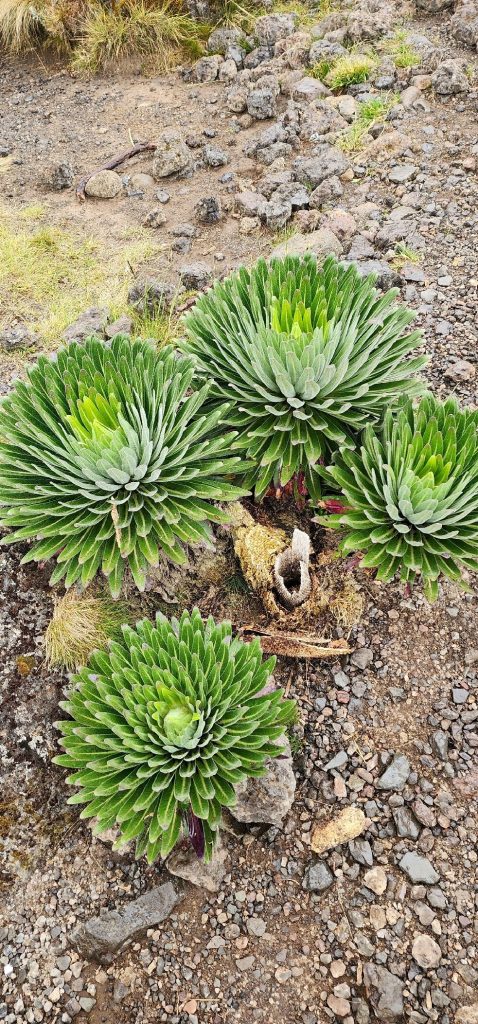
The Lemosho Route is a seven or eight day camping trek up Mount Kilimanjaro, starting at Londorossi Gate on the western side and covering roughly 70 kilometres on the full eight day itinerary. Around 90 percent of eight day Lemosho climbers reach the summit, the highest figure of any mainstream route. Lemosho crosses the Shira Plateau inside Kilimanjaro National Park in northern Tanzania before joining the southern trail to Uhuru Peak.
Lemosho Route Trekking Overview
Lemosho route trekking was introduced as a gentler alternative to the older Shira trail, which starts high on the plateau by vehicle. Lemosho keeps the plateau scenery but walks in from lower down through forest, which is both nicer and better for your body.
The trek splits into two halves. The first two or three days are quiet, remote and lightly walked, crossing the western forest and the open Shira Plateau with barely another group in sight. Then the trail merges with the Machame path near Lava Tower and everything after that point is shared: Barranco, Karanga, Barafu, the summit, and the Mweka descent.
That combination is why so many operators name Lemosho as their default recommendation. You get solitude where solitude is available, the finest walking on the mountain, and an altitude profile with genuine climb high and sleep low sections built into it. Height gain from the gate to Uhuru Peak is around 3,650 metres spread across eight days, and the pacing shows in the numbers. Set side by side with Machame, the two trails share everything after Lava Tower and differ almost entirely in how they begin.
Watch for six day Lemosho packages. They drive you up to roughly 3,400 metres on the Shira Plateau and skip the forest days entirely, which removes the two things that make this route worth paying for. If a quote looks cheap for Lemosho, check where day one actually begins.
Lemosho Trek Day One from Londorossi Gate to Mti Mkubwa
The morning is mostly driving. Londorossi Gate sits at about 2,250 metres on the far western flank, two to three hours from Moshi and longer from Arusha, and park formalities take a while because this gate handles fewer groups. From the gate a rough forest track carries you on towards the trailhead, and in wet months the vehicles cannot always make it the whole way, which means a longer walk than the itinerary promises.
You eat lunch at the trailhead and then walk three to four hours through undisturbed forest, gaining about 500 metres to Mti Mkubwa, sometimes called Forest Camp, at around 2,800 metres. The name means big tree.
This forest feels different from the southern side. Less foot traffic, more moss, and a real chance of elephant and buffalo sign on the path, which is why an armed ranger sometimes accompanies groups on the lower western slopes. Sightings are uncommon and never guaranteed, but the droppings and broken branches tend to make an impression.
Lemosho Route Trekking Onto the Shira Plateau
Day two leaves the trees behind. The trail climbs through heather and tall grass draped in lichen, crosses a few streams, and gains the Shira Ridge before dropping gently to Shira 1 Camp at roughly 3,500 metres. Eight to thirteen kilometres depending on the operator’s variation, five or six hours.
Cresting the ridge is the moment this trek turns. The plateau opens out ahead, 13 kilometres of undulating high ground, with Kibo standing across it wearing whatever ice it has left. This is the collapsed remains of the third and oldest volcanic cone on the massif, and one of the highest plateaus on the planet.
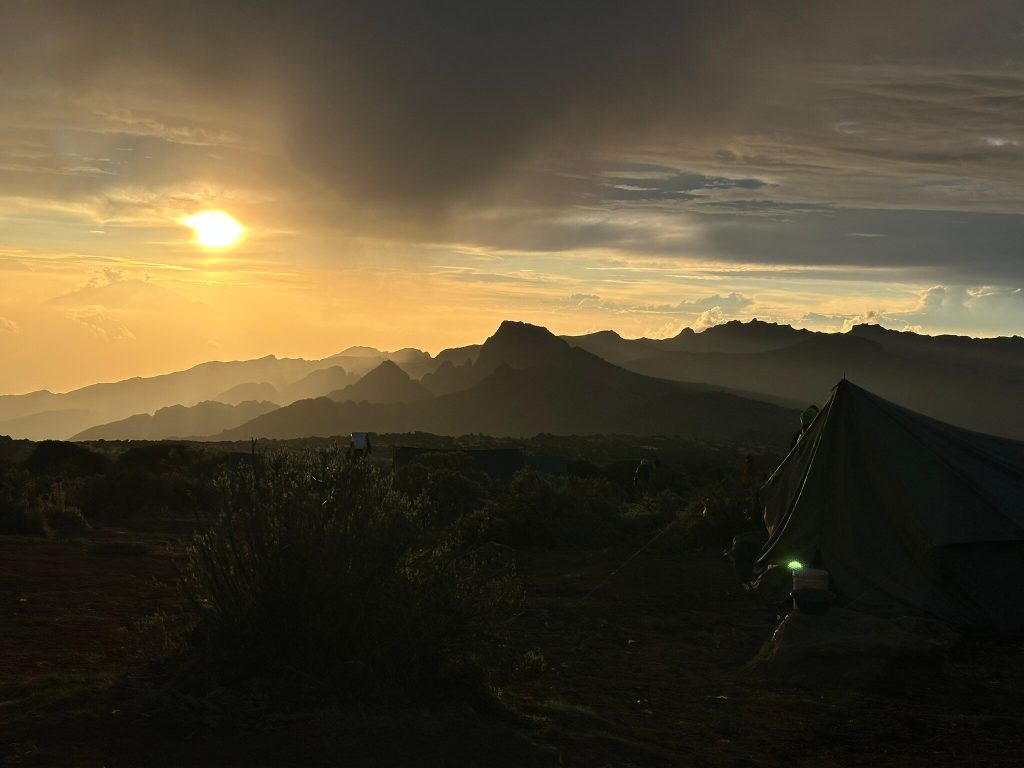
Camp that night is exposed and cold and worth it. Sunsets across the plateau, seen from Shira, are among the better things this mountain does.
The Moir Hut Acclimatisation Day on an Eight Day Lemosho Trek
Day three on the eight day itinerary is a gentle walk east across the plateau to Shira 2, then a divert north from the main trail to Moir Hut at around 4,200 metres, a little used camp at the base of the Lent Hills. Moir is also the fork where the nine day Northern Circuit peels away to loop the northern slopes.
Distance runs to about 14 kilometres over five to seven hours, but the gradient is kind and the day is really about the walks available from camp. Guides usually take groups up onto the Lent Hills for an hour or two in the afternoon, gaining a few hundred metres and then coming back down to sleep. It is optional and it is the most valuable optional thing on the route.
The seven day version skips Moir entirely, running Shira 1 straight through to Shira 2 on day two. It still works, and reported summit rates around 85 percent are respectable, yet the eight day profile is the reason this trail has the reputation it does.
Lemosho Trekking Past Lava Tower to Barranco Camp
From Moir the trail climbs south east towards Lava Tower, a volcanic plug standing at about 4,640 metres, where Lemosho, Shira and trekkers coming up the southern Machame trail all converge. From that high point the path drops steadily into the Barranco Valley to camp at roughly 3,985 metres.
Seven to ten kilometres, four to six hours, and you end the day lower than the highest point you touched. That is the whole design. Several hours above 4,600 metres followed by a night 700 metres lower does more for your chances than any amount of gym work.
Barranco Camp sits in a bowl beneath the Breach Wall with the southern ice fields overhead and giant senecio scattered across the slope like something from an older world. It is the most photographed camp on Kilimanjaro. In the morning you look straight up at the wall.
Barranco Wall and Karanga Valley on the Lemosho Trek
The wall is a 257 metre rock face and it is a scramble rather than a climb. No ropes, no exposure that a steady walker cannot manage, but you will want your hands free, so the poles get stowed. An hour or so of switchbacks puts you above the cloud with the summit clear ahead.
Past the top the trail runs along ridges and dips into the Karanga Valley, a steep drop of around 140 metres and a climb back out to Karanga Camp at roughly 4,000 metres. Five or six kilometres, four hours, no net height gain, which sounds pointless and is anything but.
Older trekkers manage this section every week of the season. The reputation the wall has among people who have not yet seen it is out of proportion to the reality.
Lemosho Route Trekking to Barafu and the Summit Climb
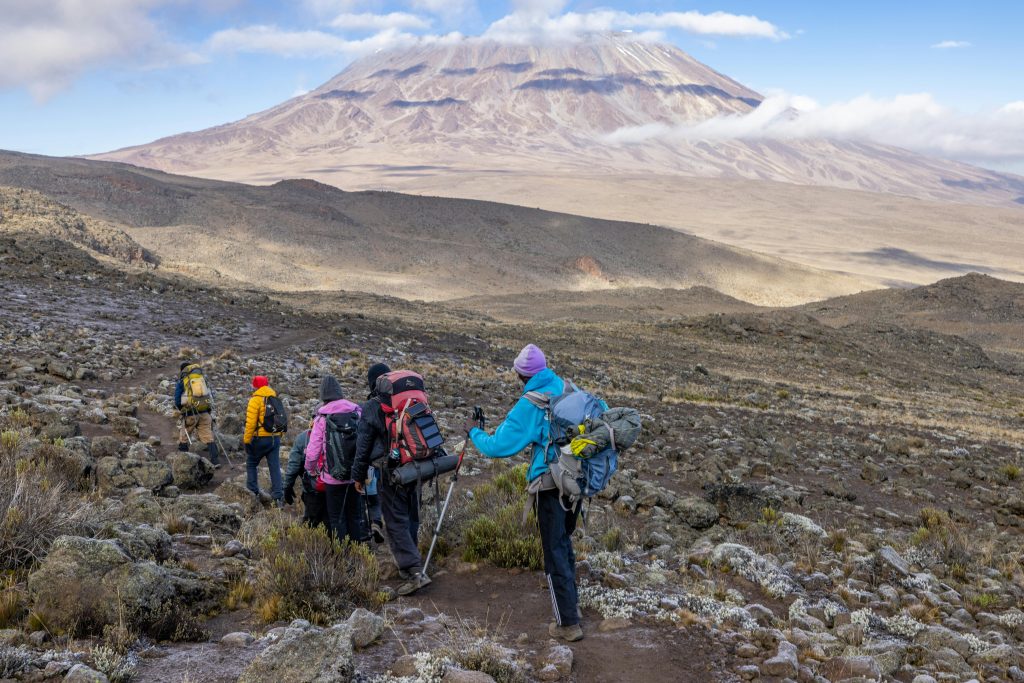
A short steep pull of three to four kilometres brings you up through alpine desert to Barafu Camp at roughly 4,670 metres, arriving by early afternoon. Barafu means ice. It is a windswept rocky ridge with nothing growing on it, and from there Mawenzi’s spires stand across the saddle.
The afternoon goes on eating, drinking, a gear check and lying down from early evening. Sleep is patchy at best. Wake up comes around 11pm, and you leave at midnight into the dark with a headlamp and about five kilometres of loose scree switchbacks ahead of you.
That five kilometres takes five to seven hours. Temperatures on the way up sit between roughly minus seven and minus twenty degrees Celsius before dawn, colder with wind chill, which is when the down jacket and the second pair of gloves prove their weight. Lemosho trekkers reach the rim at Stella Point, around 5,750 metres, usually as the light comes up, then walk the crater edge for about an hour past the glaciers to Uhuru Peak at 5,895 metres.
Arriving at Stella Point from the western side means roughly an hour of rim walking to the summit, against nearer two hours for trekkers coming up to Gilman’s Point on the eastern trails. After a night without sleep, that hour matters more than it sounds.
Then down. Scree back to Barafu, a rest and hot food, and on to Millennium or Mweka Camp at around 3,100 metres. Twelve to fourteen hours on the move. The last morning is a three to four hour walk out through the forest to Mweka Gate for your certificate and a transfer to Moshi.

Seven Day or Eight Day Lemosho Trekking
Eight days. Includes the Moir Hut acclimatisation day and a night at Karanga. Roughly 70 kilometres. Summit rates commonly reported near 90 percent. The version most experienced operators sell.
Seven days. Drops the Moir day, running Shira 1 to Shira 2 on day two. Around 56 kilometres. Summit rates near 85 percent. A sound choice if your leave will not stretch further.
Six days. Starts with a vehicle drop at roughly 3,400 metres on the plateau, skipping the forest. Rates fall to around 75 percent and you lose the best of the scenery. Not recommended.
If you can only spare seven days on the mountain, a seven day Lemosho departure is a good trek and better than most alternatives at the same length. If you can spare eight, take eight. The extra day on the full eight day itinerary is a few hundred dollars of park charges and crew wages set against the reason you flew to Tanzania.
Wildlife and Scenery on a Lemosho Route Trek
Black and white colobus monkeys are routinely seen in the western forest, along with blue monkeys, small lizards and a long list of birds including Hartlaub’s turaco. Sightings depend on the hour and the weather and nobody can promise them.
Larger animals are the reason this route occasionally travels with a ranger. Elephant and buffalo do use the lower western slopes and their sign turns up on the path, though actually seeing them on a trek is uncommon. Higher up the living things thin to giant groundsel, lobelia and lichen, then to nothing at all above the alpine desert.
Scenically, the plateau crossing and the traverse beneath the southern ice fields are what people remember. Five climate bands in eight days, from forest to arctic, walked on foot.
Best Time for a Lemosho Route Trek
January to early March gives warmer days, clear mornings and often fresh snow on the crater rim. Late June to October is the long dry season and the most settled weather of the year, with July and August busiest on the shared southern section and September quieter while staying dry.
April and May are the long rains. The western forest days become heavy going and the track to the trailhead can turn difficult for vehicles, which sometimes adds walking to day one. November into early December sees shorter rains. Neither period closes the route and prices soften, though the dry northern flank copes with wet weeks better than this one.
Getting to Londorossi Gate for Your Lemosho Trek
Fly into Kilimanjaro International Airport between Moshi and Arusha. Moshi is roughly an hour away by road and is the usual base for this trek. Londorossi Gate is two to three hours from Moshi and three to four from Arusha, followed by the forest track to the trailhead, so day one involves a long morning in a vehicle before your boots touch the trail.
Plan a night in Moshi before the briefing and a night afterwards. Sleeping bags rated well below freezing, down jackets, poles and gaiters can all be rented in town, which is worth knowing before you spend money on kit you will use once.
Frequently Asked Questions About the Lemosho Route
How much does a Lemosho route trek cost?
An eight day Lemosho with a solid mid range operator generally runs between $2,400 and $3,500 per person, with seven day versions a few hundred dollars less. Budget group departures start nearer $2,100 and premium private climbs pass $4,500. Because Lemosho is longer than Machame or Marangu, its fixed park charges are higher, which puts a floor under the price. Flights, the visa at around $50, high altitude insurance, tips and personal gear sit outside the package.
What park fees apply on an eight day Lemosho climb?
Conservation fees of about $70 per person per day, so roughly $560 across eight days before tax, plus camping fees near $50 per person for each of the seven nights, a one off rescue fee around $20, and small park entry charges for every guide, porter and cook. Most published tariffs exclude the 18 percent VAT, which is why the same trek is quoted differently in different places. Your operator pays all of it directly.
Is Lemosho better than Machame?
For most first time trekkers, yes, on two counts: two quieter days at the start and a longer profile with the Moir acclimatisation option. They share the entire second half of the trail, so the summit experience is identical. Machame is cheaper and easier to book at short notice, which is a real advantage. If budget is the binding constraint, seven day Machame beats six day Lemosho comfortably.
How much should I tip on a Lemosho trek?
Roughly $300 to $400 per climber for an eight day trek, since crews are larger and the itinerary longer. Daily figures pooled across the group rather than per climber run about $20 to $25 for the lead guide, $10 to $15 for assistant guides and the cook, and $5 to $10 for each porter. Bring clean US dollar notes from home, as cards do not work on the mountain and Moshi ATMs cap withdrawals.
Does the Lemosho route go up the Barranco Wall?
Yes, on day five or six depending on your itinerary, once the trail has joined the southern circuit. It is a non technical scramble of about 257 metres taking roughly an hour, and it is comfortably within the range of anyone fit enough to be on the mountain. Put your trekking poles away before you start.
Do I need to be experienced for the Lemosho route?
No. It is a walking route with no technical ground and no equipment beyond ordinary trekking kit. What it asks is the stamina to walk four to seven hours on rough ground for eight consecutive days, which eight to twelve weeks of hill walking beforehand will build. Altitude is the real variable, and Lemosho’s length is precisely how it manages that.
Booking Your Kilimanjaro Trip
The safari companies and tour operators listed on this website put trips like this together for a living and know which camps, guides and routes actually deliver. We are an independent guide to Kilimanjaro; we do not book or sell tours ourselves.
When you are ready, arrange your safari, tour or holiday with one of the recognised operators listed here. Tell them your dates and what matters most, and a real person, not a form, will handle the itinerary, park bookings and logistics for you.