Altitude Sickness on Kilimanjaro
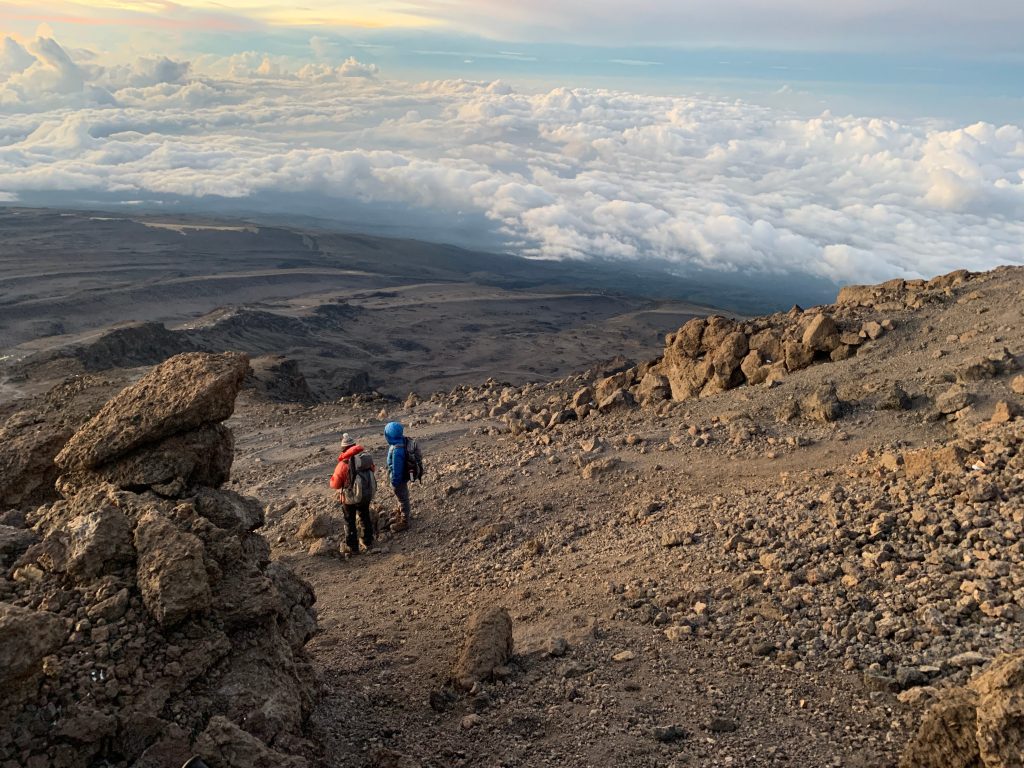
Altitude sickness is the leading reason climbers fail to summit Kilimanjaro and the main medical risk on the mountain. Mild acute mountain sickness affects most trekkers above 3,000 metres, while the severe forms affecting the lungs and brain are uncommon and treated by immediate descent. Longer itineraries and a slow pace are the best defences. Kilimanjaro reaches 5,895 metres in northern Tanzania.
What Altitude Sickness Is on a Kilimanjaro Trek
Above roughly 2,500 metres, air pressure falls far enough that each breath delivers noticeably less oxygen. By the summit of a Kilimanjaro trek you are working with about half the oxygen available at sea level, and the altitude bands you climb through on the way up explain why that change arrives so abruptly. Altitude sickness is what happens when your body has not had time to adjust to that.
It comes in three forms of escalating seriousness. Acute mountain sickness, generally shortened to AMS, is the common one and most trekkers experience some version of it. High altitude pulmonary oedema, or HAPE, involves fluid collecting in the lungs. High altitude cerebral oedema, or HACE, involves swelling of the brain. The latter two are uncommon on Kilimanjaro and both are medical emergencies.
The thing worth internalising early is that this has nothing to do with how fit or capable you are, which is a separate question from how hard the walking itself is. It affects people regardless of fitness, age or sex, and there is a mild inverse pattern where fit climbers fare worse because they walk faster than their physiology can keep up with.
This article is general information rather than medical advice. Talk to your own doctor before you fly, particularly about acetazolamide and about any existing condition or medication, and follow your guide’s judgement on the mountain over anything you read beforehand.
Symptoms of Acute Mountain Sickness on Kilimanjaro
Mild AMS feels remarkably like a hangover, which is how most guides describe it and how most trekkers recognise it.
The usual signs are headache, nausea, loss of appetite, fatigue beyond what the walking explains, dizziness, and broken or restless sleep. You may find yourself short of breath doing something that felt easy the previous day. Many people notice they have gone quiet in the evening without deciding to.
Mild symptoms are common, they are not in themselves a reason to turn back, and they often settle within a day as your body adjusts. What matters is the direction of travel. Symptoms easing over 24 hours at the same altitude is a good sign. Symptoms worsening, or new ones appearing, is the signal to stop going up.
Tell your guide the first time you feel any of it. This is the point where trekkers routinely make things harder for themselves, staying quiet in the hope that it passes and that nobody suggests they descend. A headache managed on day three is a small problem. The same headache revealed at the high camp on day six is a much larger one.
Severe Altitude Illness on a Kilimanjaro Climb
The serious forms are rare, and they deserve to be understood rather than feared into vagueness.
Fluid on the lungs presents as extreme breathlessness at rest rather than during exertion, a persistent cough sometimes producing frothy or pink sputum, chest tightness and a bluish tinge to lips or fingertips. It can develop without the usual AMS warning signs first, and it can progress within hours, which is precisely why twice daily checks matter.
Swelling of the brain presents as confusion, difficulty walking in a straight line, unusual behaviour, severe headache unrelieved by painkillers, drowsiness and eventually loss of consciousness. A trekker with this may not recognise that anything is wrong, which puts the responsibility on the people around them.
Both are emergencies. The treatment in both cases is to lose altitude immediately, with a guide, and to keep losing it. Bottled oxygen and dexamethasone may be given to support that descent, and neither is a substitute for going down.
How Guides Monitor Altitude Sickness on Kilimanjaro Treks
A well run trekking tour has a system rather than a general sense of how people look.
Twice daily health checks are the standard, usually in the morning and on arrival at camp. Guides use a pulse oximeter clipped to a finger to read blood oxygen saturation and pulse rate, and they record it, so what matters is the trend across days rather than a single number.
Alongside that they score symptoms against the Lake Louise system, which assigns values to headache, gastrointestinal symptoms, fatigue and dizziness. It gives an objective framework rather than a guess. Scores in the middle range suggest mild to moderate AMS; high scores indicate something serious. A saturation reading that falls well below the expected range for that altitude, combined with a rising symptom score, is generally the point at which a summit attempt is called off. Those checks matter most at the high camp, because the midnight push to the crater rim gains more height, faster, than any other part of the trek.
When comparing operators, ask specifically whether they carry a pulse oximeter and bottled oxygen, how often checks happen, and whether guides hold current wilderness first aid training. If none of that appears in the answer, the monitoring is informal.
Preventing Altitude Sickness on a Kilimanjaro Trek
Nothing eliminates the risk. Several things reduce it substantially, and most of them are decided before you leave home or in your first hour of walking.
Book more days. This is the largest single factor and it dwarfs the rest. Five day itineraries report roughly 27 to 30 percent reaching the summit and eight or nine day itineraries around 90, and altitude illness explains most of that gap. Choose a route with climb high and sleep low sections built in, which means Machame, Lemosho or the Northern Circuit rather than Shira or a short Marangu.
Walk slowly. Slower than feels natural, from the first hour of the first day. Aim to be among the last into camp. Fatigue is believed to contribute to AMS, so conserving energy has a direct effect. Arriving fit enough that the daily walking never empties you belongs to the same defence, and that is the real purpose of training in the months before you fly.
Drink three to four litres a day, which takes deliberate effort rather than good intentions. Eat what you are given, particularly carbohydrates, even when appetite has gone, because carbohydrate intake supports ventilation and is the most efficient fuel in thin air.
Avoid alcohol, sleeping tablets and narcotic painkillers, all of which suppress breathing at exactly the wrong time. Take every optional acclimatisation walk your guide offers. Stay warm and dry, since hypothermia and altitude illness compound each other unpleasantly.
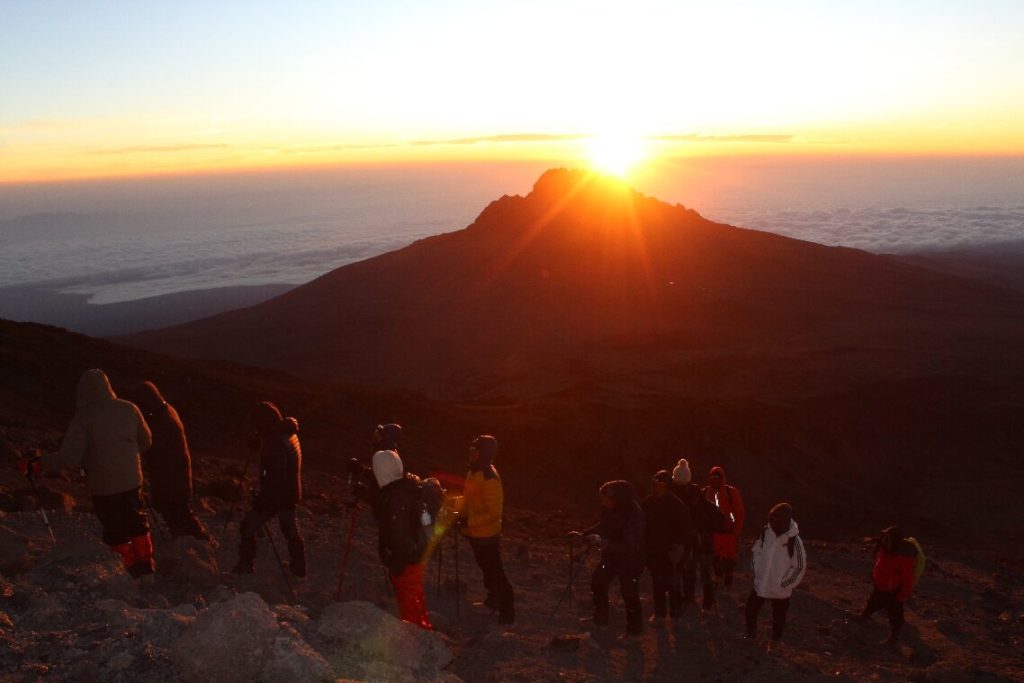
Everything that genuinely protects you from altitude sickness is unglamorous: more nights, a slower pace, more water, more food and telling your guide the truth about your headache.
Diamox and Medication for Kilimanjaro Altitude Sickness
Acetazolamide, sold as Diamox, is the medication most commonly discussed. It works by prompting deeper and faster breathing, which speeds up the body’s own acclimatisation rather than masking symptoms.
It is a prescription drug and it needs a conversation with your own doctor, not a pharmacy in Moshi the day before your briefing. Wilderness medical guidance commonly suggests a modest daily dose started the day before you begin ascending and continued through the climbing days, though your doctor will advise on what suits you.
Side effects are usually tolerable and worth knowing about in advance. Tingling in the fingers and toes is common, as is needing to urinate considerably more often, which is a nuisance in a tent at minus ten degrees. Some people report altered taste, particularly with fizzy drinks, and occasional drowsiness that can be confused with AMS symptoms.
Ordinary painkillers such as ibuprofen or paracetamol help with altitude headaches and are worth carrying. Anti nausea medication is useful for the same reason. None of these fixes altitude illness; they make mild symptoms manageable while your body catches up.
Descent and Rescue on Kilimanjaro
Descent is the treatment. Everything else supports it.
Losing 500 to 1,000 metres of altitude usually resolves symptoms quickly, often within hours, and for severe cases the target is considerably lower. A trekker who needs to go down should never do so alone, which is why the number of assistant guides on your trek matters when you compare operators. On a properly staffed climb one guide takes the affected person down while the rest of the group continues.
Bottled oxygen is carried by good operators for emergencies. It buys time during a descent and is not a means of pushing a struggling climber higher, which is a distinction worth confirming with any operator you are considering.
Helicopter evacuation is available from designated points on the mountain and is coordinated by your operator. The park charges a one off rescue fee to every climber, which covers its own ground rescue services rather than a private helicopter lift. This is why your travel insurance must cover trekking above 5,000 metres and helicopter evacuation, since many standard policies exclude one or both.
Altitude Sickness Risk by Kilimanjaro Trekking Route
Lowest risk. Nine day Northern Circuit, with two northern days that finish lower than they began and five nights above 3,800 metres before the summit push.
Low risk. Eight day Lemosho, with an acclimatisation night at Moir Hut around 4,200 metres and the Lent Hills walk.
Moderate risk. Seven day Machame and seven day Lemosho, both with useful no gain days at Barranco and Karanga.
Higher risk. Six day itineraries on any trail, and seven day Rongai, which climbs steadily with fewer chances to sleep lower than the day’s high point.
High risk. Five day Marangu, with height gained on consecutive days and no rest anywhere, and six day Rongai for similar reasons.
Highest risk. Umbwe, gaining roughly 2,300 metres in two days, and Shira, which drives you to about 3,500 metres for your first night.
What to Do If You Feel Unwell on a Kilimanjaro Trek
Say something, immediately, to your lead guide. That is the whole answer and everything else follows from it.
Do not climb higher while symptoms are worsening. Do not take a sleeping tablet to get through a bad night. Do not assume that pushing on is brave; on this mountain it is simply how people turn a manageable problem into a serious one.
Rest, drink, eat something, take a painkiller for the headache and let your guide reassess you. Many trekkers who feel dreadful at one camp feel considerably better the next morning, particularly on routes that drop you to a lower sleeping altitude. Guides see this pattern constantly and are well placed to judge whether yours is settling or building. Plenty of trekkers who spend a wretched night at Barranco go on to stand on Uhuru Peak three days later.
If your guide says descend, descend. They have taken hundreds of people up this mountain, they are reading a pulse oximeter trend as well as your face, and a good operator loses money by turning you around rather than gaining it.
Frequently Asked Questions About Altitude Sickness on Kilimanjaro
How common is altitude sickness on Kilimanjaro?
Mild symptoms are very common and most trekkers experience some, whether a headache, poor appetite or disturbed sleep, usually above 3,000 to 4,000 metres. It is the leading reason climbers turn back, and with overall summit figures at 65 to 80 percent, roughly one climber in three does not reach the top. The severe lung and brain forms are uncommon.
Does travel insurance cover altitude sickness treatment?
Only if the policy explicitly covers trekking above 5,000 metres and helicopter evacuation, and many standard policies exclude both. Check the altitude limit in the wording rather than the marketing. Specialist high altitude cover typically costs $100 to $300 depending on trip length and age. The park also charges a mandatory rescue fee of around $20 per climber, which covers its own ground services rather than a private evacuation.
Should I take Diamox for Kilimanjaro?
That is a question for your own doctor, ideally weeks before you fly. Acetazolamide speeds up your body’s natural acclimatisation and has been studied extensively at altitude. Common side effects include tingling in fingers and toes and needing to urinate more often. It supports good practice rather than replacing it, so route length and pacing still matter more.
Can fit young people get altitude sickness?
Yes, routinely. Altitude illness does not correlate with fitness, age or sex. There is a mild pattern in the other direction, since fit climbers often walk faster and outpace their own acclimatisation. Guides say pole pole, slowly slowly, for exactly this reason, and the trekkers arriving last into camp are frequently the ones who summit.
What happens if I have to descend partway through?
An assistant guide takes you down while the rest of your group continues, which is why guide ratios matter when choosing an operator. Descent is on foot to a lower camp or gate in most cases, with helicopter evacuation available from designated points for serious cases. Most operators cannot refund the unused portion of the trek, since park fees are paid in advance.
How quickly does descending help?
Usually fast. Losing 500 to 1,000 metres often resolves mild and moderate symptoms within hours, and severe cases require going considerably lower. This is why descent is the treatment for every form of altitude illness and why oxygen and medication are used to support a descent rather than to allow someone to continue upwards.
Booking Your Kilimanjaro Trip
The safari companies and tour operators listed on this website put trips like this together for a living and know which camps, guides and routes actually deliver. We are an independent guide to Kilimanjaro; we do not book or sell tours ourselves.
When you are ready, arrange your safari, tour or holiday with one of the recognised operators listed here. Tell them your dates and what matters most, and a real person, not a form, will handle the itinerary, park bookings and logistics for you.