Kilimanjaro Altitude
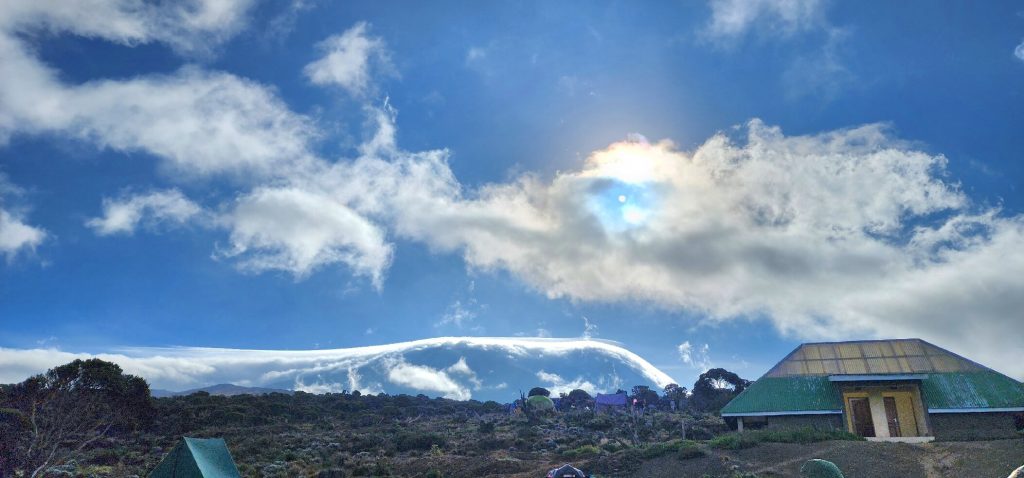
Kilimanjaro reaches 5,895 metres at Uhuru Peak, making it the highest mountain in Africa and the tallest free standing mountain in the world. Air at the summit holds roughly half the oxygen available at sea level. Trekking routes climb through five climate bands from around 1,600 metres, with high camps sitting between 4,600 and 4,750 metres. The massif lies in northern Tanzania near Moshi.
How High Kilimanjaro Is and How the Massif Is Built
The figure quoted for a Kilimanjaro trek summit is 5,895 metres, or 19,341 feet, at Uhuru Peak on the rim of the Kibo crater. What makes that height unusual is not the number but the fact that nothing surrounds it. Kilimanjaro rises straight out of open plains rather than sitting in a range, which is why it is described as the tallest free standing mountain on the planet.
It is a dormant volcano, not an extinct one, and it has three cones. Kibo is the highest and youngest, and it carries the summit. Mawenzi at 5,149 metres is the shattered second cone, visible from the eastern trails and considerably more dramatic to look at than Kibo. Shira is the oldest, collapsed into the broad plateau that the western routes cross at around 3,500 to 3,900 metres.
The whole massif sits about 330 kilometres south of the equator, which is why it has wet and dry seasons rather than summer and winter, and why temperatures at any given camp barely change across the year.
Kilimanjaro is often described as the most accessible high mountain in the world, and that is fair as far as it goes. It requires no ropes, no crampons and no technical skill. What it does require is respect for an altitude where fit, healthy people regularly become unwell.
Oxygen and Air Pressure at Kilimanjaro Altitude
Oxygen makes up the same proportion of the air at the summit as at sea level. What falls is air pressure, which means each breath delivers far fewer oxygen molecules.
At Uhuru Peak the effective oxygen available is roughly half what you are used to. Around 3,000 metres, where most routes make their first or second camp, it is already down to something like two thirds. At the high camps near 4,700 metres it sits closer to 55 percent.
Your body responds in ways you will notice. Breathing deepens and quickens, your heart rate rises, and over days your blood chemistry shifts to carry oxygen more efficiently. Those changes are acclimatisation, and they take days rather than hours, which is the single fact that governs how a Kilimanjaro itinerary is designed.
Sleep suffers because breathing patterns become irregular at altitude. Appetite falls away for almost everyone above roughly 4,000 metres. Both are normal and both make the trek harder in ways that have nothing to do with the walking. When the same thin air produces a headache and nausea that will not settle, that is acute mountain sickness rather than ordinary tiredness.
Kilimanjaro Climate Zones on a Trekking Route
You pass through five bands in under a week, and the transition between them is one of the genuine pleasures of the climb.
The cultivated lower slopes, from about 800 to 1,800 metres, are farmland worked by the Chagga communities living around the mountain, with fertile volcanic soil growing coffee and bananas. You mostly drive through this on the way to the gate.
The rainforest belt runs from roughly 1,800 to 2,800 metres, warm and humid at 21 to 27 degrees Celsius, receiving heavy rainfall. Colobus and blue monkeys are commonly seen here and the bird life is loud, though the canopy hides most of it.
Heath and moorland occupy about 2,800 to 4,000 metres, cooler and windier, with giant groundsel and lobelia and volcanic rock draped in lichen. This is where the mountain first opens up and Kibo comes into view.
Alpine desert runs from roughly 4,000 to 5,000 metres, with almost no rainfall, huge daily temperature swings and very little growing. The high camps sit in this band, and those swings are the reason clothing for the mountain is built in layers rather than around one heavy jacket.
The arctic summit zone above 5,000 metres has no vegetation at all, only rock, scree, ice and the remaining glaciers.
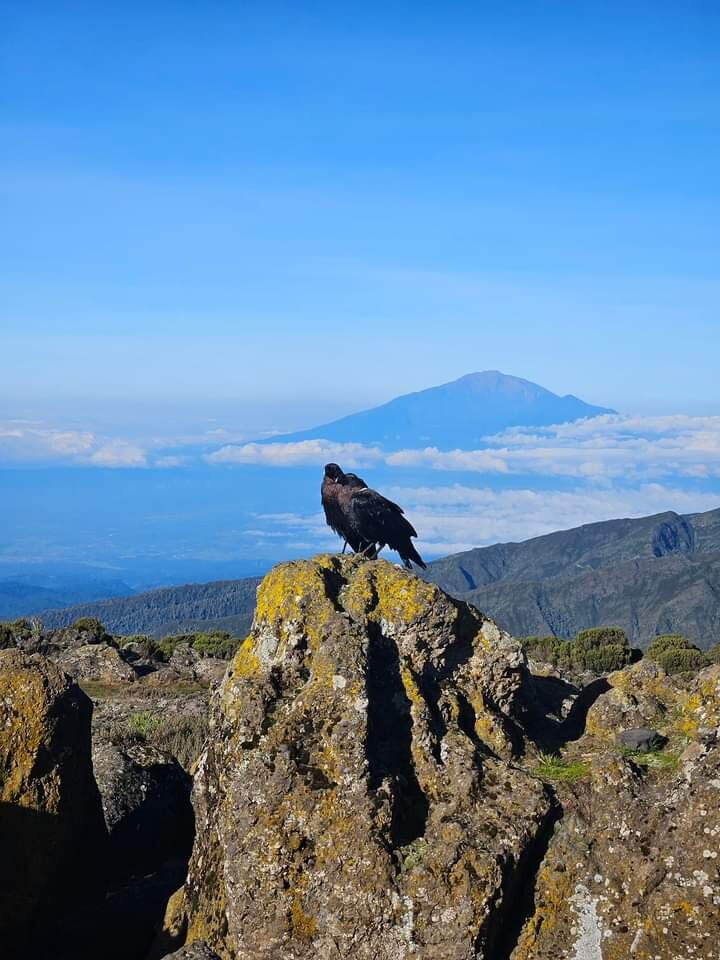
Camp Altitudes on Kilimanjaro Trekking Routes
Forest camps. Machame Camp around 3,000 metres, Mti Mkubwa on Lemosho about 2,800, Mandara on Marangu roughly 2,700, Simba on Rongai near 2,600, Umbwe Cave around 2,900.
Plateau and moorland camps. Shira 1 at roughly 3,500 metres, Shira 2 and New Shira around 3,850, Horombo on Marangu at 3,720, Kikelewa on Rongai about 3,600.
Southern circuit camps. Barranco at roughly 3,985 metres and Karanga at about 4,035, both used by Machame, Lemosho, Shira and Umbwe.
Northern camps. Moir Hut at roughly 4,200 metres, Buffalo or Pofu at about 4,020, Third Cave near 3,800, Mawenzi Tarn on Rongai at roughly 4,320.
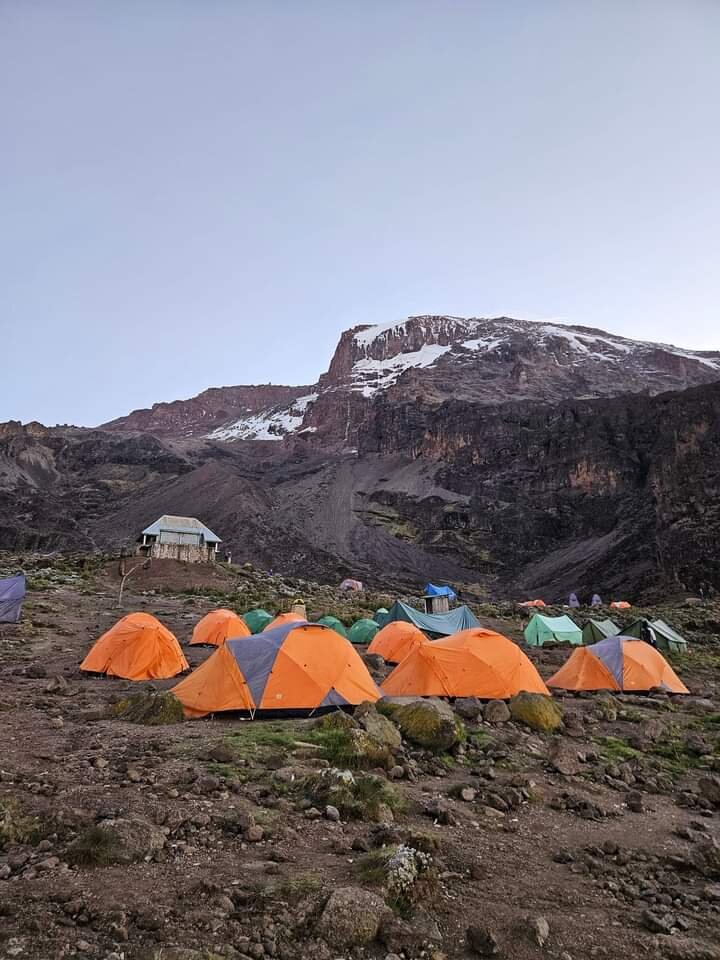
High camps. Barafu at roughly 4,670 metres, Kibo Hut at about 4,700, School Hut near 4,750. All three freeze water in bottles overnight, and all three are where the midnight climb to the crater rim begins.
Crater Camp. Around 5,750 metres, just below the summit, used on a few long private itineraries and carrying an extra park charge.
Climb High and Sleep Low Trekking Profiles
Sleeping altitude matters more than the highest point you touch in a day, and route designers exploit that.
Machame’s third day is the clearest example. You climb to over 4,600 metres at Lava Tower, spend several hours up there, then descend to sleep at Barranco Camp at about 3,985 metres. Net gain for the day is roughly 100 metres, and your body has had a strong stimulus without the cost of a night in thin air.
Lemosho does the same and adds an acclimatisation night at Moir Hut with a walk up the Lent Hills. The Northern Circuit goes furthest, with two consecutive days on the northern slopes that finish lower than they began, which is why it reports the strongest outcomes on the mountain.
Marangu and Rongai climb more steadily upward. The gradient is gentler and the walking is easier, and the body gets less help. That trade explains why the trail that feels easiest underfoot has the weakest record.
Shira illustrates the reverse. Because a vehicle carries you to roughly 3,500 metres at the Morum Barrier, your first night is spent at an altitude that other western routes do not reach until day three.
Two treks of identical length can perform quite differently, and the reason is almost always where they put you to sleep rather than how far they walk you.
How the Body Adjusts to Kilimanjaro Altitude
Acclimatisation begins on day one and continues throughout the trek. Breathing rate rises, the kidneys adjust blood chemistry, and over several days the blood’s capacity to carry oxygen improves.
Three things help it along, and none of them is fitness. Time, which is why itinerary length dominates every other variable. Pace, because walking slowly leaves capacity for the adjustment rather than spending it on exertion. And hydration, because dehydration in the dry air at altitude impairs the whole process.
Guides monitor how it is going. On a well run trek you get twice daily checks using a pulse oximeter to read your blood oxygen saturation, alongside symptom scoring against the Lake Louise system. Readings falling steeply or symptoms mounting are the signal to slow down, rest or descend.
Acetazolamide, sold as Diamox, speeds the process by prompting deeper breathing. It accelerates acclimatisation rather than replacing it, and it is worth discussing with your own doctor before you fly.
Why Fitness Does Not Solve Kilimanjaro Altitude
This is the most persistent misunderstanding about the mountain. Altitude illness does not track fitness, age or sex. Marathon runners are turned around every week and moderately fit walkers reach the summit.
There is even a mild inverse effect. Fit climbers tend to walk faster, arrive at camp sooner and push harder on the acclimatisation days, which is exactly the behaviour that provokes trouble. Guides repeat pole pole, slowly slowly, from the first hour because of it, and the trekkers who arrive last into camp are frequently the ones standing at Uhuru Peak.
Fitness does help. It gives you endurance for a twelve to fourteen hour summit day, it aids recovery between days, and it protects your knees on the descent. It simply does not exempt you from the altitude, and treating it as though it does is how prepared people end up turning back. Fitness answers only part of what actually makes the climb hard.
Altitude Records and Extremes on Kilimanjaro
The summit was reached for the first time in 1889. Since then the mountain has attracted a steady stream of records, and tens of thousands of climbers a year now attempt it.
Uhuru Peak is the highest walkable point in Africa, which is part of its appeal to trekkers who have no interest in technical mountaineering. It is one of the Seven Summits, the highest peaks on each continent, and by a wide margin the most accessible of them.
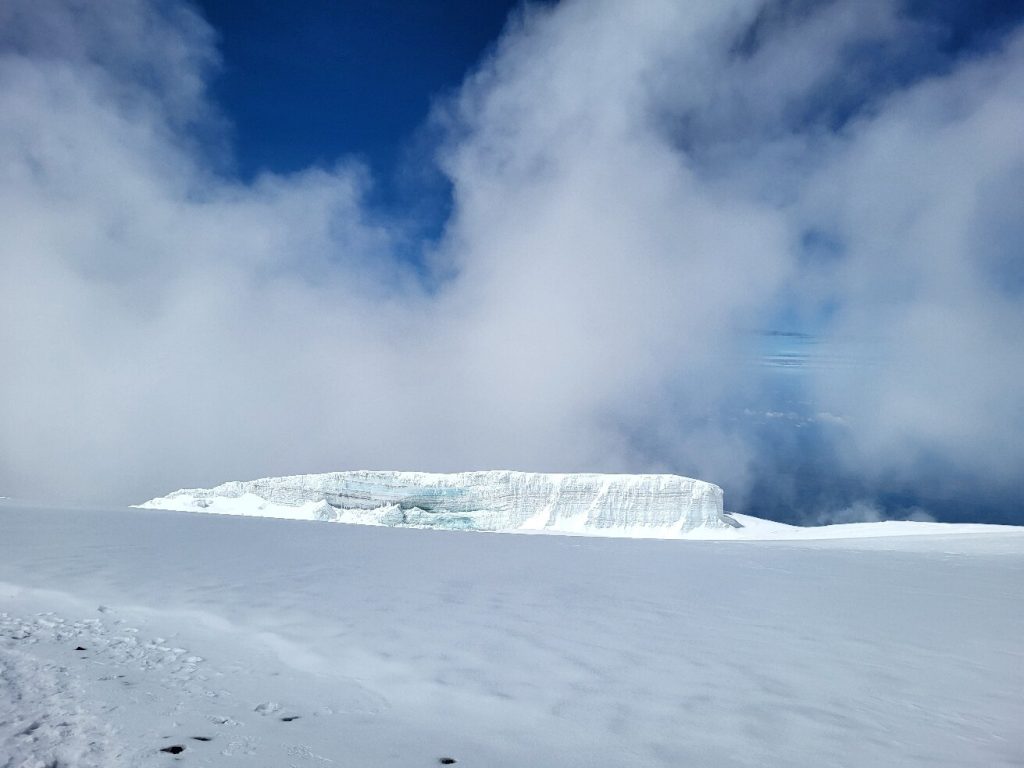
The glaciers on the crater rim, including the Furtwängler Glacier and the northern and southern ice fields, have retreated substantially over the past century and continue to do so, which is why many climbers now describe seeing them as one of the reasons to go sooner rather than later.
Snow can fall above roughly 5,000 metres in any month of the year, and December typically brings the most snowfall to the summit, which often persists into January and February.
Frequently Asked Questions About Kilimanjaro Altitude
How high is Kilimanjaro exactly?
Uhuru Peak stands at 5,895 metres, or 19,341 feet, on the rim of the Kibo crater. Gilman’s Point at about 5,685 metres and Stella Point at roughly 5,750 metres are lower points on the same rim that trekkers pass on the way up, and both earn a park certificate, though only Uhuru counts as the summit.
How much oxygen is there at the summit?
Roughly half what is available at sea level. Oxygen forms the same proportion of the air; what falls is pressure, so each breath delivers fewer molecules. At the high camps near 4,700 metres you are working with about 55 percent, and even at 3,000 metres it is down to around two thirds. This is why sleep and appetite suffer well before the summit push.
Does the altitude affect the cost of a climb?
Indirectly, because managing altitude requires days and days are charged for. Conservation fees run roughly $70 per person per day and camping about $50 per night, before the 18 percent VAT most published tariffs exclude, so each extra acclimatisation night adds around $200 to $400 once wages and food are included. That is why eight day Lemosho at $2,400 to $3,500 costs more than five day Marangu at $1,200 to $1,500, and why it performs so much better.
Can I acclimatise before arriving in Tanzania?
Only by spending real time at altitude. Three or four days on nearby Mount Meru at 4,562 metres is the most useful preparation available in the region and many operators sell it alongside a Kilimanjaro trek for roughly $600 to $1,000. Altitude tents and hypoxic chambers exist and are expensive, awkward and generally less valuable than simply adding two nights to your itinerary.
What are the five climate zones on Kilimanjaro?
Cultivation from about 800 to 1,800 metres, rainforest from 1,800 to 2,800, heath and moorland from 2,800 to 4,000, alpine desert from 4,000 to 5,000, and the arctic summit zone above 5,000 metres. Temperatures range from 21 to 27 degrees Celsius in the forest to between minus seven and minus twenty at the summit before dawn.
Is the altitude the same on every route?
The summit is, at 5,895 metres. What differs is the profile beneath it. High camps sit between 4,600 and 4,750 metres on every trail, but routes vary in how gradually they get you there and whether they let you climb high and sleep lower. Machame, Lemosho and the Northern Circuit build that in; Marangu, Rongai and Shira do so far less.
Booking Your Kilimanjaro Trip
The safari companies and tour operators listed on this website put trips like this together for a living and know which camps, guides and routes actually deliver. We are an independent guide to Kilimanjaro; we do not book or sell tours ourselves.
When you are ready, arrange your safari, tour or holiday with one of the recognised operators listed here. Tell them your dates and what matters most, and a real person, not a form, will handle the itinerary, park bookings and logistics for you.