How Long Does It Take to Climb Kilimanjaro
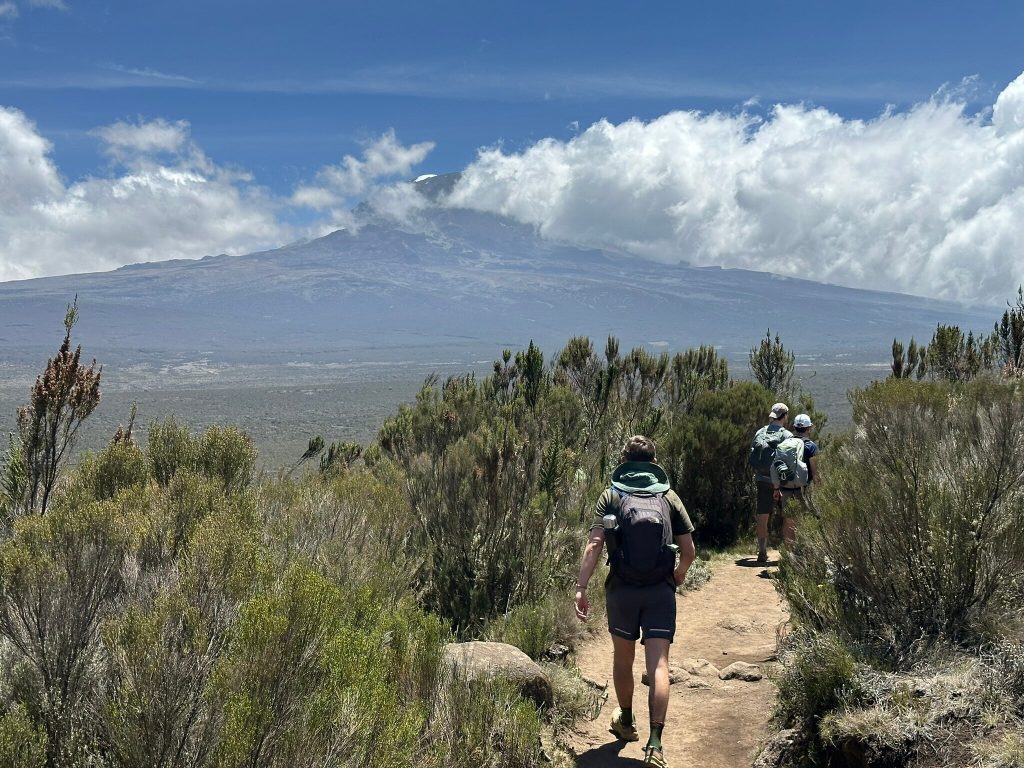
Climbing Kilimanjaro takes five to nine days on the mountain, with seven or eight days being the usual recommendation. Five day treks report roughly 27 percent reaching the summit and eight or nine day treks around 90 percent, so duration is the single strongest predictor of the outcome. Allow ten to fourteen days in total including travel. Kilimanjaro stands at 5,895 metres in northern Tanzania.
How Many Days a Kilimanjaro Climbing Trek Takes
Every Kilimanjaro trek is sold by day count, and the number covers your time inside the park from the gate to the exit rather than your whole trip. A seven day trek means seven days walking and six nights sleeping on the mountain, and those nights are what let your body adapt to the height it is being taken to.
Five days is the legal minimum, available only on Marangu. Six days is possible on Machame, Rongai, Umbwe and Marangu. Seven is the most commonly booked length across the mountain. Eight is standard on Lemosho and the recommendation most experienced operators make. Nine is the Northern Circuit, the longest trail available.
One detail worth checking on any quote. Some operators advertise a nine day package that contains seven days of walking, counting arrival and departure. Ask how many nights you sleep on the mountain, because that is the number that determines both your cost and your acclimatisation.
The relationship between days and outcomes is steep and well documented. Five day treks put roughly a quarter of climbers on the summit. Six day treks manage around half. Seven day treks reach 65 to 85 percent. Eight and nine day treks reach around 90. Same mountain, same walkers, different arithmetic.
Five Day Kilimanjaro Treks
Only Marangu can be walked in five days, and the itinerary is unforgiving: Mandara at about 2,700 metres, Horombo at 3,720, Kibo at 4,700, then summit and descend, then out. Height gained on every consecutive day with no rest and almost no chance to sleep lower than the day’s high point.
Reported outcomes sit at 27 to 30 percent, the weakest figure on the mountain. Most of those who turn back do so on the scree between Kibo Hut and Gilman’s Point, having run out of acclimatisation rather than fitness.
It exists for people whose leave genuinely will not stretch, and for those who accept the odds going in. If that is you, go in clear eyed rather than hopeful, and understand that reaching Gilman’s Point on the crater rim still earns a certificate.
Six Day Kilimanjaro Trekking Itineraries
Six days is where most budget packages sit and where the arithmetic starts working. Six day Marangu adds the rest day at Horombo with a walk up towards Zebra Rocks, and that one day roughly doubles the odds to somewhere between 50 and 65 percent.
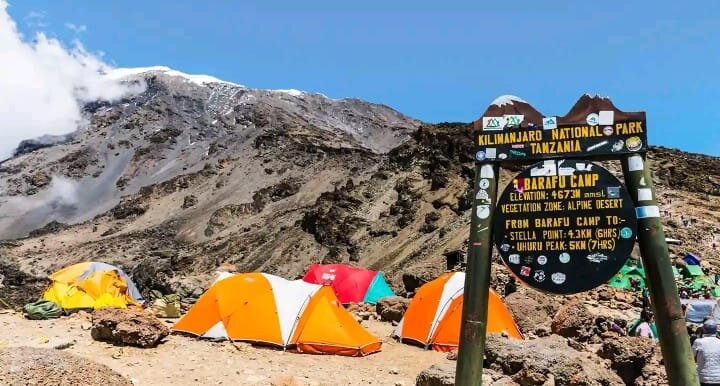
Six day Machame skips the night at Karanga, walking from Barranco Camp to Barafu in a single push. It reports between 50 and 73 percent depending on the operator, and the range is wide because pacing and crew quality matter more when the schedule is tight.
Six day Rongai and Umbwe are both harder than their day counts suggest. Rongai lacks the climb high and sleep low pattern that helps on Machame, and Umbwe gains roughly 2,300 metres in two days with no rest anywhere.
Six days works for walkers who have spent time above 4,000 metres before and know how they respond. For a first high altitude trip it is tight.
Seven Day Kilimanjaro Treks
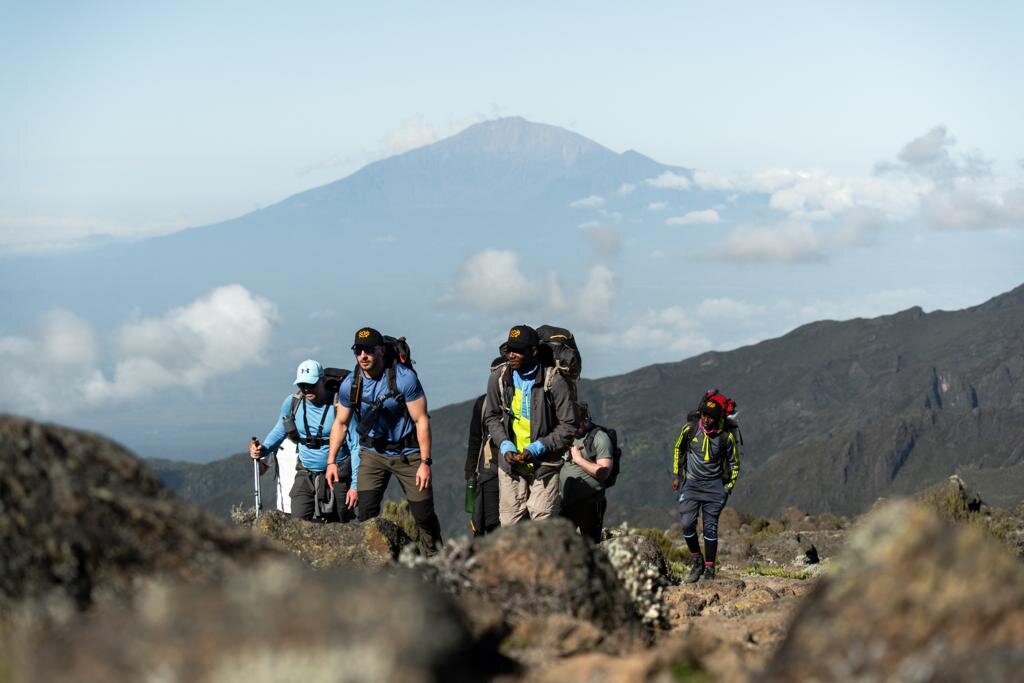
The sensible middle, and the most widely booked length on the mountain.
Seven day Machame adds the Karanga night, which is a short walking day at around 4,000 metres and worth 10 to 15 percentage points on its own. Reported outcomes sit near 85 percent. Seven day Lemosho drops the Moir Hut detour but keeps everything else and reports around the same. Seven day Rongai adds the acclimatisation day at Mawenzi Tarn beneath the spires of the second cone, lifting it from roughly 70 percent to about 85.
Seven days is also the length that fits most working holidays. Count the travel and you are looking at around ten days away, which many people can free without difficulty.
Eight and Nine Day Kilimanjaro Trekking Itineraries
Eight day Lemosho is the itinerary experienced operators put in front of first timers. It walks in from Londorossi Gate through western forest, crosses the Shira Plateau, includes an acclimatisation night at Moir Hut at roughly 4,200 metres with a walk up the Lent Hills, then joins the southern trail. Roughly 90 percent reach Uhuru Peak.
The nine day Northern Circuit is the longest trek available, looping almost the whole mountain with two consecutive days on the northern slopes that finish lower than they began. Reported outcomes run 90 to 95 percent, the strongest on Kilimanjaro, and the camps are the quietest.
Ten day versions exist privately, occasionally with a night at Crater Camp near the summit. Beyond nine days the returns flatten out considerably: the jump from six days to eight is worth perhaps 30 percentage points, while eight to nine is worth around five.
Daily Walking Hours on a Kilimanjaro Trek
Most days involve four to seven hours on the trail, and the distances are modest by hiking standards. What makes them tiring is altitude and pace rather than mileage.
Typical days look like this. Forest days run five to seven hours, sometimes with a steep gradient. Moorland and plateau days run four to six. Acclimatisation days, such as Karanga on Machame or the northern slope days on the Northern Circuit, can be as short as three or four hours with almost no net height gain, which feels pointless and is doing the most important work of the week.
Total walking distance varies by route. Umbwe is shortest at around 53 kilometres, Machame roughly 62, Marangu about 64 return, Lemosho near 70 on eight days, Rongai 70 to 74, and the Northern Circuit close to 90.
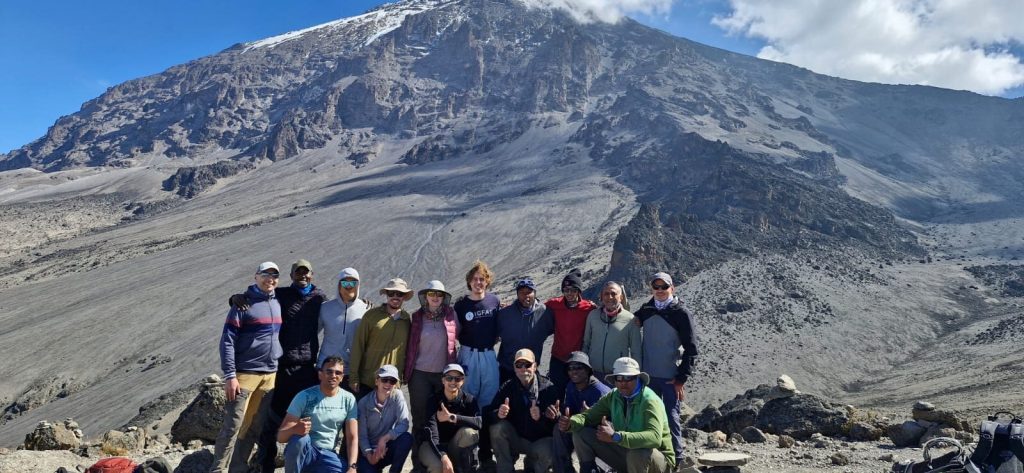
Nobody finds the daily distances hard. What people find hard is walking them at two thirds of their natural speed, for a week, while sleeping badly in thin air.
How Long Summit Night Takes on a Kilimanjaro Trek
The longest day by a wide margin, and it starts before the previous one has properly ended.
You are woken around eleven at night at Barafu, Kibo Hut or School Hut depending on the route, and leave at midnight. The climb to the crater rim covers roughly five to six kilometres and takes five to seven hours on loose scree switchbacks in the dark, with temperatures between about minus seven and minus twenty degrees Celsius. Whatever length of trek you book, that one night dictates most of what you end up packing.
Trekkers arriving from the west reach Stella Point and walk the rim for around an hour to Uhuru Peak. Those arriving from the east reach Gilman’s Point and walk one and a half to two hours. So the ascent alone runs six to eight hours.
Then you descend to your high camp for a rest and hot food, and continue down to a lower camp the same day. Total time on the move from midnight is commonly twelve to fourteen hours, and on the Northern Circuit it can stretch to sixteen.
How Long the Descent Takes
Faster than the ascent and harder on the body than people expect.
Coming off the summit you drop from 5,895 metres to a camp at around 3,100 metres in a single afternoon, which is most of the mountain in one go. Scree descent is quick and punishing, and trekking poles and knee support earn their place here more than anywhere else.
The final morning is short. Three to four hours through the forest to Mweka Gate on most routes, where you sign out and collect your certificate. Marangu and Rongai finish at Marangu Gate instead, which is a longer walk of roughly 20 kilometres over five to seven hours from Horombo.
Total Trip Length Including Travel Days
Work backwards from what you actually have rather than from the trek length.
Add your flights, which for most people means one full day in each direction. Add a night in Moshi before your briefing, so a delayed bag is an inconvenience rather than a crisis. Add a night after you come down for a shower, a meal and your certificate.
That gives roughly ten days away for a seven day trek, eleven or twelve for an eight day Lemosho, and around fourteen for the nine day Northern Circuit. If you plan to add a northern circuit safari or several days in Zanzibar afterwards, add another three to five and a rest day between the two. Once the number of days is fixed, deciding which trail to walk becomes a much simpler question.
Why Longer Kilimanjaro Treks Reach the Summit More Often
Altitude sickness is the leading reason climbers turn back, and time is the only reliable defence. Your body needs days, not hours, to produce the changes that let it work in air holding roughly half the oxygen of sea level. That is why reported summit rates track itinerary length more closely than they track anything else.
Two treks of equal length can still differ, which is where trail design comes in. Machame, Lemosho and the Northern Circuit take you high during the day and bring you back down to sleep, sometimes repeatedly. Rongai and Marangu climb steadily upward, so the body gets less help even though the walking is gentler. The Shira variant distorts things further again by driving you to 3,500 metres for your first night, which is why a day count on its own can mislead.
Fitness barely enters it, which surprises people. Altitude sickness does not track fitness, age or sex, and very fit walkers sometimes fare worse because they climb too fast and outpace their own physiology. Guides say pole pole for exactly this reason.
Best Time to Trek Whatever Length You Choose
Two dry windows carry most climbs. January to early March brings warmer days, clear mornings and often snow on the crater rim. Late June to October is the long dry season, colder at height but the most settled weather of the year, with July and August busiest and September quieter while staying dry.
April and May are the long rains and November brings shorter ones. Both are cheaper and quieter, trails are muddier and views come and go. If your dates fall in a wet stretch, the northern routes sit in the rain shadow and hold up considerably better.
Frequently Asked Questions About How Long Kilimanjaro Takes
What is the minimum number of days to climb Kilimanjaro?
Five, on the Marangu route only. It is the shortest legal itinerary and reports the weakest outcomes at 27 to 30 percent. Six day Marangu with the Horombo rest day roughly doubles that, and it costs only modestly more, which makes the five day version poor value even on a tight budget.
How much does each extra day cost?
Roughly $200 to $400 per person per additional day. Park charges alone account for a large part of that: conservation fees of about $70 per person per day, or near $82 with the 18 percent VAT most published tariffs exclude, plus camping fees around $50 per night. Add another day of wages and food for a crew of around ten. Five and six day Marangu runs $1,200 to $2,200, seven day Machame $2,000 to $3,000, eight day Lemosho $2,400 to $3,500 and nine day Northern Circuit $2,800 to $3,800.
How many days should a first time trekker book?
Eight if the budget and leave allow, seven as a solid alternative. Eight day Lemosho reports around 90 percent reaching the summit against roughly 85 percent on seven day Machame and 50 to 73 percent on six day itineraries. Anything shorter than seven days for a first high altitude trip is taking on avoidable risk of turning back.
How long is summit day from start to finish?
Twelve to fourteen hours of movement on most routes, and up to sixteen on the Northern Circuit. You leave your high camp at midnight, take five to seven hours to reach the crater rim, then one to two hours along the rim to Uhuru Peak depending on which side you came up, then descend to your high camp and continue to a lower one the same day.
How long should I allow for the whole trip?
Ten days for a seven day trek, eleven or twelve for eight days, and around fourteen for the nine day Northern Circuit. That covers flights, a night in Moshi before your briefing and a night after the descent. Add three to five more days for a safari or Zanzibar extension, plus a rest day between the climb and the extension.
Can you climb Kilimanjaro in three or four days?
No. Five days is the park minimum and no operator can shorten it legally. Even trail runners attempting speed records are working within a permitted framework and are extremely acclimatised beforehand. For an ordinary trekker, a four day attempt would be both prohibited and dangerous.
Booking Your Kilimanjaro Trip
The safari companies and tour operators listed on this website put trips like this together for a living and know which camps, guides and routes actually deliver. We are an independent guide to Kilimanjaro; we do not book or sell tours ourselves.
When you are ready, arrange your safari, tour or holiday with one of the recognised operators listed here. Tell them your dates and what matters most, and a real person, not a form, will handle the itinerary, park bookings and logistics for you.