Machame Route vs Lemosho Route

Machame and Lemosho are the two most recommended of the seven trekking routes on Mount Kilimanjaro, and they share their entire second half, so the real difference lies in the first two days and the length of the itinerary. Lemosho starts in the west and runs seven or eight days with quieter walking; Machame starts in the south over six or seven days and costs less. Both climb to Uhuru Peak at 5,895 metres inside Kilimanjaro National Park in northern Tanzania.
Machame and Lemosho Trekking Compared at a Glance
Machame trek. Machame Gate on the southern side, roughly 62 kilometres, six or seven days, camping. Summit rates near 85 percent on seven days and around 50 to 73 percent on six. Used by close to half of all Kilimanjaro climbers.
Lemosho trek. Londorossi Gate in the west, roughly 70 kilometres on eight days, camping. Summit rates near 90 percent on eight days and around 85 percent on seven. Used by a small fraction of climbers, though the share is rising.
Shared. Everything from Lava Tower onwards. Barranco Camp, the Barranco Wall, Karanga, Barafu, Stella Point, Uhuru Peak and the Mweka descent are identical on both treks.
Different. The first two days, the number of nights available, the price, and how many other groups you walk beside before the trails merge.
Where Each Kilimanjaro Trek Begins
Machame Gate sits at about 1,800 metres on the south western flank, and it is one of the easiest trailheads to reach. Roughly 45 minutes to an hour from Moshi, so your first morning involves a short drive, a short registration queue and walking by lunchtime.
Londorossi Gate, for Lemosho, sits at about 2,250 metres on the far western flank, two to three hours from Moshi and longer from Arusha. Park formalities take longer because the gate handles fewer groups, and then a rough forest track carries you further towards the trailhead. In wet months vehicles cannot always finish that track, which sometimes means walking more than the itinerary promised.
That difference sounds administrative and it is not entirely. A Lemosho trek gives up most of its first morning to travel; a Machame trek starts walking sooner and gets a longer first day on the trail.
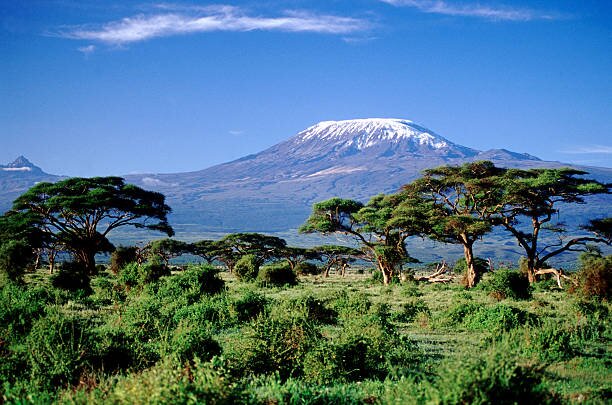
The First Two Days of Each Trekking Route
This is where the two treks genuinely part company.
The Machame trail climbs steeply through dense montane forest for five to seven hours on day one, on ground that is usually wet whatever the month, because this southern flank catches a great deal of cloud. Colobus and blue monkeys are commonly seen. There is no view. Day two breaks out onto moorland and climbs about 800 metres to New Shira Camp at roughly 3,850 metres, where Kibo appears ahead for the first time.
Lemosho opens with three to four hours through undisturbed western forest to Mti Mkubwa at around 2,800 metres, on a trail where you may not pass another group all day. Elephant and buffalo sign turns up on the path here, which is why a ranger occasionally walks with parties on the lower western slopes, though sightings are uncommon. Day two crosses the Shira Ridge and drops to Shira 1 Camp at roughly 3,500 metres, and cresting that ridge to see the whole plateau open out is the moment people remember from this trek.
Then, on the eight day Lemosho, comes the day Machame does not have: a gentle crossing east past the Shira Cathedral with a detour north to Moir Hut at around 4,200 metres, and an afternoon walk up the Lent Hills before sleeping lower. That single day is most of the reason the two treks report different outcomes.
The Shira Plateau is the honest tie breaker on scenery. Machame clips its southern edge; Lemosho walks across the middle of it. Thirteen kilometres of open high ground with Kibo filling the eastern horizon is the finest walking either trek offers, and only one of them gives you a full day of it.
Shared Southern Circuit Trekking from Lava Tower Onwards
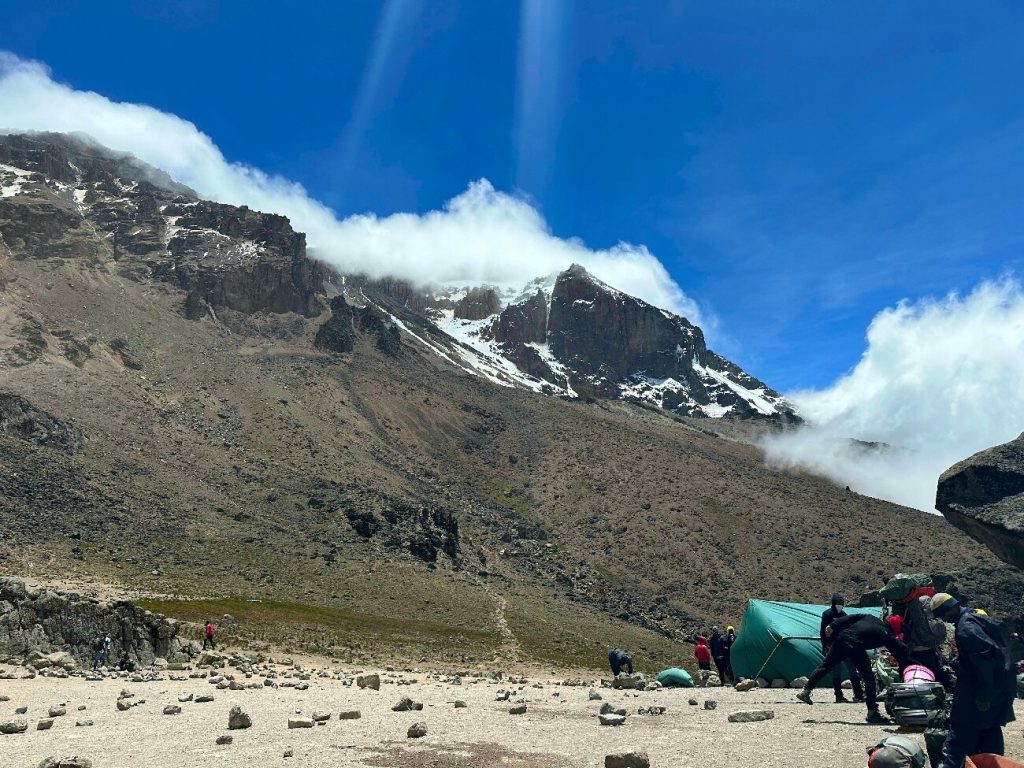
Both trails converge near Lava Tower, a volcanic plug at about 4,640 metres, and from that point the treks are the same walk.
You drop into the Barranco Valley to camp at roughly 3,985 metres, ending the day lower than the highest point you touched, which is the acclimatisation pattern both routes rely on. In the morning comes the Barranco Wall, a 257 metre non technical scramble that takes about an hour and looks considerably worse from the campsite than it feels with hands on the rock.
Beyond the wall, ridges and valleys lead down into the Karanga Valley and back up to Karanga Camp at roughly 4,035 metres, then a short steep pull through alpine desert to Barafu Camp at around 4,670 metres. Identical camps, identical views of the southern ice fields, identical crowds.
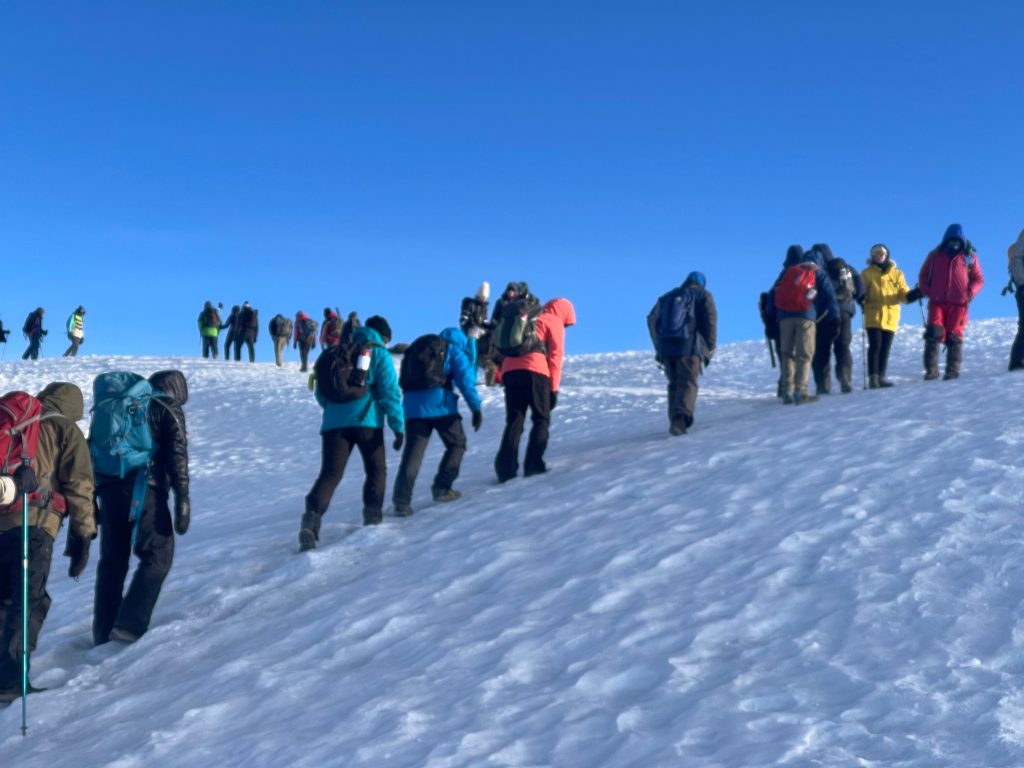
Summit Night on a Machame or Lemosho Trek
There is no difference here at all, and that is worth stating plainly, because some marketing implies otherwise.
Both treks leave Barafu around midnight, climb roughly five kilometres of switchbacks on loose scree in five to seven hours, and reach the crater rim at Stella Point at about 5,750 metres as the sky lightens. From there it is around an hour along the rim to Uhuru Peak at 5,895 metres. Temperatures before dawn sit between roughly minus seven and minus twenty degrees Celsius, colder in wind.
Both descend to Barafu, then on to Mweka or Millennium Camp at around 3,100 metres, with the day totalling twelve to fourteen hours on the move. Both walk out through the forest to Mweka Gate the following morning.
Where the difference shows is in how you arrive at Barafu. A trekker on eight day Lemosho has spent seven nights getting there, with an extra night above 4,000 metres. A trekker on six day Machame has spent five and skipped Karanga. Same summit night, two different bodies attempting it.
Crowds and Camps on Each Trekking Route
Machame carries close to half of all Kilimanjaro traffic. In July and August that means several hundred trekkers sharing camps, queues forming at the base of the Barranco Wall in the morning, and broken sleep at Barafu as groups leave for the summit at staggered times.
Lemosho’s first two days are among the quietest walking on the mountain. Then it joins the same trail and you inherit the same crowds from Barranco onwards. Nobody should book Lemosho expecting solitude on summit night; what you get is two peaceful days at the start and a calmer beginning to the week.
If crowds are the deciding factor rather than a preference, neither of these is the answer. Rongai on the northern flank, or the Northern Circuit that shares this same western start before looping north, are the quiet routes.
Ask what you are actually buying with the Lemosho premium. It is not a different summit and not a different Barranco Wall. It is two quiet forest days, a full crossing of the Shira Plateau, and one extra night of acclimatisation.
Summit Odds on Machame and Lemosho Treks
The reported figures line up in a way that is easier to read once you sort by nights rather than by name.
Six day Machame departures commonly report somewhere between 50 and 73 percent depending on the operator. Seven day Machame sits around 85 percent. Seven day Lemosho also sits around 85 percent. Eight day Lemosho reaches roughly 90 percent. Six day Lemosho, where a vehicle drops you at about 3,400 metres on the plateau and the forest is skipped, falls back towards 75 percent.
Read down that list and the pattern is obvious. At equal length the two treks perform almost identically, because they share most of their trail. Lemosho’s advantage comes from the fact that it is usually sold longer. Which means the practical instruction is not to choose Lemosho over Machame, but to choose the longer itinerary of whichever one your budget reaches.
Trip Length and Value on Each Trekking Route
Machame is the cheaper trek at any given length, for two reasons. Its trailhead transfer is short while Londorossi involves hours of driving and a forest track, and it is sold in enormous volume, which keeps group departures full and prices competitive. Only Marangu undercuts it, and that saving comes with much weaker summit odds.
Lemosho carries an extra night on its standard itinerary, and because park charges are levied per day and per night regardless of trail, an eight day trek always costs meaningfully more than a seven day one. Crew wages and food scale the same way.
In leave terms, count backwards. Add travel days plus a night in Moshi before your briefing and a night after the descent. An eight day Lemosho realistically wants eleven or twelve days away; a seven day Machame fits comfortably into ten.
Which Kilimanjaro Trek to Book
Book eight day Lemosho if you have the days and the budget, have not slept at altitude before, and want the plateau crossing and a quiet start. It is the trek most experienced operators put in front of first timers and the reasoning holds, which is why it heads most rankings of the best way up the mountain.
Book seven day Machame if budget is the binding constraint, if you are relaxed about company on the trail, or if you are booking at short notice, since Machame departures are far easier to join. It is the best value trek on the mountain and the difference in outcome against seven day Lemosho is negligible.
Do not book six day Lemosho. It removes the forest days and the acclimatisation night, which are the only things you were paying extra for, and a seven day Machame beats it on every measure including price.
Best Time to Trek Either Route
Both trails follow the same seasonal pattern. January to early March brings warmer days, clear mornings and often snow on the crater rim. Late June to October is the long dry season and the most settled weather of the year, with July and August busiest and September quieter while staying dry.
April and May are the long rains. Machame’s forest day, already the wettest section on the mountain, becomes heavy going, and on Lemosho the concern shifts to the Londorossi forest track, which can force an earlier start or a longer walk in. November into early December brings shorter rains. Neither route is the sensible choice for a wet week; the northern trails cope far better.
Frequently Asked Questions About Machame and Lemosho
How much more does Lemosho cost than Machame?
An eight day Lemosho generally runs $2,400 to $3,500 per person with a mid range operator, against $2,000 to $3,000 for a seven day Machame, so expect a difference of roughly $400 to $600. Some of that is the extra night and some is the longer transfer to Londorossi. At equal length the gap narrows to a couple of hundred dollars. Flights, the visa at around $50, insurance, tips and personal gear sit outside both packages.
Why do park fees make longer routes dearer?
Conservation fees run about $70 per person per day and camping about $50 per person per night, before the 18 percent VAT that most published tariffs exclude, plus a one off rescue fee near $20 and small entry charges for every guide, porter and cook. An eight day trek therefore carries one more day of conservation fees and one more night of camping fees than a seven day one, plus another day of wages and food for a crew of around ten. The cost per day is nearly identical on both routes.
Do Machame and Lemosho use the same summit route?
Yes. Both merge near Lava Tower and follow the Southern Circuit through Barranco, Karanga and Barafu, then climb to Stella Point and walk the crater rim to Uhuru Peak. Both descend via Mweka. Summit night is the same walk in the same conditions on either trek.
Is Lemosho less crowded than Machame?
For the first two days, considerably. After the trails join near Lava Tower you share every camp with Machame groups, so Barranco, Karanga and Barafu are as busy on one trek as the other. Machame carries close to half of all Kilimanjaro traffic, and in July and August the Barranco Wall can back up in the morning on both routes.
How much should I tip on each route?
Around $250 to $350 per climber on a seven day Machame and $300 to $400 on an eight day Lemosho, since crews and itineraries are both larger. Pooled across the group rather than paid per climber, the commonly used daily figures are $20 to $25 for the lead guide, $10 to $15 for assistant guides and the cook, and $5 to $10 for each porter. Bring clean US dollar notes from home.
Which route is better for a first time trekker?
Eight day Lemosho, if the days and money are available, because the gradual start and the Moir Hut acclimatisation night do genuine work. Seven day Machame is a close second and a perfectly sound first climb. What matters more than the choice between them is avoiding any six day itinerary on either trail if you can help it.
Booking Your Kilimanjaro Trip
The safari companies and tour operators listed on this website put trips like this together for a living and know which camps, guides and routes actually deliver. We are an independent guide to Kilimanjaro; we do not book or sell tours ourselves.
When you are ready, arrange your safari, tour or holiday with one of the recognised operators listed here. Tell them your dates and what matters most, and a real person, not a form, will handle the itinerary, park bookings and logistics for you.