Cheapest Kilimanjaro Route
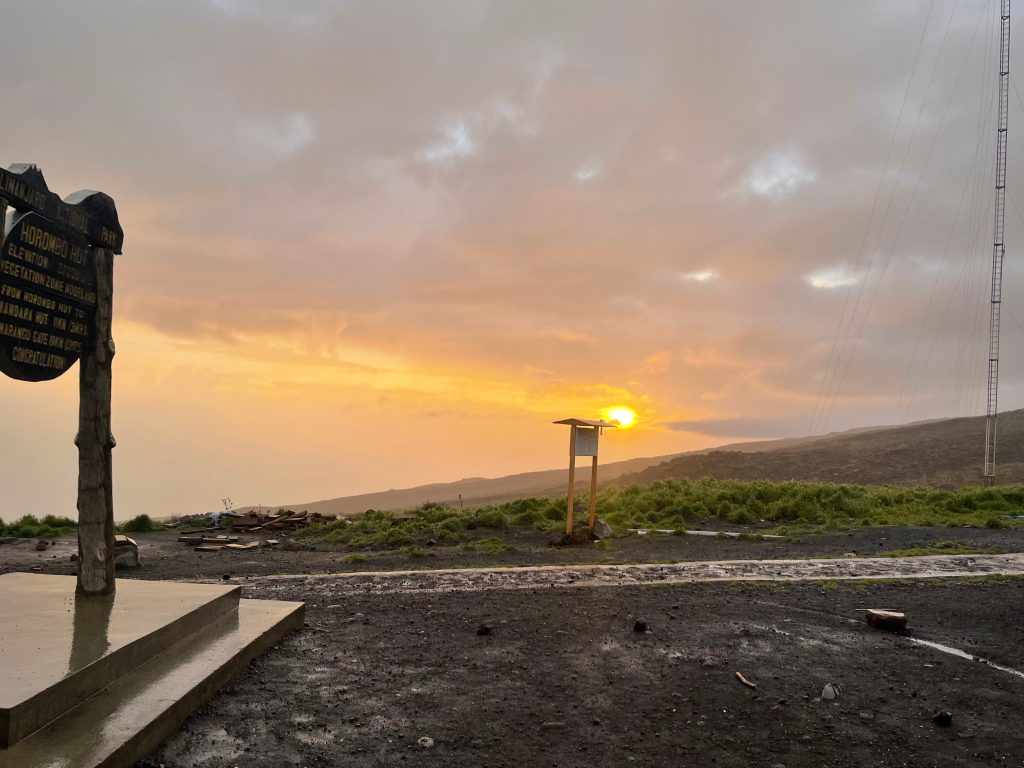
The cheapest route to climb Mount Kilimanjaro is the five or six day Marangu trek, because it is the shortest itinerary on the mountain and its hut accommodation needs less equipment and fewer porters than camping. Shorter Machame treks come next. Budget group departures are the lowest priced way to book, with the full figures set out below. Marangu and Machame both sit inside Kilimanjaro National Park in northern Tanzania.
Why Marangu Is the Cheapest Kilimanjaro Trekking Route
Three things drive the price of any Kilimanjaro trek, and Marangu is favourably placed on all three.
First, days. Park charges are levied per person per day and per night regardless of which trail you walk, so the shortest itinerary always carries the smallest fixed bill. Marangu can legally be done in five days, which no other route matches, and its six day version is still shorter than the standard Machame or Lemosho.
Second, equipment and crew. Because you sleep in the huts at Mandara, Horombo and Kibo, nobody carries tents, sleeping mats, a mess tent or camp furniture up the mountain. That trims the porter count, and porters are a real line item.
Third, volume. Marangu has been the tourist path up Kilimanjaro for decades, group departures fill easily, and competition among operators selling it keeps prices keen. It helps that the trail itself is the gentlest walking on the mountain, which widens the market for it.
Marangu is cheapest largely because it is shortest, and shortest is also why it has the weakest record on the mountain. That is not a coincidence and it is the single most useful thing to understand before you book on price alone.
What the Cheapest Kilimanjaro Trek Actually Costs You
Here is the part that budget comparisons tend to leave out. On a five day Marangu, roughly a quarter to a third of climbers reach Uhuru Peak. The rest turn back, usually on the scree between Kibo Hut and Gilman’s Point.
Everything you spend still gets spent. Flights, the visa, insurance, the gear, the leave from work, the tips, the park fees. The only thing you do not get is the summit. Weighed that way, the saving on a short itinerary is not really a saving; it is a bet, and the odds are published.
A six day Marangu with its rest day at Horombo roughly doubles the odds for a modest amount more. A seven day Machame does considerably better again. The cheapest trek that actually works is a different question from the cheapest trek, and it is usually the more useful one to ask.
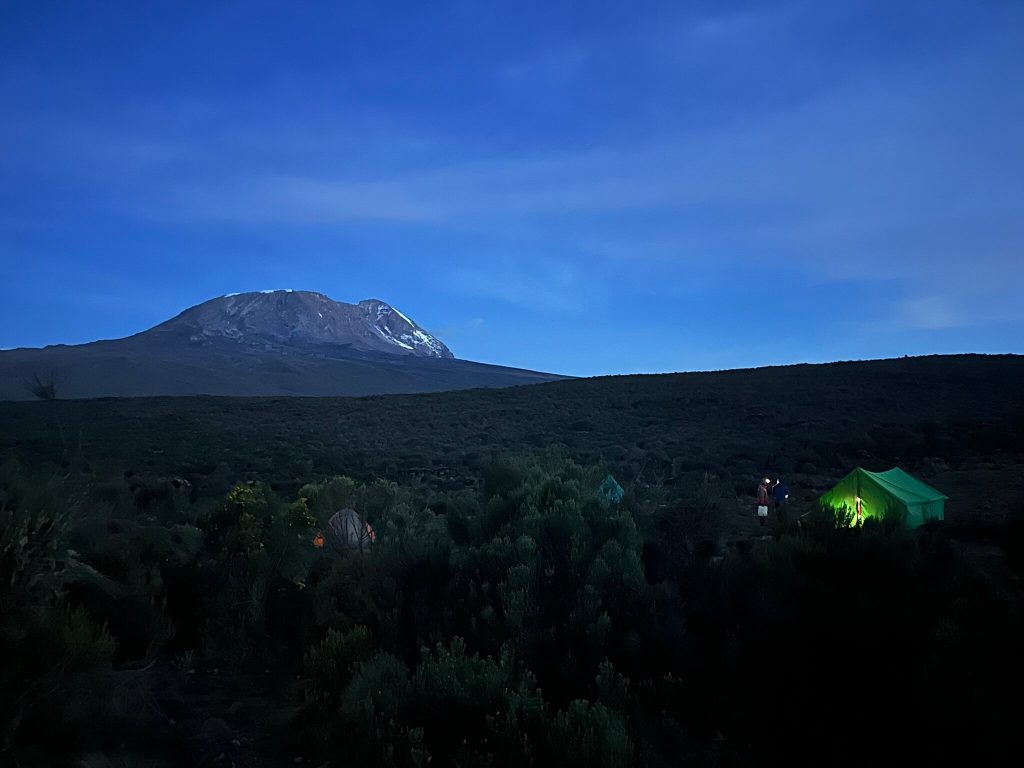
Cheapest Kilimanjaro Routes Ranked by Trek Length
Five day Marangu. The cheapest option available anywhere. Four nights in huts, no rest day. Summit rates around 27 to 30 percent.
Six day Marangu. Adds the Horombo rest day and a walk to Zebra Rocks. Modest price increase, roughly double the odds at 50 to 65 percent.
Six day Machame. The cheapest camping trek. Skips Karanga. Summit rates around 50 to 73 percent depending on the operator.
Six day Rongai or Umbwe. Similar pricing to six day Machame but with weaker profiles, so poor value despite the comparable cost.
Seven day Machame. The best value trek on the mountain. Around 85 percent reach the summit. Costs more than any option above and delivers far more.
Eight day Lemosho and nine day Northern Circuit. The dearest routes, purely on length. Summit rates of roughly 90 and 90 to 95 percent.
How to Book a Cheap Kilimanjaro Trek Without Cutting Corners
There are legitimate ways to bring the price down and there are ways that shift the cost onto somebody else. Worth knowing which is which.
Join a group departure rather than booking privately. Crew and vehicle costs are shared across more climbers, and this is the single largest honest saving available. Ask an operator when their next open group leaves and whether you can slot into it.
Travel in a shoulder or wet period. Prices soften in April, May and November, and if your dates are flexible that is real money for weather that is often fine on the northern side of the mountain.
Rent your gear in Moshi rather than buying it. Sleeping bags, down jackets, poles and gaiters are all available in town at a fraction of retail, and you avoid flying with kit you may use once.
Book directly with a Tanzanian operator instead of through an overseas agent adding a margin. Check they are licensed, that they are a KPAP partner, and that their guides carry oxygen and a pulse oximeter. The wider guide to climbing Kilimanjaro sets out the rest of the questions worth putting to them.
Fly into Kilimanjaro International Airport rather than routing through Nairobi and driving, unless the fare difference is substantial, because the border crossing and long transfer eat a day.
Where a Cheap Kilimanjaro Climb Goes Wrong
Below a certain price the arithmetic stops working. Park fees are fixed and non negotiable, food and fuel cost what they cost, and the only flexible line left is what the crew is paid.
The Kilimanjaro Porters Assistance Project sets minimum wages, load limits of 20 kilograms per porter, and standards for meals and shelter, and monitors partner companies against a published scorecard. A large share of expeditions on the mountain do not meet those standards. When a package is dramatically undercutting everyone else, that gap is usually the reason.
The other corners cut are less visible and matter to you directly: worn tents that leak, thin food that leaves you underfuelled at altitude, no bottled oxygen, guides with no wilderness first aid training, and no pulse oximeter for the twice daily health checks that catch altitude sickness early. Operators running rock bottom prices also have a commercial reason not to turn a sick climber around.
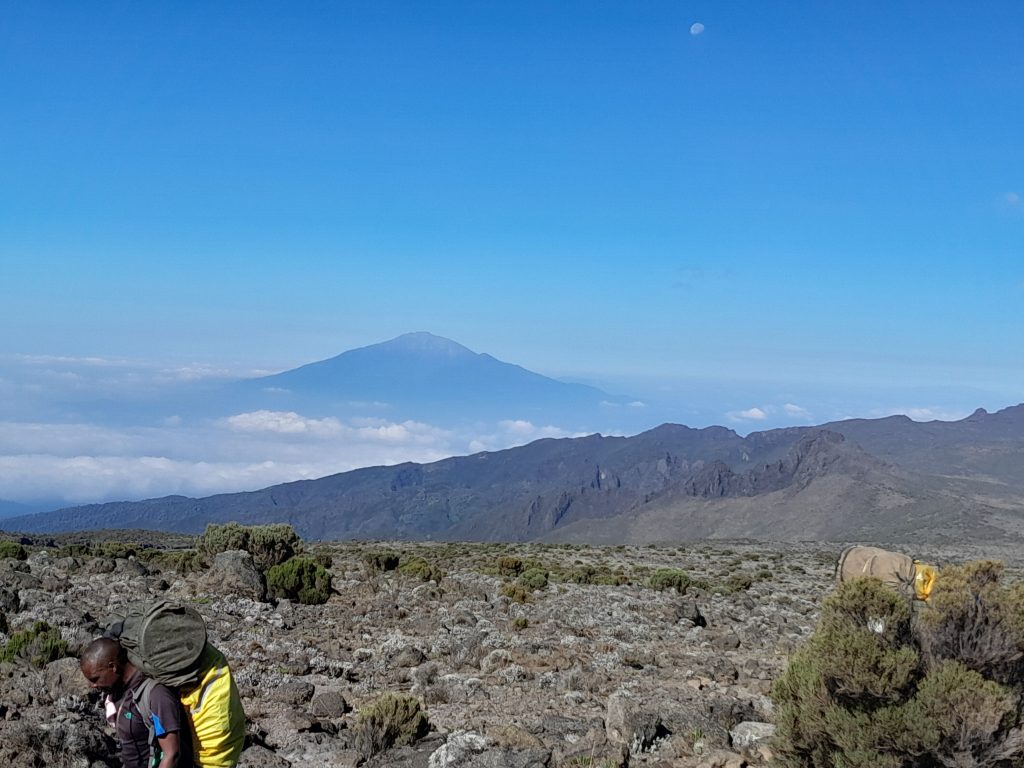
Every quote on Kilimanjaro contains the same fixed park charges. When two prices differ sharply, the difference is almost never clever logistics. It is food, equipment, safety kit or wages.
Extra Costs on Even the Cheapest Kilimanjaro Trek
A cheap package price is not a cheap trip, and the gap catches people out. Tips are the big one and they are customary rather than optional, since crew wages are a base amount that tips top up towards a living wage. Then international flights, a Tanzanian visa, high altitude travel insurance that covers trekking above 5,000 metres and helicopter evacuation, personal gear or rental, and hotel nights either side of the climb.
Nearly everyone underestimates the total by planning around the package figure alone. Build the full picture before you decide which route your budget reaches, because a five day Marangu plus all the extras costs more than some people expect a six day Machame to cost. Put the two trails side by side and the gap in outcomes is a good deal wider than the gap in price.
Cheapest Time of Year for a Kilimanjaro Trek
Operator prices track demand closely. July, August and the Christmas period are the peak, with full rates and the most expensive flights. January, February and September sit slightly below that with excellent conditions.
The genuinely cheap windows are April, May and November, when the rains come. Trails are muddier, views come and go, and the mountain is quiet. If you are willing to take that on, the northern routes, Rongai and the Northern Circuit, sit in the rain shadow and stay considerably drier than Machame or Umbwe, which makes them the sensible pick for a wet season bargain.
Early March and late November are the shoulder weeks worth targeting: close to dry season conditions at off peak prices, with far fewer people on the trail.
Getting to Kilimanjaro on a Budget
Kilimanjaro International Airport sits between Moshi and Arusha, roughly an hour from Moshi by road, and almost every operator includes the transfer. Nairobi is the alternative arrival, followed by a road crossing at Namanga, which is sometimes cheaper on airfare but costs a day in each direction.
Moshi is the cheaper base town and it is where the gear rental shops are. Budget guesthouses are plentiful and many operators include a night either side of the trek in their package, which is worth confirming rather than assuming. Marangu and Machame gates are both under an hour from Moshi, so neither adds much transfer cost, unlike Londorossi in the west or the long drive around to Rongai.
Frequently Asked Questions About the Cheapest Kilimanjaro Route
How much is the cheapest Kilimanjaro climb?
Budget five day Marangu packages start around $1,200 to $1,500 per person and six day versions run roughly $1,600 to $2,200. A six day Machame typically starts near $1,700 and a seven day Machame $2,000 to $3,000. Eight day Lemosho runs $2,400 to $3,500 and the nine day Northern Circuit $2,800 to $3,800. Treat anything below roughly $1,200 as a warning rather than a bargain.
What are the fixed park fees I cannot avoid?
Conservation fees of about $70 per person per day, overnight charges of roughly $50 per person per night camping or $60 in the Marangu huts, a one off rescue fee near $20, and small entry charges for each guide, porter and cook. Most published tariffs exclude the 18 percent VAT, which pushes the daily conservation figure closer to $82. On a five day Marangu that is several hundred dollars before wages, food or equipment, which is why the floor on package prices exists.
Why should I not book a climb under $1,200?
Because park charges alone consume a large share of that figure, leaving little for food, equipment, safety kit and wages. Operators at that level typically pay porters well below the agreed minimum, skip the 18 percent VAT, use worn tents and carry no bottled oxygen or pulse oximeter. You also lose the operator’s willingness to turn you around safely, since a failed climb costs them money.
How much should I budget for tips on a cheap trek?
Around $200 to $300 per climber on a five or six day Marangu, more if you are climbing solo since one person still needs almost a full crew. Pooled across the group rather than paid per climber, the commonly used daily figures are $20 to $25 for the lead guide, $10 to $15 for assistant guides and the cook, and $5 to $10 per porter. Tips are expected, not optional, and they represent a meaningful share of what the crew earns. Bring clean US dollar notes from home.
Is it cheaper to join a group or climb privately?
A group departure is substantially cheaper, often several hundred dollars per person, because crew, vehicle and cook costs are shared. Solo climbers pay the most, since one person still requires a lead guide, a cook and several porters. Two or three friends booking together capture most of the group saving without joining strangers.
Can I save money by renting gear in Tanzania?
Yes, and it is one of the better savings available. Sleeping bags rated well below freezing run roughly $30 to $50 for the trek, trekking poles $15 to $25, and duffel bags $10 to $20 or free with many packages. Down jackets and gaiters are also widely available in Moshi. Buy your own boots and base layers, since fit matters and boots need breaking in before you fly.
What is the cheapest route with a decent chance of summiting?
Six day Marangu or six day Machame at the low end, and seven day Machame at around $2,000 to $2,600 if you can stretch. The seven day Machame is the best value on the mountain: roughly 85 percent reach the summit, against 27 to 30 percent on a five day Marangu costing perhaps $800 less. Set against the full cost of the trip, that is not a close call.
Booking Your Kilimanjaro Trip
The safari companies and tour operators listed on this website put trips like this together for a living and know which camps, guides and routes actually deliver. We are an independent guide to Kilimanjaro; we do not book or sell tours ourselves.
When you are ready, arrange your safari, tour or holiday with one of the recognised operators listed here. Tell them your dates and what matters most, and a real person, not a form, will handle the itinerary, park bookings and logistics for you.